By Musa Waziri
The Raw Materials Research and Development Council (RMRDC), Taraba State Coordinating Office, in partnership with the National Coffee and Tea Association of Nigeria (NACOFTAN), successfully hosted a two-day Investment Forum on Coffee and Tea Value-Chain Development in Taraba State. The forum’s theme, “Promoting Innovation, Investment and Industrial Development in Nigeria’s Coffee and Tea Industry” took place on Wednesday, 24th, and Thursday, 25th September 2025, at the Gym Hall, Jolly Nyame Stadium, Jalingo.

The event commenced with an advocacy and awareness campaign where delegations from RMRDC and NACOFTAN embarked on courtesy visits to selected Ministries, Departments, Agencies, Parastatals, and Institutions within the state capital during these engagements, dignitaries and stakeholders were served a variety of indigenous, home-grown Taraba teas and coffee products, including Highland Tea, Pleasure Tea, Samari Tea, Rosella Black Tea, and Lingzhi Coffee. The initiative aimed to sensitize the public, mobilize potential investors, and encourage the participation of policy makers and key stakeholders ahead of the investors forum.
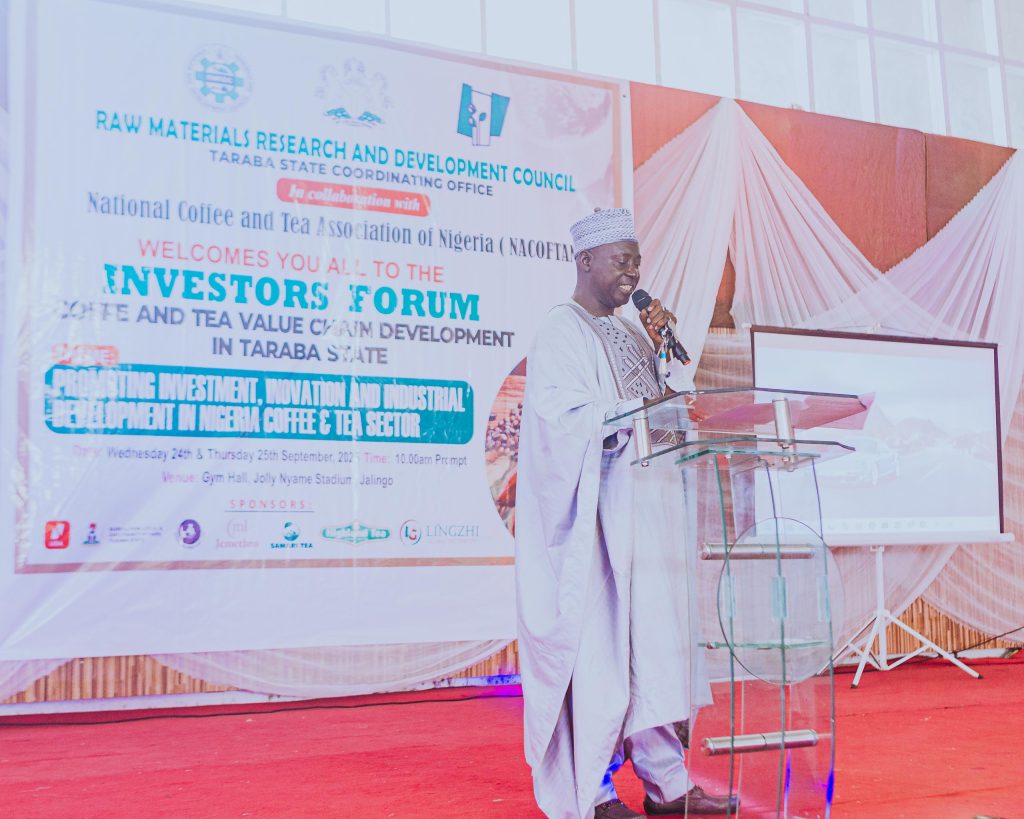
The investment forum itself held on Thursday, 25th September 2025, started with a welcome address delivered by the Taraba State Coordinator, Mr. Ahmed Musa Waziri, who welcomed everyone on behalf of the Director General, Prof. Nnanyelugo Ike-Muonso. In his address, he underscored the unwavering commitment of the Raw Materials Research and Development Council (RMRDC) to championing sustainable development through the effective utilization of Nigeria’s vast raw material resources. He highlighted the Council’s strategic vision to drive industrial innovation, support local content development, and foster inclusive economic growth by bridging the gap between raw materials availability and industrial demand. Mr. Waziri further emphasized that the forum was a reflection of RMRDC’s ongoing efforts to catalyze investment in raw materials research, value addition, and technology-driven solutions that will transform Nigeria into a self-reliant, resource-optimized economy.
This was followed by the keynote address by Mr. Maigari Abubakar, Head, Investment Division at RMRDC Headquarters and the forum formally declared open by His Excellency, the Executive Governor of Taraba State, Dr. Agbu Kefas, represented by Hon. Jethro Yakubu, the Majority Leader, Taraba State House of Assembly.
You Might AlsoLike




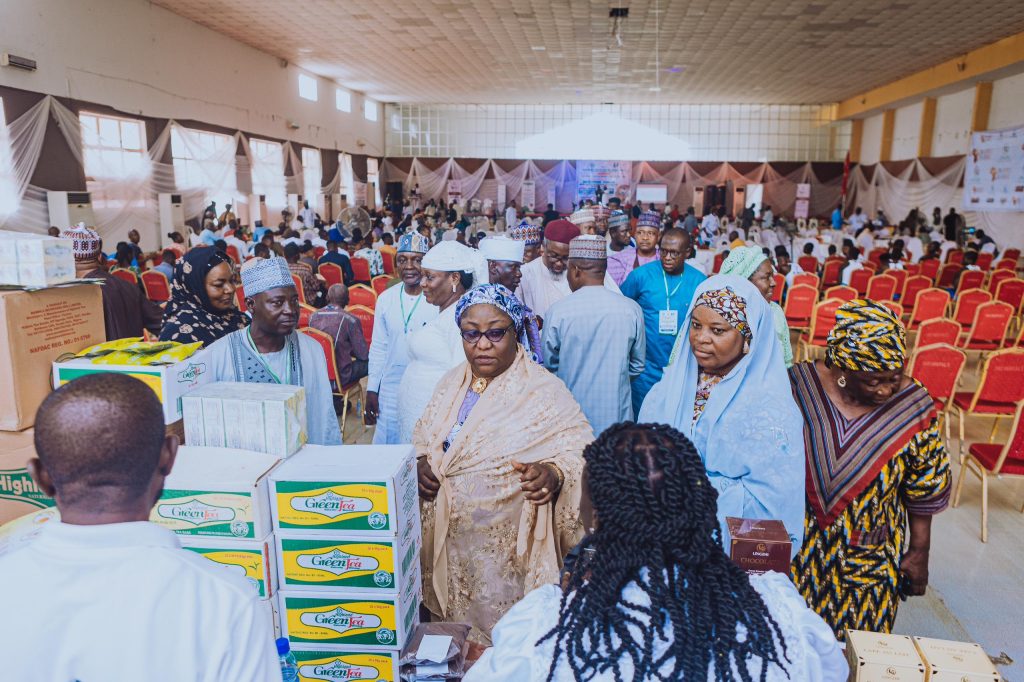
The event has over 200 participants comprising local producers, international investors, development partners, diplomatic representatives, financial institutions, and government officials. Prominent among the local stakeholders were Highland Tea, Pleasure Tea, Samari Tea, and Rosella Black Tea producers, while international participation included Lingzhi Coffee, My Buna Coffee of Ethiopia, Leisly Foods and Beverages Ltd of Cameroon, and official representation from the Federal Democratic Republic of Ethiopia. Also, in participation was diplomatic representation including H.E. Ambassador Legesse Geremew Haile, Ethiopia’s Ambassador Extraordinary and Plenipotentiary (represented), and Mr. Sadik Abdulahi, Trade, Investment, and Tourism Counselor at the Ethiopian Embassy.
The event also followed with the presentation of technical papers which set the direction for discussions during the technical session. Professor Umar Mahmood Hamid, Deputy Vice Chancellor of Taraba State University, Jalingo, delivered a paper titled Unlocking Investment Potentials on Coffee and Tea Value-Chain Development in Taraba State, while Chief Iliya Ezekiel, Managing Director of Samari Tea Company Ltd, presented on Public-Private Partnership Financing in Coffee and Tea Value-Chain for Sustainable Development and Economic Growth. The session was moderated by Professor Chukudi Michael of Taraba State University.
The papers provided valuable insights into the economic opportunities within the coffee and tea sectors and highlighted strategic frameworks for investment, sustainability, and collaboration. These contributions helped shape meaningful dialogue around actionable policies and investment strategies in the region.

Key outcomes of the forum included actionable discussions on enhancing value addition through processing, packaging, and branding; strengthening market linkages for both domestic and export markets; promoting high-quality coffee and tea export; and encouraging sustainable public-private partnerships to attract funding and technology. The forum also emphasized the importance of creating employment opportunities for farmers, women, and youth across the value chain, with a broader aim to improve livelihoods and stimulate rural economic development.
In his remarks, Prof. Ike-Muonso, represented by Mr. Waziri, described the forum’s theme as timely and strategic. He noted that it aligns with Nigeria’s national agenda for economic diversification, agricultural transformation, and sustainable industrial growth. According to him, RMRDC remains firmly committed to its mandate of promoting the development and optimal utilization of the country’s raw materials for industrial advancement.
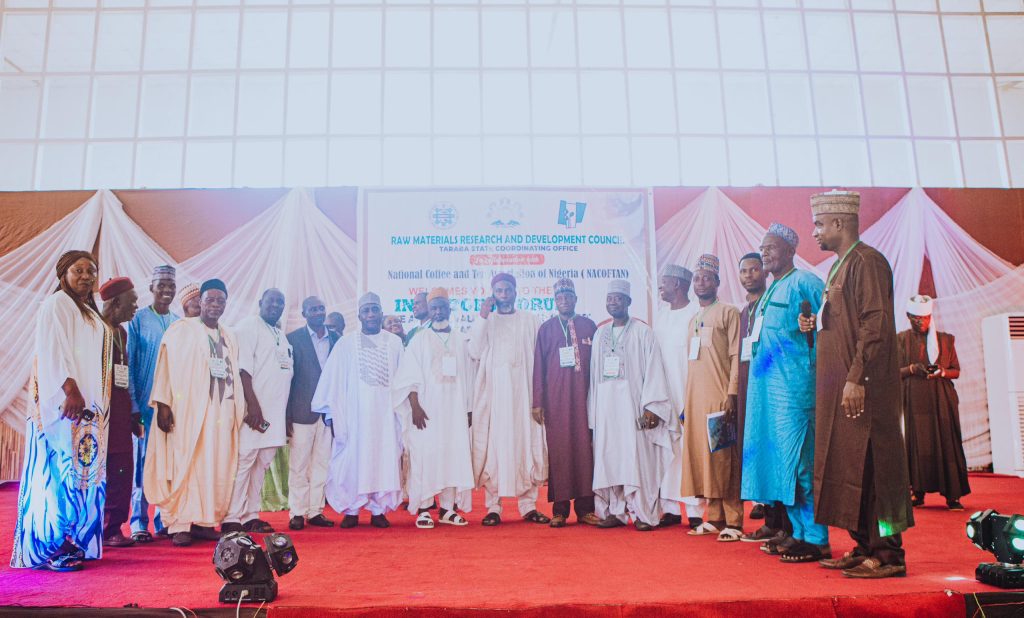
The DG highlighted Taraba State’s unique ecological conditions, expansive arable land, and favorable climate as strong factors positioning it as a natural hub for coffee and tea cultivation. He explained that these attributes informed the Council’s collaboration with Taraba State University and NACOFTAN to advance the industry in the region. He also expressed appreciation to the state governor, Dr. Agbu Kefas, for allocating land for the establishment of a Raw Materials Resource Centre in Taraba, which will strengthen research, training, and capacity development.
Governor Kefas, represented by Hon. Jethro Yakubu, expressed gratitude to RMRDC for its support toward the state’s economic development efforts. He noted that the state government has put in place investment-friendly policies and incentives and is working with the legislature to give these policies the legal backing necessary for long-term impact and sustainability.
The forum concluded with a call to action for all stakeholders, government, private investors, and development partners, to embrace the coffee and tea subsector as a strategic pillar for inclusive economic growth. Participants agreed that, if well harnessed, the sector could help reduce unemployment, drive rural development, enhance food security, and reposition Nigeria as a key player in the global beverage market.