By Umar Salihu Adamu
The Niger State Coordinator of the Raw Materials Research and Development Council (RMRDC), Dr Abdulrasheed Mohammed, has urged stakeholders in Nigeria’s rice value chain to deepen innovation and value addition as a strategy to improve food security and reduce post-harvest losses.

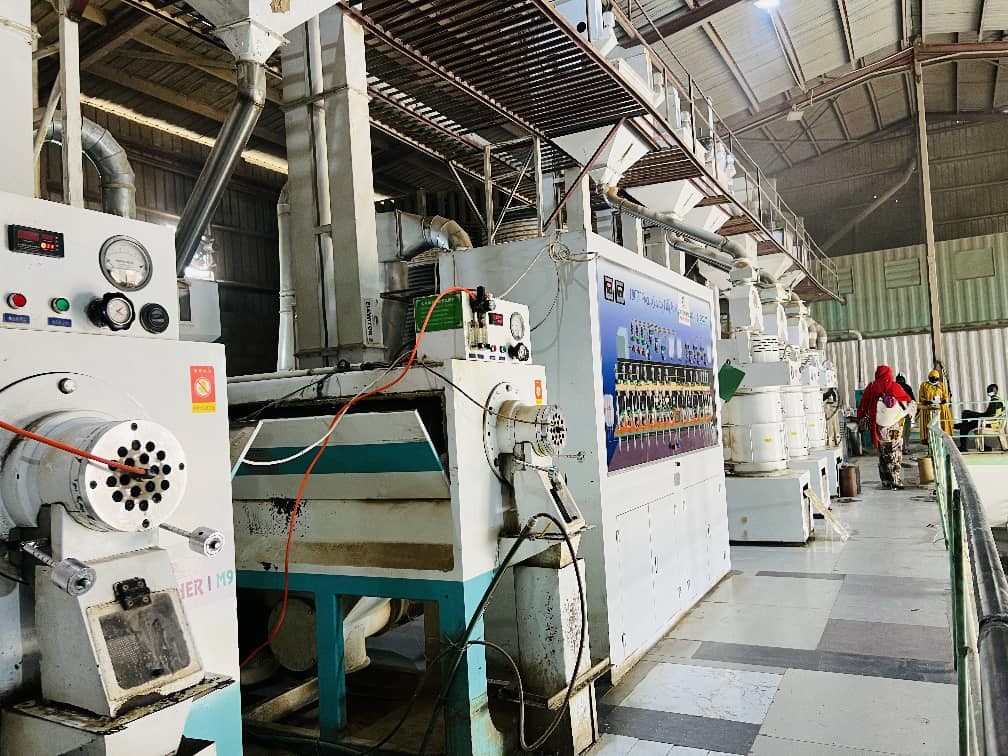
The call was made during an industrial visit to JAAF Rice Mill at the Mandala Junction, Minna, where the Niger State Coordinator RMRDC, Dr Abdulrasheed Mohammed, represented by a Senior Scientific Officer, Mrs. Saratu Bello Usman, led the delegation. She emphasized the need for continuous research and the adoption of modern processing techniques to meet the growing demand for quality rice in the country.
Mrs Saratu explained the mandate, aims, and objectives of the RMRDC, highlighting the Council’s focus on promoting local raw materials utilization.
She noted that the JAAF facility, with its efficient and structured production process, serves as a model for other agro-processors.
You Might AlsoLike




“What we have seen here at JAAF Rice Mill shows that Nigeria has the capacity to produce world-class rice if we continue to invest in technology and quality assurance,” she said.
The RMRDC team were taken through JAAF’s production chain, where the company’s representative Engr. Abba Mohammed outlined the mill’s operations, starting from paddy rice initial cleaning point to soaking, steaming, drying, and final bagging, as at every stage is guided by strict quality control.
During laboratory demonstrations, the JAAF’s members of staff revealed the use of moisture testers, Vernier calipers, and color sorters to ensure grain quality, while by-products such as rice husk are recycled into briquettes for cooking and organic manure and it is an area with huge potential for value addition.

Despite these successes, Mrs Saratu raised concerns about the underutilization of the rice by-products and the limited awareness among local processors on how to transform waste into wealth.
She identified challenges such as inconsistent moisture control, inadequate access to modern equipment for small-scale farmers, and weak linkages between research institutions and processors as key issues affecting Nigeria’s rice industry.
Calling for urgent action, Mrs Saratu recommended increased collaboration between government agencies, private investors, and research bodies to enhance technology transfer and support local innovators, stressing that Nigeria must go beyond producing rice for consumption to fully explore its by-products, such as using husk ash for briquettes or as organic fertilizer, because this is where the future of sustainable agro-processing lies.
She urged policymakers to prioritize funding for value addition research and training programs across the rice value chain.