By Aminu Dandawaki
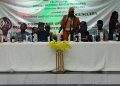
Jigawa State has officially launched the second phase of the Renewed Hope Employment Initiative (RHEI 2), a significant federal government program designed to combat poverty and generate sustainable employment across all 27 Local Government Areas. This phase marks a strategic collaboration with the Raw Materials Research and Development Council (RMRDC), signaling a shift towards an industry-focused model that leverages local resources for job creation.

The flag-off ceremony, held in the state capital, Dutse, was led by the National Directorate of Employment (NDE). Representing the Director-General of NDE, Mr Silas Ali Agara, the State Coordinator, Mr Hamza Garba, explained that the program is structured around four core pillars. These include vocational skills development to provide practical trade training for participants, small business support aimed at nurturing emerging enterprises, rural employment promotion with a strong focus on agricultural opportunities, and special public works designed to deliver short-term income and equip participants with essential infrastructure-related skills.
The initiative, a cornerstone of President Bola Ahmed Tinubu’s economic reform and job creation agenda, aims to provide comprehensive training and financial support to thousands of participants. Its enhanced success is anticipated through the active involvement of the RMRDC, which will contribute its extensive expertise in developing and promoting local raw materials, transforming them into foundational elements for self-employment and small businesses within the program.
Mr. Garba highlighted the enthusiastic response from the public, noting that the Renewed Hope Employment Initiative is a direct response to the government’s commitment to empower its citizens. He expressed confidence that the initiative would not only improve livelihoods but also address unemployment by producing wealth creators rather than mere job seekers.
You Might AlsoLike


The integration of the RMRDC into RHEI 2 represents a pivotal shift from general training to a more specialized, industry-driven approach. The partnership is designed to ensure that participants acquire not only valuable skills but also the resources needed to establish and expand businesses rooted in Nigeria’s abundant raw materials.
According to the Jigawa State Coordinator for RMRDC, Mr. Abdulhamid Mohammed, the Council has developed a comprehensive support plan to mitigate risks for aspiring entrepreneurs. This plan covers access to RMRDC’s extensive raw materials database, the introduction of modern processing technologies, and the incorporation of value addition principles into the training curriculum. It also facilitates linkages with industrial hubs and processing communities, provides affordable local machinery alongside essential starter packs, and delivers specialized training across key economic sectors.
By strategically aligning vocational training with the effective use of local resources and industrial support, the collaboration between RMRDC and RHEI 2 is set to significantly reshape Jigawa’s economic landscape. The program is expected to convert the state’s natural endowments into enduring economic opportunities, positioning the Renewed Hope Agenda as a model for grassroots industrial growth and sustainable job creation.