By Moyofoluwa Ogunyemi and Mojeed Adeyemi
The Director-General/CEO of the Raw Materials Research and Development Council, Professor Nnanyelugo Ike-Muonso, has re-emphasized that value addition and robust data systems are vital to Nigeria’s economic prosperity, as stakeholders at the 10th Edition of the Bullion Lecture 2026 called for a decisive shift from raw material exports to industrial transformation.

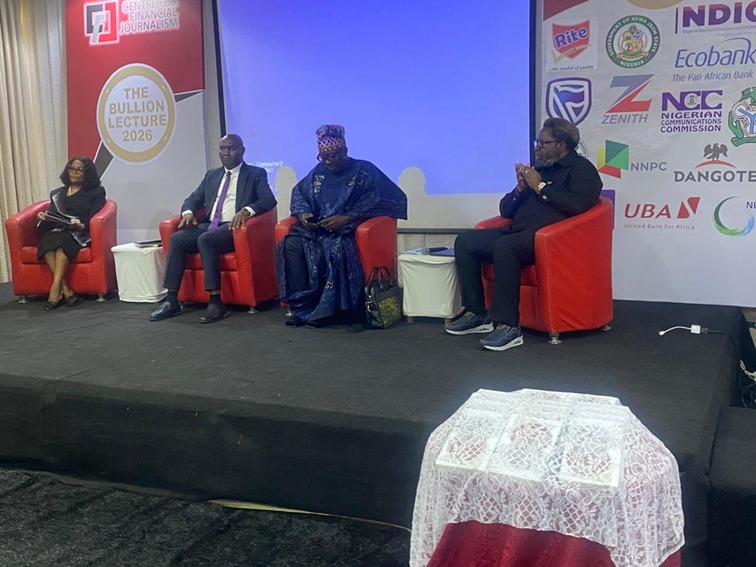
The event, organized by the Centre for Financial Journalism (CFJ), was held on Thursday, April 24, 2026, at the Civic Centre, Victoria Island, Lagos, and was themed: “From Resources to Prosperity: How Raw Materials Development, Value Addition, and Innovation Can Catalyse Nigeria’s Industrial Renaissance.”
Delivering a compelling guest lecture, Professor Ike-Muonso challenged Nigeria to break free from its long-standing dependence on exporting raw materials with little or no value addition. He lamented that despite the country’s vast agricultural and mineral resources; it remains at the lowest level of the value chain because it exports commodities in their raw form. According to him, countries that achieve sustainable prosperity do not merely extract resources; they process, manufacture, brand, and export finished products. “Unfortunately, Nigeria is currently at the extraction stage because we export our raw materials,” he stated.
He explained that while raw exports generate minimal returns, significantly higher value is derived when resources are processed into semi-finished and finished goods. Nations dominating global trade today, he noted, are those that have successfully made this transition.
You Might AlsoLike




Using practical examples, Prof. Ike-Muonso illustrated the substantial value Nigeria loses through the export of raw commodities. He explained that raw cashew nuts generate only a fraction of the income that can be earned from processed products. For instance, raw cashew nuts sell for about US$1,250 per tonne, whereas processed cashew products can generate significantly higher returns, with kernels valued between US$3,500 and US$8,000 per tonne, and fully processed products reaching as high as US$7,800 per tonne. He noted that this clearly demonstrates the economic benefits of local value addition and processing. Likewise, cocoa exported as beans earns far less than cocoa converted into butter, powder, and chocolate products. He also cited lithium and other solid minerals, noting that refined industrial-grade materials command much higher prices than raw ores. These examples, he said, are evidences that demonstrate the urgent need for Nigeria to build domestic processing capacity.
Professor Ike-Muonso further emphasized the importance of leveraging Nigeria’s natural endowments to drive industrial development rather than relying on imports. He observed that despite abundant local resources, the country continues to import critical raw materials such as wheat, raw sugar, and industrial inputs; placing pressure on foreign exchange reserves and weakening domestic industries.
He called for stronger backward linkages between industries and local suppliers, forward linkages into manufacturing and exports, and fiscal linkages that enhance government revenue through productive enterprise. “Industrialization is not optional; it is the pathway to national prosperity,” he said.

Disclosing the efforts of RMRDC on strengthening of data systems, the DG, disclosed that the Council has developed a comprehensive, second-generation raw materials database. The initiative amongst others is expected to improve access to reliable data on resource availability and support investment planning and industrial growth.
Earlier in his opening remarks, the Chairman of the Bullion Lecture, Otunba Kelvin Dele Oye, emphasized the importance of policy consistency in driving national development. He warned that inconsistent policies and the influx of imported goods continue to undermine local industries and discourage investment. Otunba Oye also stressed that sustainable growth lies in transforming raw materials into higher-value products and commended the strategic role of Raw Materials Research and Development Council in advancing Nigeria’s industrialization agenda.
During the panel session, the Director of the Statistics Department at the CBN, Dr. Moses Okpanachi Usman, described the proposed Value Addition Bill by Raw Materials Research and Development Council as a potential game changer once enacted, noting that it could create opportunities for collaboration between the CBN and RMRDC. He also pledged support for data sharing and investment de-risking initiatives to encourage private sector participation.
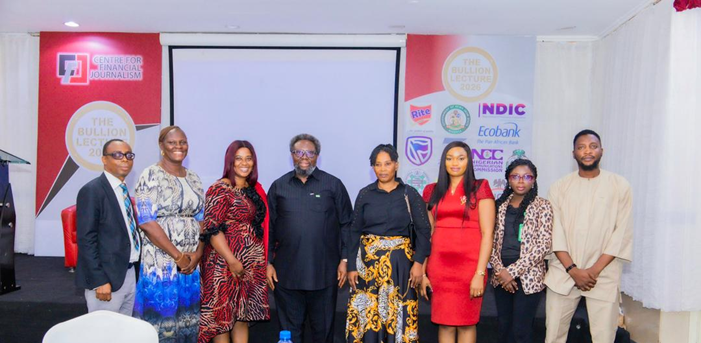
Members of the RMRDC delegation at the event included Deputy Director, Directorate of Cooperate Affairs, Mr Festus Obot; Lagos State Coordinator, Mrs. Uchechukwu Ojiakor; Assistant Directors, Mrs. Ebele Nwajuaku and Assistant Director, Mrs. Adaora Adibe; Principal Scientific Officers, Dr. (Mrs.) Moyofoluwa Ogunyemi and Principal Information Officer, Mrs Tochukwu Ogbalu; and Scientific Officer I, Mr. Mojeed Adeyemi.