By Oluwaseyi Otitoju
The President and Provost of State University of New York Polytechnic Institute (SUNY Poly), Dr. Oluwole Soboyejo, has stated that Africa must embrace advanced technologies such as Artificial Intelligence (AI), robotics, and nanotechnology to transition from a resource-extractive economy to a fully industrialized continent.

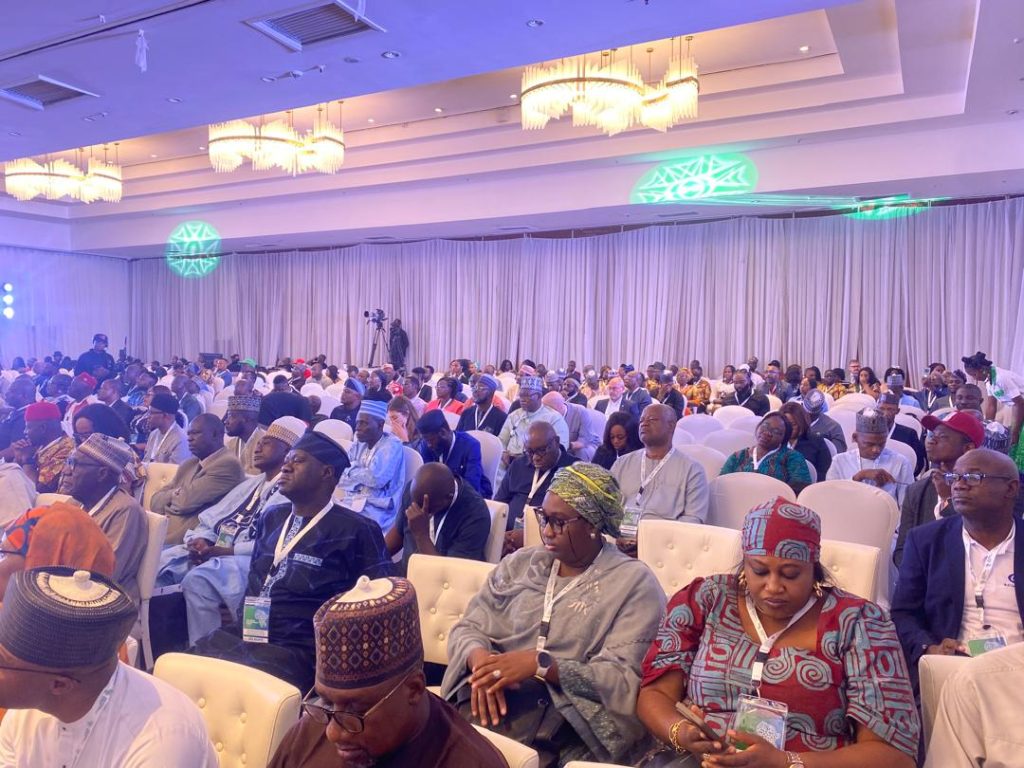
Delivering a keynote address on Day Two of the African Raw Materials Summit (ARMS), recently at the Continental Hotel, Abuja, Dr. Soboyejo spoke on the theme “Technological Leapfrogging in African Industry.” He emphasized that adopting AI and digital technologies offers Africa a unique opportunity to bypass traditional development stages and accelerate its path to industrialization.
“Africa must move beyond merely extracting and exporting raw materials,” he asserted. “We need industries that can refine, add value, and manufacture finished products using cutting-edge technologies.” he said.
He noted that by leveraging AI and the Internet of Things (IoT), African industries can significantly improve the quality and value of their raw materials. He also called for the strategic deployment of solar energy technologies to meet the continent’s industrial power needs, reducing high energy costs that hinder growth.
You Might AlsoLike




“Nanotechnology, combined with AI, can play a pivotal role in solving Africa’s persistent energy challenges,” Dr. Soboyejo explained. “Nigeria, for instance, can explore large-scale energy storage technologies to stabilize power supply and support industrial expansion.”
He stressed the importance of integrating AI into Nigeria’s energy systems to ensure reliable and sustainable power availability, adding, “We must get to a point where power is consistently available when needed.”
Dr. Soboyejo also highlighted the potential for international collaboration in applying technology to healthcare. He shared a groundbreaking research project involving Nigerian scientists and the National Hospital, Abuja, aimed at developing AI-driven, nanotechnology-based drugs specifically tailored to address breast cancer in African women.

“Through global data and local research, we’ve found that cancer receptors in African women differ significantly from those in women of Asian descent,” he explained. “Our goal is to develop targeted treatments that shrink tumors within two weeks of diagnosis, offering a faster, more effective response to cancer in African patients.”
He argued that this type of innovation exemplifies how technology can be harnessed to solve region-specific challenges, stressing that Africa must begin producing precision-manufactured products using its own data, resources, and industries.
Beyond healthcare, he advocated for the integration of AI and robotics in key sectors such as agriculture, construction, warehousing, and manufacturing. He cited the example of a Nigerian inventor who developed a robotic tractor capable of planting, harvesting, and packaging crops autonomously, calling it a “game-changer” for mechanized farming in Africa.
“This is proof that African innovators are already leveraging AI to develop practical solutions,” he said. “We must support and scale such innovations across sectors.”
He concluded by urging African governments, institutions, and industries to recognize AI and robotics as transformative tools rather than futuristic concepts. “These technologies are not just enhancements—they are essential for modernizing Africa’s industries and positioning the continent to compete in the global economy.”