Olufadi Halima and Mujeli Aisha
In pursuit of sustainable agricultural development and economic diversification, the Raw Materials Research and Development Council (RMRDC) has engaged with the National Coconut Producers, Processors, and Marketers Association of Nigeria (NACOPPMAN) to advance coconut cultivation and processing as part of efforts to unlock the full potential of Nigeria’s coconut value chain.

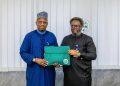
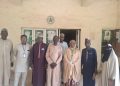
The engagement followed a courtesy visit by NACOPPMAN to the Council’s headquarters in Abuja on Tuesday, 21st October, 2025, aimed at fostering discussions on the implementation of the Federal Government’s directive on large-scale coconut cultivation across the country in order to strategically position Nigerian coconuts for industrial use and global competitiveness.
Speaking during the visit, the National President of NACOPPMAN, Dr. Nma Okoroji, described the coconut tree as the “tree of life”, emphasizing its immense economic and environmental value. She noted that while Nigeria has vast arable land suitable for coconut cultivation, the country still lags behind top global producers such as Indonesia and the Philippines.

According to Dr. Okoroji, Nigeria currently produces about 364,000 metric tonnes of coconuts annually, compared to Indonesia’s 28 million tonnes and the Philippines’ 16 million tonnes. She stressed that expanding coconut cultivation and processing could generate millions of jobs, enhance rural livelihoods, and contribute significantly to Nigeria’s economic diversification agenda.
You Might AlsoLike


“Coconut is a versatile tree with a lifespan of over 80 years and more than 350 products derivable from it,” she said. “It is not just a crop but a long-term investment capable of transforming the nation’s agro-industrial landscape.”
In his remarks, the Director-General of RMRDC, Professor Nnanyelugo Ike-Muonso, commended the association for its advocacy and reaffirmed the Council’s readiness to partner closely with NACOPPMAN to drive coconut industrialization in Nigeria.
He acknowledged the multiple industrial uses of coconut, including its potential contribution to energy generation and alternative fuel development, particularly as a possible substitute in addressing the national cooking gas challenge.

“We understand the strategic relevance of coconut to Nigeria’s industrial growth, and with the necessary legislative support, we plan to work with the association to cultivate about two million coconut trees nationwide,” the Director-General stated.
Professor Ike-Muonso further directed NACOPPMAN to collaborate with the Agro-Allied Department of RMRDC to design and implement specialized training programmes focused on coconut value addition and supply chain management. He emphasized that the RMRDC remains committed to supporting the development of the coconut value chain through stakeholder engagement, research, and policy guidance.
Also speaking, Mr. Abdulsamad Usman, a consultant to NACOPPMAN, explained that the association was established to develop every aspect of the coconut value chain and has been engaging relevant stakeholders, including government ministries, departments, and agencies (MDAs), to achieve this mandate.
He disclosed that NACOPPMAN approached the National Assembly, which subsequently passed a motion giving coconut farming national priority status, a development that has led to strategic collaborations with MDAs such as RMRDC.
Mr. Usman identified low production capacity as one of the major challenges facing Nigeria’s agricultural sector and called for budgetary allocations for coconut seedlings and plantation development to enhance productivity and sustainability.
NACOPPMAN has set ambitious targets to achieve coconut self-sufficiency in Nigeria by 2027, with medium- and long-term development goals extending to 2057. The association projects that with adequate support and investment, the coconut industry could create over 50 million direct jobs and 10 million indirect employment opportunities, positioning Nigeria as a major player in the global coconut market.