By Abubakar Yusha’u
The Raw Materials Research and Development Council (RMRDC), Katsina State Coordinating Office, has intensified efforts to promote mineral-based industrial development following a strategic assessment visit to the Ashaka Gypsum Cluster in Funakaye Local Government Area of Gombe State.

The field inspection, conducted on May 7, 2026, was aimed at identifying investment opportunities for Katsina-based investors and evaluating the cluster’s potential to support the proposed Mega Resource Centre in Katsina State.
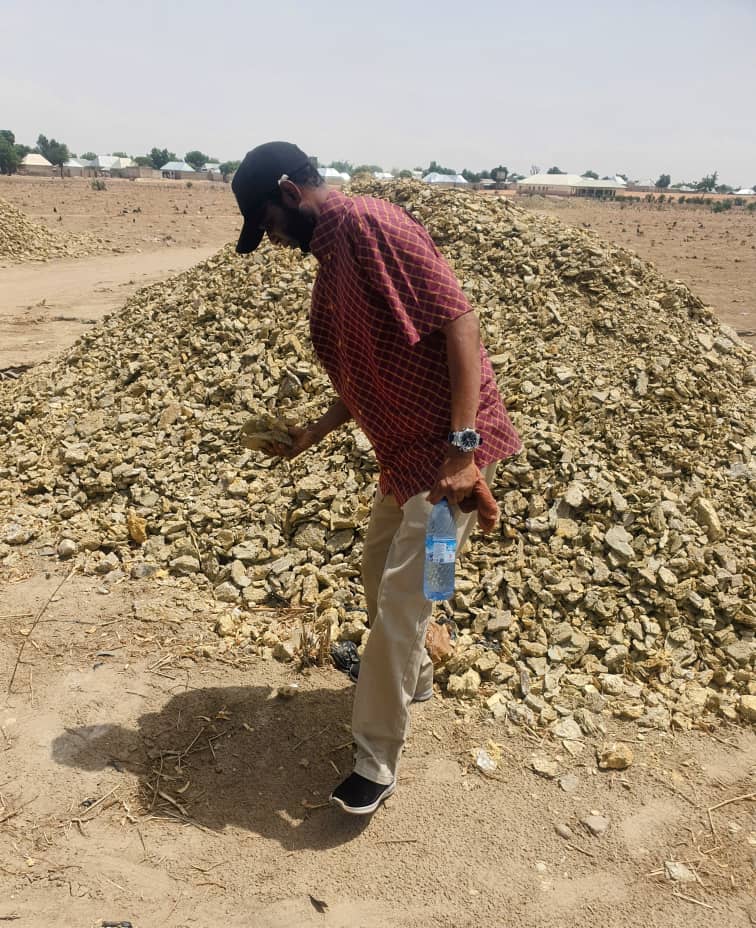
The visit formed part of an official working tour to Gombe State by the Katsina State Coordinator of RMRDC, Abubakar Y., and included an inspection of mining and processing activities in Ashaka Town, host community to Ashaka Cement, a subsidiary of Lafarge Africa.
The assessment followed extensive engagements with the Gombe State Coordinating Office of RMRDC on the economic and industrial potential of the Ashaka gypsum deposits.Mr Abubakar said the visit was designed to evaluate the cluster’s viability as a sustainable raw material source while also identifying market opportunities for prospective investors interested in the mineral sector.
You Might AlsoLike




The delegation also collected representative gypsum samples for analysis and possible inclusion in the proposed Mega Resource Centre being planned for Katsina State.
During the inspection, the team observed that the Ashaka gypsum cluster has remained operational for approximately 25 years and continues to serve as a major supplier of raw materials for cement production within the region.
The mining activities, according to officials, have created employment opportunities for both skilled and unskilled workers, while the gypsum deposits continue to support industrial production and regional economic activities.

Findings from the visit further revealed that gypsum used at the facility is sourced entirely from local deposits, particularly from Fika Local Government Area of Yobe State and parts of Gombe State, thereby ensuring a stable and accessible supply chain for manufacturers.
The cluster was also found to possess strong production capacity, generating about 900 metric tonnes of gypsum daily, equivalent to approximately 6,300 tonnes weekly, 27,000 tonnes monthly, and over 328,000 tonnes annually.
Officials noted that the gypsum deposits meet industrial-grade standards suitable for cement manufacturing and other industrial applications.
Despite the operational success recorded at the cluster, poor road infrastructure was identified as a major challenge affecting the transportation of gypsum to processing plants and external markets.
The Katsina office observed that improved road networks and logistics infrastructure would significantly reduce haulage costs, improve efficiency, and attract more private sector investment into the mineral value chain.
Speaking after the inspection, the Katsina State Coordinator, Abubakar Y., described the Ashaka gypsum cluster as a strategic and sustainable raw material hub capable of supporting industrial expansion and mineral resource development in northern Nigeria.
He expressed optimism that enhanced inter-state collaboration, coupled with improved infrastructure, would unlock new investment opportunities, strengthen mineral processing activities, and accelerate industrial growth across the North-East region.