By Adaora Adibe, Tola Ogunwusi
The Raw Materials Research and Development Council (RMRDC) has embarked on a focused training programme aimed at strengthening the capacity of its staff between grade level 7 to 12 in the application of the Harmonized System (HS) Code an essential tool in international trade.

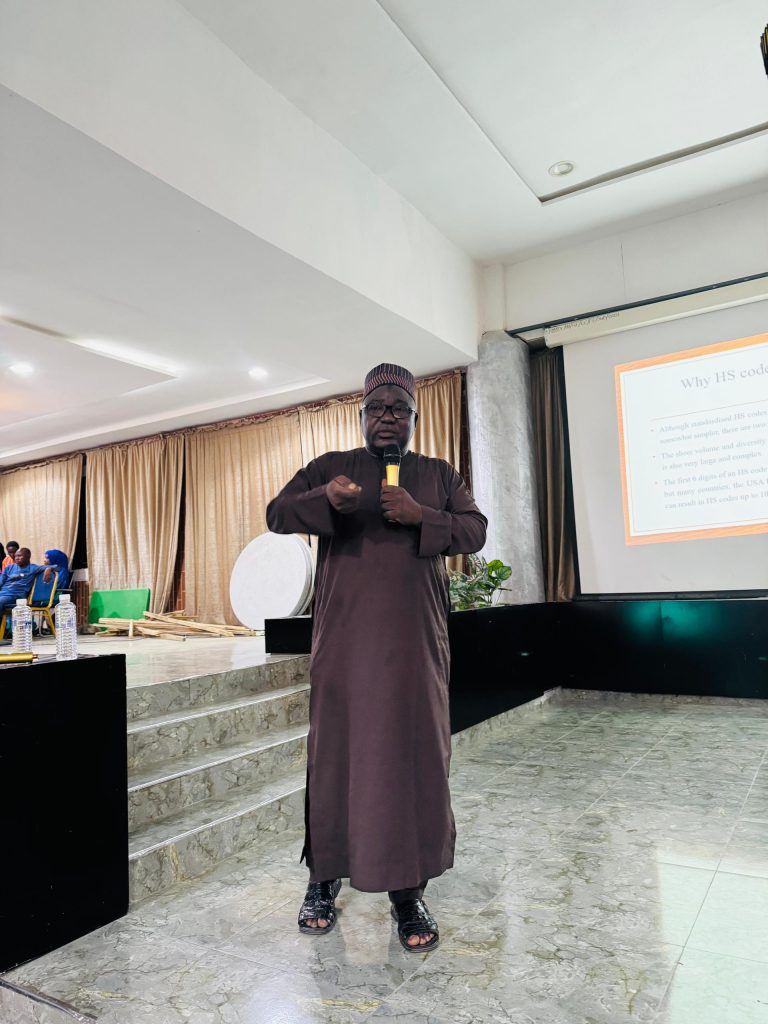
Held on June 23, 2025, at the Council’s headquarters in Abuja, the training was organised by the Directorate of Competitiveness Strategy and Special Projects (NSC&SP) as part of RMRDC’s strategic efforts to align Nigeria’s raw materials sector with global trade standards.
The initiative is designed to equip staff with the technical knowledge required to accurately classify raw materials and products, monitor trade patterns, and support more effective policy and decision-making. By deepening institutional knowledge in HS Code usage, the Council aims to enhance Nigeria’s competitiveness in the global marketplace.
The HS Code, developed by the World Customs Organization (WCO) in 1988, formerly the Customs Cooperation Council is an internationally recognized system that categorizes traded products using standardized numeric codes. It plays a pivotal role in setting tariffs, guiding customs procedures, shaping trade agreements, and enabling economic analysis.
You Might AlsoLike




In his opening remarks, the Director General of RMRDC, Prof. Nnanyelugo Ike-Muonso, emphasized the importance of the training, urging participants to approach it with dedication. He noted that as the Council’s core mandate is to support the manufacturing sector through efficient raw materials management, both in imports and exports. He urged staff to engage adequately in gaining knowledge for the in-depth understanding of international classification systems.
“The HS Code is not just a trade tool; it is a strategic asset,” the DG remarked. “To serve our stakeholders effectively and position RMRDC for excellence, innovation, and global relevance, our staff must be equipped with the right knowledge.” He stated.
The Dg further emphasised on the critical need for staff to remain strategic and work assiduously towards ensuring that the knowledge gained during the training is gainfully utilised to reposition the Council towards achieving greater heights.

The Director, Directorate of National Competitiveness Strategy and Special Project, Dr. Valeri Ehimiaghe welcomed all participants to the crucial training on the Harmonized System (HS) Code, stating that it is a cornerstone of international trade and customs administration. She pleaded on staff to make use of the opportunity by paying rapt attention so as to build capacity to drive the Council’s strategic goals.
Speaking during his paper presentation on HS Code and export compliance in Nigeria, the former secretary, National Trade Facilitation Committee (NTFC)- Federal Ministry of Trade and Investment, Mr. Abdullahi Usman, emphasized the critical role of accurate tariff classification in promoting Nigeria’s non-oil exports. Drawing on his experience in trade facilitation, Mr. Usman highlighted the challenges exporters face in navigating the Harmonized System (HS) Code and underscored the need for capacity-building initiatives, streamlined customs procedures, and greater inter-agency coordination to improve compliance and competitiveness in international trade.
This was followed by another paper presentation on Understanding the importance of HS Code Subcommittee in import reduction of raw materials and products in Nigeria, by Mr. Chima O, who emphasized the strategic role of the HS Code Subcommittee in promoting local production by ensuring accurate classification of goods and identifying opportunities to substitute imports with locally sourced alternatives. He also highlighted how data-driven HS code analysis can inform policy decisions that support industrial growth and economic diversification.
The high point of the event was the presentation of the HS Code Subcommittee terms of reference (TOR) by the Overseeing Director, Research and Development Plant, Mrs. Fausta Ogbuefi.
The event concluded with a vote of thanks by the Assistant Director, (NCS&SP) Zainab Abubakar. She expressed gratitude to all participants, and facilitators for their active engagement and contributions, and reaffirmed the Directorate’s commitment to sustaining capacity-building initiatives that support trade efficiency, compliance, and national development.