By Nafisat Abdulrahman
As part of its ongoing engagement with member countries under the Country Engagement Framework, a delegate from the Islamic Development Bank (IsDB), Mr. Kamel Aribi from the South South Corporation Reverse Linkage Division of the bank which is headquartered in Jeddah Saudi Arabia, paid a courtesy visit to the Raw Materials Research and Development Council (RMRDC) headquarters in Abuja.

The visit, which forms part of the IsDB’s broader strategy to enhance and facilitate connection and exchange with different member countries focused on reviewing the progress of the Reverse Linkage Programme between the Bank and RMRDC, with a view to scaling up existing projects and identifying new areas for collaboration.

Speaking during the meeting, Mr. Aribi noted that RMRDC remains a strategic partner for the Bank and commended the Council for its efforts in the implementation of the Reverse Linkage Programme so far, since its initiation in 2020. “We are satisfied with the collaboration with RMRDC so far, especially in the area of the fruits and vegetables value chain. Pakistan, the provider of expertise in that programme, also gave very positive feedback,” he said.
Earlier, a presentation was made by the Deputy Director of the North-Central Coordinating Division RMRDC and the Coordinator of the RMRDC and IsDB Reverse Linkage Program. She provided an overview of the Council’s previous engagements with the Bank, which include three submitted concept notes on the oil palm, dairy products, and fruits and vegetables value chains supported by Malaysia, Indonesia, and Pakistan respectively.
You Might AlsoLike


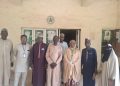

She noted that the fruits and vegetables value chain which was supported by Pakistan was implemented first awaiting upgrade to reverse linkage by the bank.
The Dean of the RMRDC Training School, Dr. Ify Olife, who served as the focal person for the fruits and vegetables value chain noted that establishing a model factory could be a valuable next stage in the project’s development. She said such a facility equipped with the right machinery would serve as a center where stakeholders from across the country could observe, learn, and replicate the processes locally.
Providing further insights, Mr. Adibi stated that his department specializes in training, capacity building, and knowledge exchange, which they can offer over a two-to-three-year partnership. However, the collaboration typically begins with a pilot phase lasting between two to four months with IDB covering the expenses. For other critical needs such as machinery and equipment, Mr. Aribi mentioned that IDB has a separate division that can assist and also mobilize financing and co-financing where necessary.

Meanwhile, the Director-General of RMRDC, Prof. Nnanyelugo Martin Ike-Muonso, assured the delegation of the Council’s readiness to deepen the collaboration, particularly in line with the nation’s drive for industrialization through raw materials development. He also informed the delegation of ongoing discussions with the Global Oil Palm Group, which could complement IsDB’s efforts in the oil palm value chain.
“The future of Nigeria is here. And if you want to make an impact, the biggest impact you can make is from here, truly because we are a factor economy. And all the things we’ve talked about are basically the kind of things that rural people, ordinary people do. And these are things that ensure that we join other countries of the world to industrialize, raw materials and raw material value addition. So in terms of impact on national output and employment generation, the place to look at is the RMRDC.” the DG emphasized.
The Director of Policy, Planning and Statistics at RMRDC, Mrs. Rachel Kotso also introduced the Africa Raw Materials Information System (ARMIS) as another area for potential support. She promised to share relevant documents with the IDB for evaluation.
On his part, the Director, Finance and Accounts of RMRDC, emphasized the importance of technical capacity building. He stressed the need for equipping staff especially technical staff with relevant knowledge and skills to meet national demands, while highlighting additional Council projects that could benefit from IsDB’s support through direct aid or co-financing.
Mr. Aribi gave the assurance that once all the documents, concept notes, financial outlines, and progress reports are submitted, a dedicated team at the IDB will conduct a review to determine the feasibility and scale of potential interventions.