By Lydia Adewumi
The Raw Materials Research and Development Council (RMRDC) has reaffirmed its commitment to supporting the Nigerian Association of Chambers of Commerce, Industry, Mines, and Agriculture (NACCIMA) in driving Nigeria’s ambition to become a $1 trillion economy by the year 2030.

This pledge was made during the 65th Annual General Meeting and Conference of NACCIMA, held in Ilorin, Kwara State. Representing the Director-General of RMRDC, Mrs. Lydia Adewumi the Council’s Kwara State Coordinator, delivered a goodwill message outlining RMRDC’s readiness to collaborate on sustainable economic strategies aimed at industrial development and resource optimization.
Themed “Harnessing Private Sector Potential to Achieve Nigeria’s $1 Trillion Economy by 2030,” the event convened key government officials, business leaders, and industry stakeholders. Notable attendees included the Attorney General of the Federation, Prince Lateef Fagbemi; Minister of Industry, Trade and Investment, Dr. Jumoke Oduwole; Minister of State for Industry, Trade and Investment, Senator John Owan Enoh; and the Minister of Defence, Mohammed Badaru Abubakar, who represented President Bola Ahmed Tinubu.
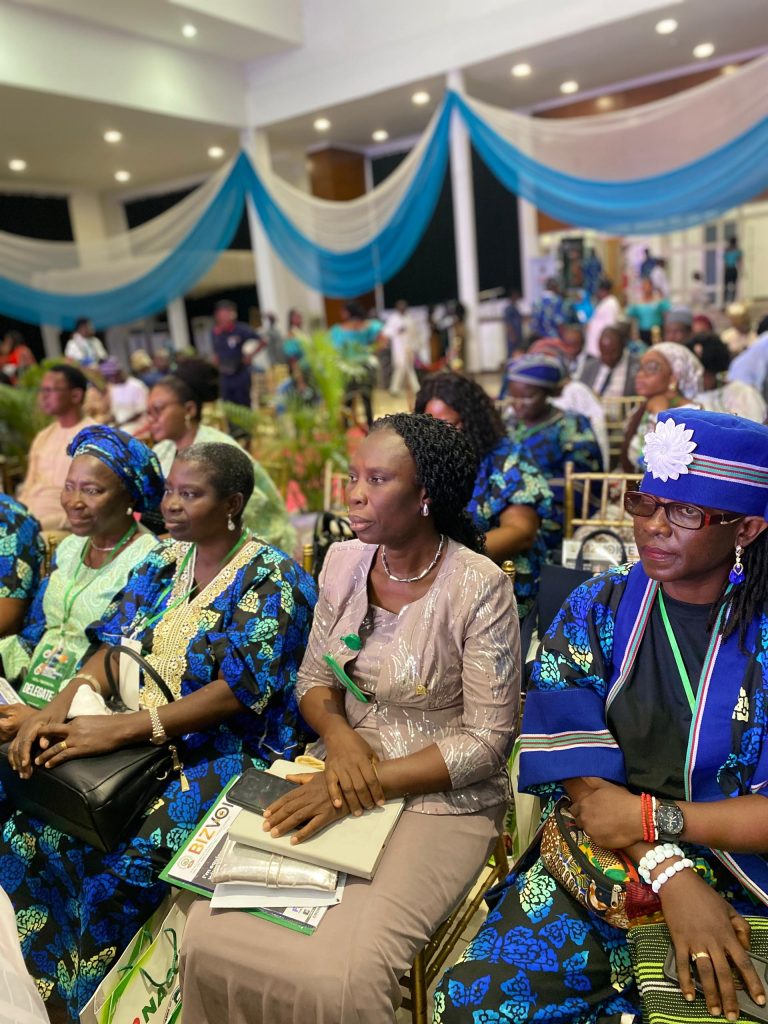
Others present included NACCIMA President Alhaji Jani Ibrahim, Kwara State Deputy Governor Kayode Alabi, and representatives of the state government.
You Might AlsoLike




In his keynote address, Chairman of the Bank of Industry (BOI), Dr. Mansur Mukhtar, outlined four critical areas necessary for achieving the 2030 economic target: infrastructure development, enhanced security, youth empowerment, and improved access to finance for businesses.
A high-level panel session featured industry experts including Prof. Jonathan Aremu, Aishah Rimi (CEO, Nigerian Investment Promotion Commission), Muda Yusuf (Director-General of NACCIMA), and Segun Ajayi-Kadir (Director-General, Manufacturers Association of Nigeria). The panel underscored the importance of policy clarity, support for Micro, Small and Medium Enterprises (MSMEs), and inclusive economic reforms.
Stakeholders collectively recommended the following priorities:

- Strengthening national security;
- Launching targeted youth empowerment programmes;
- Expanding business support services;
- Fostering inclusivity across sectors.
The conference served as a strategic platform for dialogue on investment opportunities, economic reforms, and the central role of the private sector in Nigeria’s economic transformation. Participants expressed optimism about the feasibility of achieving the $1 trillion economy vision by 2030, calling for unified efforts from both public and private sectors