By: Oyajimi Kehinde & Adeniyi Sakiru
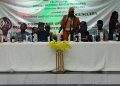
In a bid to strengthen staff welfare and promote access to affordable housing, the Raw Materials Research and Development Council (RMRDC), Ogun State Coordinating Office, organized a sensitization program in collaboration with the Federal Mortgage Bank of Nigeria (FMBN). The event, which was held on 24th September, 2025 at the RMRDC Ogun State Office, Abeokuta, provided staff with an in-depth understanding of mortgage products and housing finance opportunities available under the National Housing Fund (NHF) scheme.

The sensitization exercise, which attracted a large turnout of staff, featured a team from the Federal Mortgage Bank of Nigeria (FMBN) Ogun State Branch led by Dr. Badejo Adedeji, Head of Branch, accompanied by Mr. Fashola Olayinka and Mr. Oni-Olubunmi. Declaring the session open, Mr. Rabiu, on behalf of RMRDC, welcomed the FMBN delegation and commended the initiative as both timely and necessary. He urged staff to seize the opportunity to gain practical knowledge about affordable housing finance options, stressing that decent and accessible housing remained a cornerstone of staff welfare.
Speaking at the visit, Dr. Badejo explained that FMBN is a foremost housing finance institution in the Nigeria mandated to manage the National Housing Fund and to design sustainable financial products that support the Federal Government’s vision of ensuring affordable housing for Nigerians. He outlined key FMBN housing products available to staff contributors, including the National Housing Fund (NHF) Loan with repayment periods of up to 30 years; the Rent-to-Own Scheme, which allows contributors to occupy FMBN-built homes while paying gradually towards ownership; the Individual Housing Construction Loan, aimed at contributors who wish to build or complete personal homes; the Home Renovation Loan, designed to assist existing homeowners in upgrading or expanding their houses; and the Cooperative Housing Development Scheme, which enables staff cooperatives to collectively access loans to develop affordable housing estates for members.
He further explained that loan access is categorized into Basic (₦10 million), Classic (₦25 million), and Premium (₦50 million), depending on eligibility, with repayments capped at one-third of monthly income. Supporting documentation such as valid tax clearance, payslips, building plans, Certificate of Occupancy (C of O), and processing fees which is primarily for verifying the authenticity of the C of O; are required for applications.
You Might AlsoLike


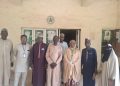

The highlight of the program was an engaging interactive session, where staff raised practical questions about the NHF and FMBN housing products. like whether outright payment options existed under the schemes, and clarification on equity contributions and repayment flexibility and about difficulties in tracking NHF deductions on the RMRDC dashboard despite being registered contributors.
Responding, Dr. Badejo assured participants that the Bank was committed to resolving such challenges. He encouraged affected staff to compile and forward their details for prompt intervention. He reiterated that FMBN remains dedicated to providing clear guidance to contributors through every stage of the mortgage process. The answers provided during the session were well received by participants, who described them as clear, practical, and reassuring.
In his closing remarks, the Ogun State Coordinator of RMRDC praised the FMBN team for their detailed and insightful presentation. He described the sensitization as a success, noting that it had greatly deepened staff understanding of affordable housing finance. He also emphasized the Council’s commitment to strengthening collaboration with FMBN to ensure that staff fully benefit from the NHF scheme.

Staff participants lauded the initiative, describing it as both timely and impactful. Many noted that it provided them with practical knowledge that directly addressed challenges they had faced in trying to access housing loans. They recommended that similar sensitization programs be held periodically to sustain awareness and encourage wider participation in government-backed housing finance initiatives.