
By Moyofoluwa Ogunyemi
The Lagos Regional Manager of the Nigerian Civil Aviation Authority (NCAA), Barr. Bukola Teriba has highlighted the urgent need for the aviation sector of Nigeria to transition from conventional fossil-based jet fuels to Sustainable Aviation Fuel (SAF), leveraging its abundant agricultural waste and livestock by-products.

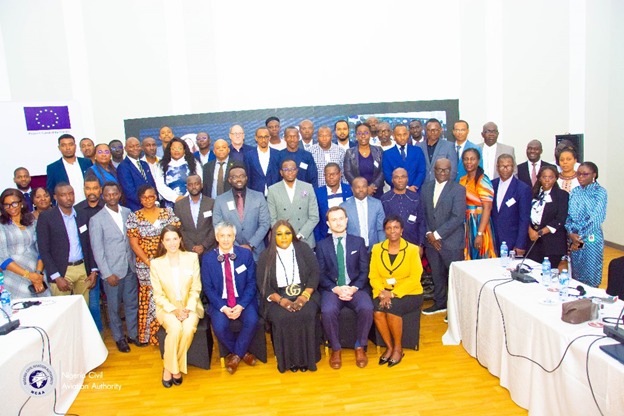
Barr. Teriba made this assertion during a high-level workshop organized by the Nigerian Civil Aviation Authority (NCAA) in collaboration with the National Council on Climate Change Secretariat and the European Union Aviation Safety Agency (EASA), and held at Lilygate hotel, Lekki, Lagos from 5th to 9th May, 2025. She emphasized that this shift was crucial for reducing aviation-related greenhouse gases (GHG) emissions, aligning with international climate commitments and positioning Nigeria as a regional leader in green aviation.
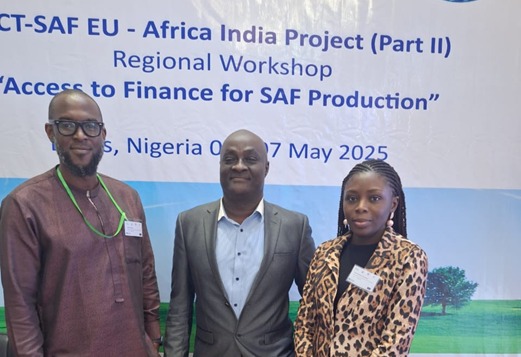
The workshop, themed “Facilitating Access to Finance for SAF Production,” assembled participants from 14 African countries and major international organizations to explore pathways for financing SAF projects across Africa.
In her welcome address, Barr. Teriba, affirmed that Nigeria is strategically positioned to take the lead in carbon reduction efforts through the production of Sustainable Aviation Fuel (SAF) from its vast reserves of agricultural wastes and animal by-products. “Nigeria is well-positioned to contribute meaningfully to SAF production, given our large supply of agricultural residues and livestock wastes. However, despite these resources, we currently lack the infrastructure for commercial-scale SAF production. This is why access to finance is so crucial,” she stated.
You Might AlsoLike




Barr. Teriba emphasized that SAF plays a vital role in reducing aviation’s environmental footprint and in achieving the global net-zero emissions target by 2050; a goal that African nations must strive to meet.
Echoing her remarks, other experts and stakeholders at the workshop stressed that Nigeria’s rich biomass potential offers a significant opportunity to promote green aviation and meet international climate objectives.
She further pointed out the capital-intensive nature of SAF development, calling for strong collaboration amongst policymakers, regulators, industry stakeholders and investors to unlock the country’s SAF potential and drive sustainable progress in the aviation sector.

Corroborating her submission, Mr. Frankline Omondi, an environmental expert and representative of the African Civil Aviation Commission (AFCAC), reported that the African Union Commission had developed a continental strategy to promote the use of SAF and Low Carbon Aviation Fuel (LCAF), with the aim of reducing carbondioxide (CO₂) emissions by 2–5% by 2030 and scaling up to 75–80% by 2050: a strategy which seeks to foster the production and deployment of SAF and LCAF across Africa.
He also revealed that strategic partnerships are already underway with key institutions, including the World Bank, African Development Bank (AfDB), European Union Aviation Safety Agency (EASA) and (COMESA full meaning); aimed at establishing self-sustaining SAF logistics systems across African states.
He also called for deeper regional cooperation, announcing that preparations are ongoing for a high-level Africa-Europe SAF financing Summit. Mr. Omondi expressed optimism that the outcomes of the Lagos workshop would feed into a formal declaration expected in June, advancing the continent’s commitment to sustainable aviation.