
By Mojeed Adeyemi
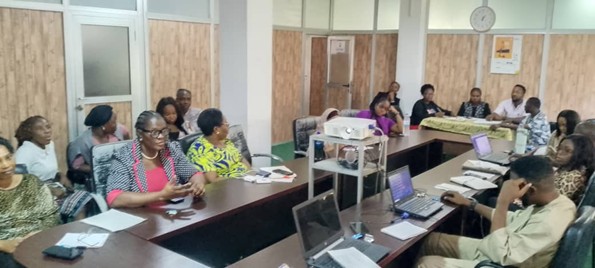
In a move aimed at strengthening institutional efficiency and enhancing service delivery, the Raw Materials Research and Development Council (RMRDC), Lagos State Coordinating Office, has organized an in-house training programme for staff on the Public Service Rules (PSR) and the Performance Management System (PMS).

The training, held at the boardroom of the Lagos Coordination Office on Monday, May 18, 2026, focused on improving staff understanding of recent modifications to the Public Service Rules and reinforcing the application of the Performance Management System as a tool for accountability, productivity, and effective public sector administration.
The first session, titled “Understanding the Public Service Rules: Structure, Purpose and Application in Nigeria’s Public Service,” was facilitated by Principal Investment Officer, Mr. Mathew O. Odesanya.
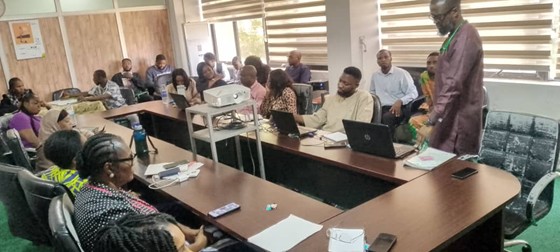
In his presentation, Odesanya explained that the Public Service Rules serve as official policies guiding employment procedures, staff conduct, and administrative operations within the Federal Public Service.
You Might AlsoLike



He noted that the rules, initially approved on September 27, 2021, were later reviewed on July 27, 2023, to address emerging developments in the public service sector.
According to him, some of the major amendments include increased peculiar allowances, upward review of Duty Tour Allowance (DTA), enhancement of estacodes and book allowances, introduction of a new exit benefit scheme, and greater emphasis on staff training, digitalization, and performance management.
Odesanya further enlightened participants on key provisions contained in the Public Service Rules, including matters relating to appointment and promotion, discipline and misconduct, leave administration, petitions and appeals, medical treatment, staff development, and conditions of service.

The second session, which focused on “Performance Management System (PMS): Enhancing Accountability, Productivity and Service Delivery,” was facilitated by Chief Investment Officer, Mr. Sibigam Okoro.
Okoro described the Performance Management System as a structured framework for planning, monitoring, reviewing, and improving employee performance in line with institutional goals and objectives.
He stated that the system promotes measurable outcomes, continuous feedback, and improved accountability across the workplace.
Participants were also trained on Key Result Areas (KRAs), SMART target setting, departmental and individual performance objectives, as well as the development of effective Key Performance Indicators (KPIs).
The session featured practical exercises designed to improve participants’ understanding of performance evaluation procedures and target-setting mechanisms.
The programme also included interactive discussions during which participants sought clarification on workplace procedures, performance review processes, and the practical application of both the Public Service Rules and the Performance Management System within the Council.
The initiative reflects the commitment of the Lagos State Coordinating Office of RMRDC to continuous capacity building, professionalism, accountability, and improved public service delivery.
Top of Form
Bottom of Form