By Oyajimi Kehinde and Adeniyi Sakiru
The Raw Materials Research and Development Council (RMRDC), in collaboration with the Ogun State Ministry of Agriculture and Food Security, has intensified efforts to drive industrial growth and agribusiness development through the cassava value chain with the hosting of an investors’ forum in Abeokuta.

The one-day forum, themed “Sustainable Cassava Value Chains: Driving Agribusiness Growth in Ogun State,” was held at the Ogun State Agricultural Development Programme (OGADEP), Idi-Aba, and attracted over 155 participants, including government officials, farmers, agro-processors, researchers, investors, development partners, and private sector operators.
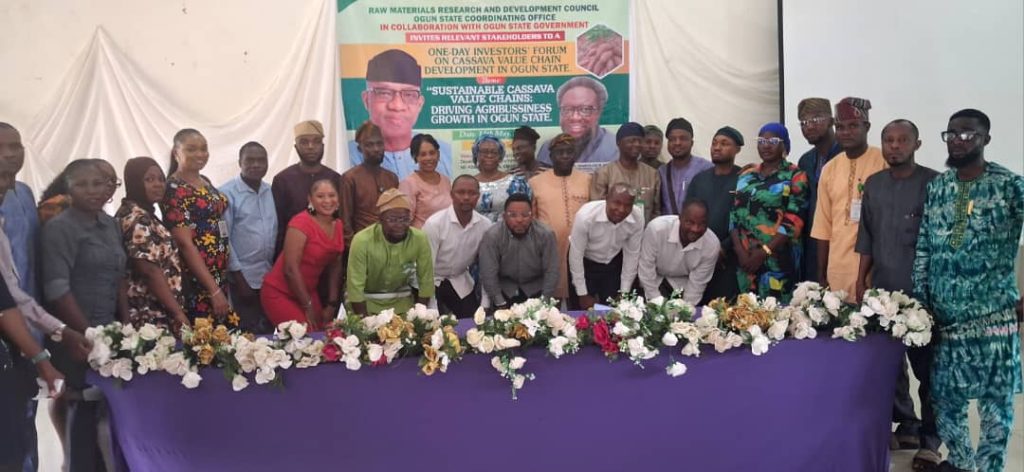
The event featured technical sessions, policy discussions, goodwill messages, and stakeholder engagements aimed at promoting value addition, industrial processing, investment opportunities, and sustainable development within the cassava sector.
Declaring the forum open on behalf of the Commissioner for Agriculture and Food Security, the Programme Manager of OGADEP, Mrs. Sobukola Adewole, described the gathering as timely, noting that cassava remains a strategic crop capable of boosting food security, industrialization, and job creation in Ogun State.
You Might AlsoLike



According to her, the state possesses significant comparative advantages in cassava cultivation and processing due to its fertile land, strategic geographical location, and growing industrial base.
Delivering the welcome address on behalf of the Director-General and Chief Executive Officer of RMRDC, Professor Nnanyelugo Ike-Muonso, Dr. (Mrs.) Edith Obi said the forum was designed to strengthen collaboration among stakeholders in repositioning cassava as a major industrial raw material and driver of economic development.
She observed that although Nigeria remains the world’s largest producer of cassava, the country still imports industrial inputs that could be sourced locally from cassava derivatives.

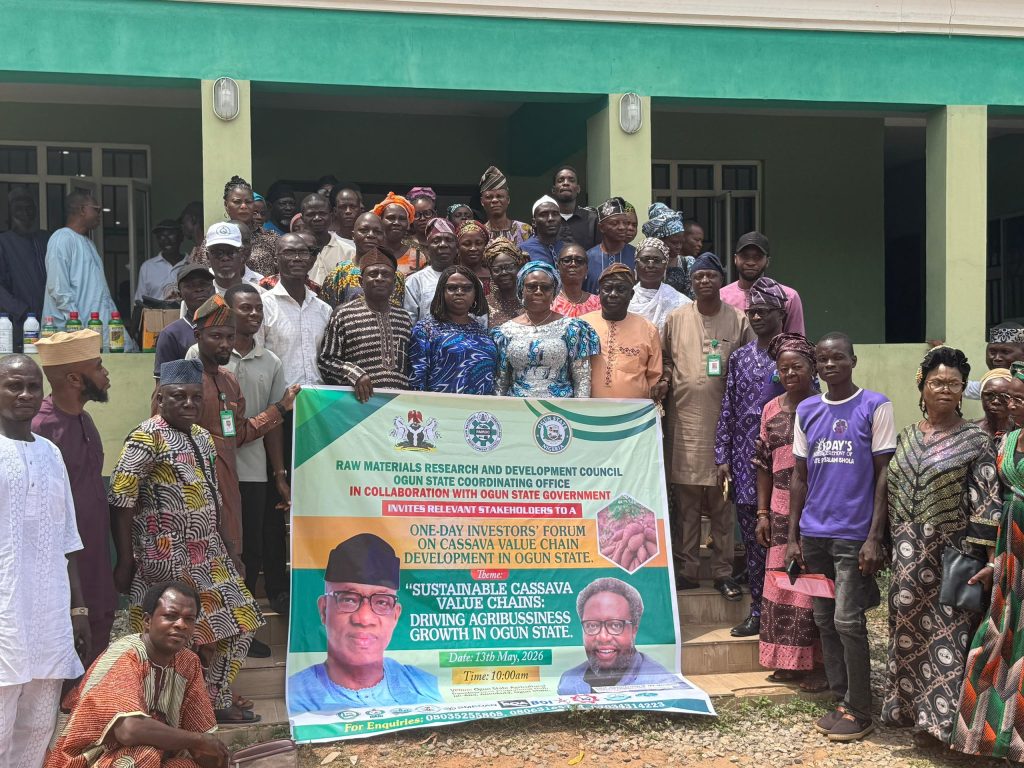
Dr. Obi stressed the need for increased investment in value-added products such as high-quality cassava flour, starch, ethanol, and other industrial materials, noting that expanding local processing capacity would conserve foreign exchange, reduce import dependence, and generate employment opportunities.
She also highlighted the Council’s partnership with the Bank of Industry to support cassava value chain development, improve processing technologies, and reduce post-harvest losses.
Representatives of key agencies, including the Nigerian Export Promotion Council (NEPC), National Agency for Food and Drug Administration and Control (NAFDAC), the Federal Ministry of Agriculture and Food Security, the Cassava Revolution Programme, and the Nigerian Association of Small-Scale Industrialists (NASSI), delivered goodwill messages emphasizing the importance of collaboration, quality standards, export promotion, and sustained investment in cassava processing.
In the keynote address, Professor Olalekan Jacob Olaoye, Director of the Agricultural Media Resources and Extension Centre (AMREC), Federal University of Agriculture Abeokuta (FUNAAB), underscored the importance of coordinated efforts across production, processing, marketing, and industrial utilization of cassava.
He identified mechanization, climate-smart agriculture, access to finance, improved processing technologies, and efficient market systems as critical to sustainable cassava value chain development.
Speaking on post-harvest handling and storage technology, Kehinde Ebenezer of the Ogun State Ministry of Agriculture and Food Security warned that poor storage and transportation practices continue to undermine food security and agricultural profitability in Nigeria.
He advised farmers and processors to adopt immediate post-harvest processing methods to reduce spoilage and preserve product quality.
Also speaking, the Managing Director of SONMAUYEK Global Nigeria Limited, Timothy Aina, who presented a paper titled “Cassava to Cash: Unlocking Value Across the Cassava Value Chain,” lamented that Nigeria still imports substantial quantities of starch, glucose, and ethanol despite its huge cassava output.
He called for stronger investment in processing infrastructure, hygienic production systems, and value addition to improve competitiveness, increase exports, and create jobs for youths.
In his closing remarks, the Ogun State Coordinator of RMRDC, Mr. Rabiu Basiru Olawale, commended stakeholders and participating institutions for their contributions to the success of the forum.
He expressed confidence that the engagements and partnerships forged during the programme would stimulate investments, strengthen agro-industrial development, and promote sustainable economic growth in Ogun State and across Nigeria.
Top of Form
Bottom of Form