By Stella Azi, Nafisat Abdulraham and Najeeb Suleiman
In Nigeria’s drive toward industrial growth and value addition in raw materials, a critical question is increasingly coming to the fore: how safe are the processes and substances that underpin this transformation? At the forefront of addressing this concern is the Toxicology Information Centre (TIC), an initiative of the Raw Materials Research and Development Council (RMRDC), which is steadily redefining the intersection between industrial development and public health safety.

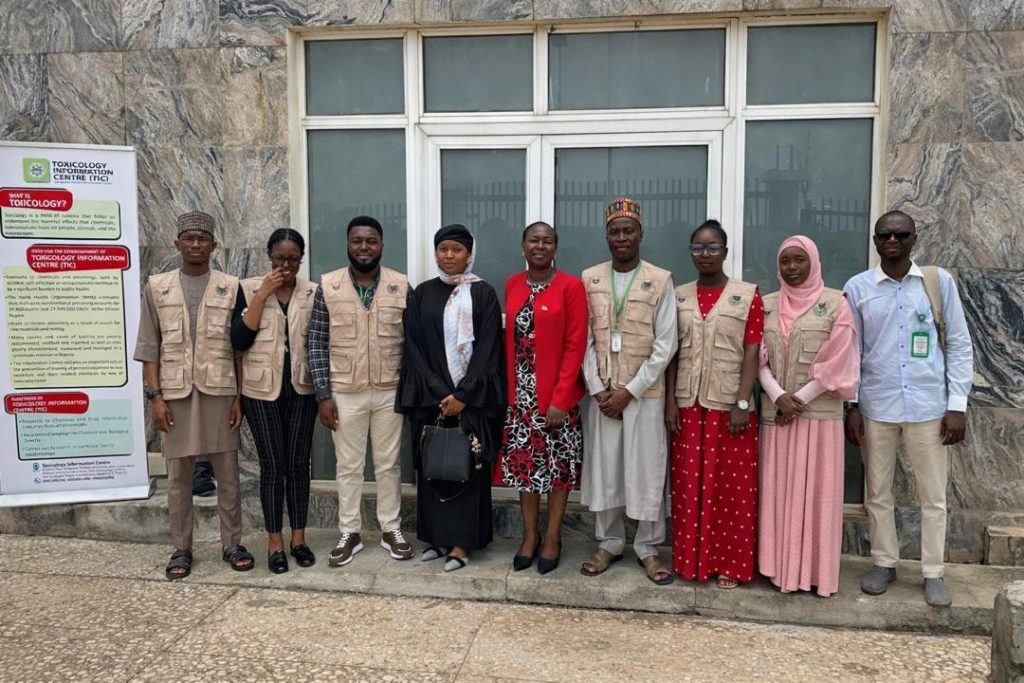
Established on December 19, 2023, and situated at the Complex of the African University of Science and Technology (AUST), Abuja, the Council’s TIC represents a strategic response to the growing need for structured toxicological intelligence in Nigeria. While RMRDC’s mandate traditionally emphasizes promoting the development and utilization of local raw materials, the creation of the RMRDC – TIC signals a more holistic vision; one that prioritizes not only economic advancement but also human and environmental well-being.
Bridging a Critical Knowledge Gap
Toxicology, the science of understanding the harmful effects of chemicals on humans, animals and the environment, remains a highly specialized field. In practice, even experienced healthcare professionals are not expected to possess exhaustive knowledge of the toxicity of every chemical substance. This reality stresses the importance of a dedicated office like the RMRDC – TIC, equipped with experts in toxicity management.
You Might AlsoLike




According to the CEO/Director General of RMRDC Prof. Nnanyelugo Ike-Muonso, the risks associated with raw material exploration and processing are often overshadowed by the push for industrial output. “There is a strong focus on converting raw materials into finished products,” he explained, “but insufficient attention is paid to the potential health and environmental consequences of exposure to hazardous substances.” Thus the establishment of the RMRDC Toxicology Information Centre.
The DG represented by the Head of the Centre, which is directly under the supervision of the DG’s Office, Mr. Isah Hussaini, informed that the TIC was therefore conceived to fill this gap—serving as a centralized hub for toxicological information, research, and advisory services. Importantly, it does not function as a hospital, rather, it provides evidence-based guidance to individuals, researchers and healthcare professionals dealing with suspected poisoning or chemical exposure.
A Pillar for Public Health Surveillance

Globally, poison centres play a vital role in implementing the International Health Regulations (2005), which require countries to develop capacities for detecting, assessing and responding to public health risks, including those arising from chemical exposure. The RMRDC-TIC is Nigeria’s contribution to strengthening this framework.
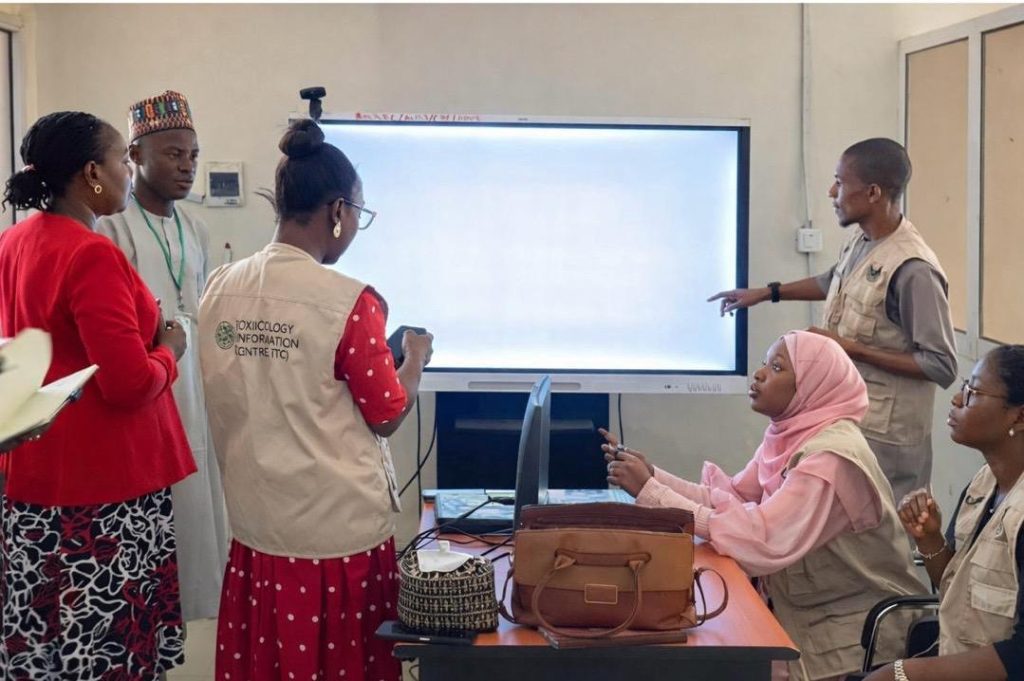
Explaining operational processes to the DCA team during the visit.
Similarly, the Centre has contributed to response strategies for lead poisoning in Ogun State and provided guidance during carbon monoxide poisoning incidents in Plateau State, demonstrating its growing relevance in national health emergencies.
Data-Driven Insights and Emerging Trends
At the heart of the Centre’s operations is a robust data collection and analysis system. Every enquiry and reported cases are documented, capturing key variables such as the substance involved, route of exposure, symptoms, and treatment recommendations.
According to Mr. Imran Suleiman, who heads the Data Analysis and Documentation Unit, this information is not only archived but actively analysed to identify trends and risk patterns. These insights inform treatment protocols, guide public health interventions and support policy formulation.
Since inception TIC has responded to lot of calls ,in the year 2025 alone the Centre has handled 117 calls, reflecting both emergency consultations and general enquiries. Analysis of 2025 data reveals that pesticides and herbicides account for the highest proportion of cases at 21.4 percent, followed by general enquiries at 20.5 percent. Pharmaceutical-related exposures represent 14.5 percent, while chemicals and household products each account for 12.8 percent.
These figures highlight a critical reality: beyond industrial settings, everyday substances, ranging from medications to cleaning agents, pose significant risks when misused or improperly handled.
Real-Life Impact: A Case in Point
During a recent visit to the Centre by members of the RMRDC Media crew led by Mrs. Stella Azi, a live case underscored the Centre’s practical relevance. A patient with long-standing symptoms including: itching, hair loss, fatigue, blurred vision, and accelerated aging, sought guidance after unsuccessful prior treatments. Suspecting possible environmental exposure to heavy metals, the case was carefully assessed by TIC’s medical team, with further investigations recommended before definitive conclusions could be drawn.
This measured, research-driven approach reflects the Centre’s commitment to accuracy and patient safety, even in complex and uncertain cases.
Building Capacity for the Future
Recognizing that expertise is the backbone of effective toxicology services, the RMRDC has invested heavily in capacity building for staff of the toxicology centre. Staff have undergone specialized training at the Tygerberg Poison Information Centre in Cape Town, participated in regional knowledge-sharing platforms, and engaged in continuous professional development through webinars and case reviews.
Notably, four staff members are currently enrolled in a Postgraduate Diploma in Medical Toxicology at Stellenbosch University, South Africa—an investment that is expected to significantly enhance the Centre’s technical capabilities.
Strategic Partnerships Driving Growth
Collaboration remains central to the TIC’s operational model. At the national level, it works closely with the Federal Ministry of Health, Federal Ministry of Environment, and the NCDC, contributing to the National Committee on Chemical Surveillance and Emergency Systems.
Internationally, partnerships with institutions such as the Tygerberg Poison Information Centre, the United Kingdom Health Security Agency (UKHSA), and the National Poison Information Service Royal infirmary of Edinburgh UK have provided critical technical support especially in the provision of database such as the TOXBASE and AFRITOX and also assisted in knowledge exchange.
These alliances have not only strengthened the Centre’s operational capacity but also positioned it within a global network of toxicology expertise.
A Strategic Asset for National Development
As Nigeria continues to expand its industrial base, the importance of institutions like the RMRDC Toxicology Information Centre cannot be overstated. Beyond responding to poisoning cases, the Centre serves as a repository of knowledge, a hub for research, and a critical tool for safeguarding public health.
By integrating scientific research, data analysis, training and multi-level collaboration, the TIC is helping to ensure that the nation’s pursuit of economic development does not come at the expense of human health or environmental sustainability.
In a landscape where chemical exposure risks are both diverse and evolving, the RMRDC’s Toxicology Information Centre stands as a timely and forward-looking intervention—one that underscores the simple but powerful principle that progress must be safe, informed and sustainable.