By Olufadi Halima and Abdulrahman Nafisat
The Raw Materials Research and Development Council (RMRDC) in collaboration with the Tropics Derma Research and Training Institute (TDRTI) has convened a two-day stakeholder engagement on the Draft National Policy on Innovation and Technological Advancement in the Cosmetics and Skincare Sector, to strengthen local production, regulation, and research within the industry. The workshop which held from 6th to 7th November, 2025, at the Council’s headquarters in Abuja, brought together experts, policymakers, researchers, ministries, agencies, and private sector players to deliberate on the proposed framework for a national skincare policy.

The two-day engagement was a collaboration of the department of Chemical and Pharmaceutical Development of the Council, and the Tropics Derma Research and Training Institute (TDRTI) aimed at promoting skincare development in Nigeria, reflecting RMRDC’s continued commitment to strengthening Nigeria’s skincare and cosmetics value chain through research, innovation, and effective coordination.
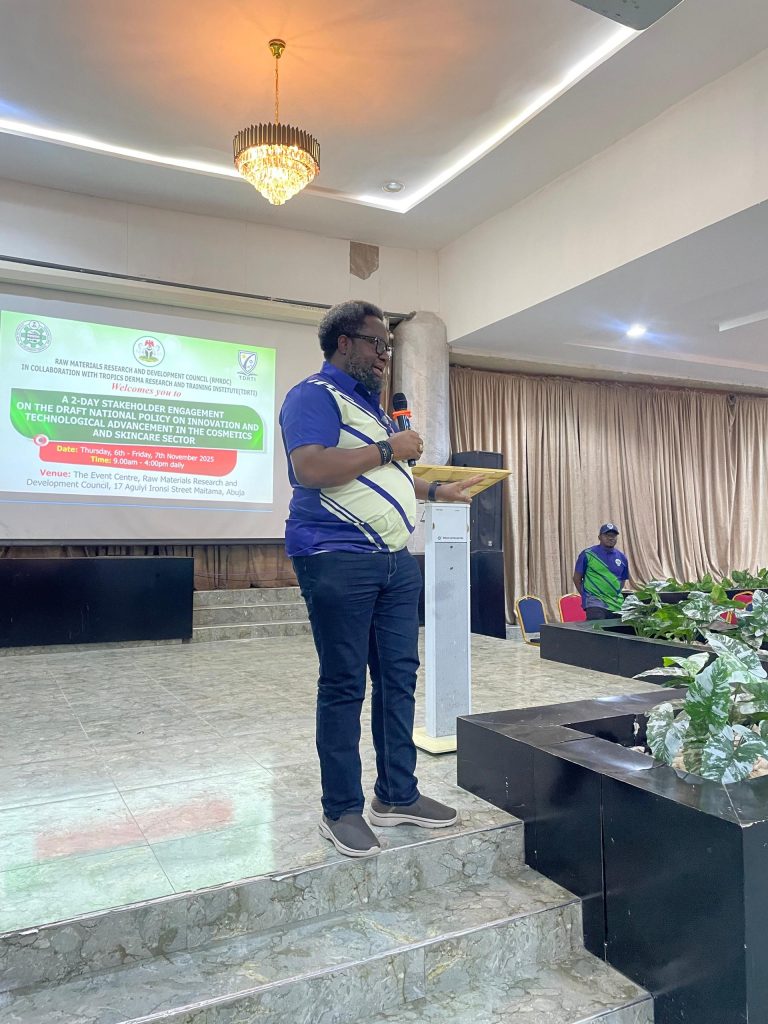
In his opening remarks, Director-General, RMRDC, Professor Nnanyelugo M. Ike-Muonso, commended the TDRTI for conducting a nationwide skin analysis to determine common skin types and challenges faced by Nigerians and Africans. He noted that such scientific assessments are crucial to developing a national policy that addresses local realities and promotes the use of indigenous raw materials. The DG also expressed appreciation to TDRTI for its consistent efforts and contributions toward advancing skincare innovation in Nigeria.
Also speaking, Founder and Chairman, TDRTI, Dr. Edith Gibson, stated that at least one person in every Nigerian household has used or abused a toxic skincare product. According to her, the abuse is not necessarily because users believe lighter skin is superior, but often due to genuine concerns such as hyperpigmentation and uneven skin tone, for which most available treatments are bleaching products that eventually cause multi-coloration of the skin. She described cosmetics as one of the most commonly used commodities in the country.
You Might AlsoLike




Dr. Gibson emphasized that the proposed policy is not intended to regulate cosmetics directly but to foster innovation in the sector, encouraging the development of products suited to Nigeria’s tropical environment. According to her, this is the first time the cosmetics industry is taking a deliberate, research-based approach to addressing skincare needs specific to African demographics. She added that the nation possesses all the raw materials necessary to manufacture products such as soaps, toothpaste, and lotions locally.

Delivering a presentation on Research, Monitoring, Evaluation, and Call to Action, the facilitator, Mr. Emmanuel Evbodaghe highlighted the current state of Nigeria’s domestic cosmetics industry, noting that the use of substandard skincare products and non-performance cosmetics continues to exacerbate skin diseases, with many products containing harmful carcinogenic substances that pose serious health risks. He described the alarming prevalence of skin bleaching in Nigeria as a “national epidemic,” referencing its recognition by the World Health Organization (WHO) and stressing the urgent need for policy-backed intervention.
In his presentation on the Policy Vision – Implementation Plan, Mr. K. Ajoku emphasized that skincare diseases are a significant health concern in Nigeria, worsened by the use of substandard products. He cited WHO data showing that 77% of Nigerian women use skin-lightening products, underscoring the urgency for a national approach tailored to the country’s tropical climate. The proposed policy aims to strengthen healthcare capacity, regulate product standards, raise public awareness, establish treatment protocols, and improve dermatological training and infrastructure nationwide.

The day two of the workshop featured structured breakout sessions designed to validate policy components and co-develop actionable recommendations across key thematic areas. Participants were assigned to three working groups: Research, Development and Innovation; Regulatory Frameworks and Standards; and Industry Development, MSME Support, Monitoring and Evaluation, and Policy Sustainability. Each group nominated a representative to present its outcomes to the plenary.
Speaking on behalf of the Nigerian Association of Dermatologists, the representative of the Chairman Nigerian Association of Dermatologists Dr. Zainab Babba, who also represented the chief of army staff, commended RMRDC and TDRTI for convening the two-day engagement, noting that it opened meaningful avenues to address challenges in the skincare sector. She also thanked Mr. Kollere for hosting the workshop and for bringing together key agencies to discuss and tackle sector issues, adding that she felt fulfilled to be part of the gathering.
Also present at the stakeholders’ engagement were delegates from Cameroon, Uganda, National Agency for Food and Drug Administration and Control (NAFDAC), National Environmental Standards and Regulations Enforcement Agency (NESREA), Standards Organisation of Nigeria (SON), Manufacturers Association of Nigeria (MAN), Federal Competition and Consumer Protection Commission (FCCPC), National Open University of Nigeria (NOUN), and the Federal Ministry of Environment, among others.