By Salifatu Guuruza and Amira Zakari
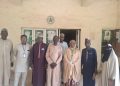
In its continued effort to deepen collaboration with industries and promote the development of Nigeria’s raw materials sector, the Raw Materials Research and Development Council (RMRDC), Plateau State Office, paid an industrial visit to Shafsinco Nigeria Limited. The delegation, led by the State Coordinator, Mrs. S. Guruza, was warmly received by the company’s Director, Mr. Shafi’u Adamu.

In her remarks, Mrs. Guruza introduced the Council and explained that the purpose of the visit was to familiarize with the company’s operations, understand its challenges, and explore possible areas of collaboration. She emphasized that the visit was not for tax-related purposes but rather to build sustainable partnerships that could support industrial growth through research, innovation, and development.
Mr. Adamu, while welcoming the team, provided an overview of the company’s background and operations. He explained that Shafsinco Nigeria Limited, established in 2022 with its headquarters in Bauchi State, specializes in the separation and processing of solid minerals, particularly iron, monazite, and zircon sourced from various states including Bauchi, Katsina, Zamfara, Taraba, and Adamawa.
According to him, the company currently employs over 100 direct and indirect workers in its Jos branch alone, with a total workforce of about 500 employees nationwide, thereby contributing significantly to job creation and economic empowerment.
You Might AlsoLike



He observed that Shafsinco’s operations focus on identifying minerals, determining their quality through analysis, and separating valuable elements such as thorium, cerium, and lanthanides, key materials used in the production of magnets and other high-tech applications. He explained that the company sources raw materials mainly from Malcon Mines and other licensed miners across Nigeria, and also provides mineral separation services to private miners at affordable rates.
During the visit, Mr. Adamu showcased some of the machines used in the company’s production line, including: Separator Machine, Air Float Machine, a locally fabricated machine and Explorer Machine.
Despite its notable progress, Mr. Adamu highlighted several challenges confronting the company, among them being high taxation, with annual payments exceeding ₦5 million, and irregular power supply, which limits production to about eight hours of electricity per day despite operating a 24-hour schedule. He also pointed out the absence of local processing plants for certain minerals, such as lithium, which constrains value addition and limits Nigeria’s industrial potential.

He therefore appealed for government intervention, urging policies that would discourage the exportation of unprocessed solid minerals and encourage foreign investors to establishprocessing plants within Nigeria. According to him, such policies would enhance industrial growth, generate employment, and strengthen the national economy.