By: Stella Azi, Seyi Otitoju
The Raw Materials Research and Development Council (RMRDC) has been a driving force behind Nigeria’s quest for industrialization and economic development. The Council has worked tirelessly to promote the development and utilization of the country’s abundant raw materials resources; one of such effort is the Amendment of the RMRDC Act 2022 Bill currently before the National Assembly. The Bill which has attracted an overwhelming stakeholders’ backing, has positioned the Council on the verge of a major breakthrough.

The RMRDC Bill proposed by Senator Peter Onyekachi Nwaebonyi, which aims to ensure local processing of at least 30% of Nigeria’s raw materials before exportation, has been a long anticipated one. Its passage will mark a significant milestone in the country’s efforts to diversify the economy and reduce over dependence on imported goods. The Value Addition Bill is designed to promote the development, utilization, and value addition to Nigeria’s abundant raw materials resources. The passage of the Bill will foster a vibrant raw materials sector, drive economic growth, create jobs, and stimulate industrialization.
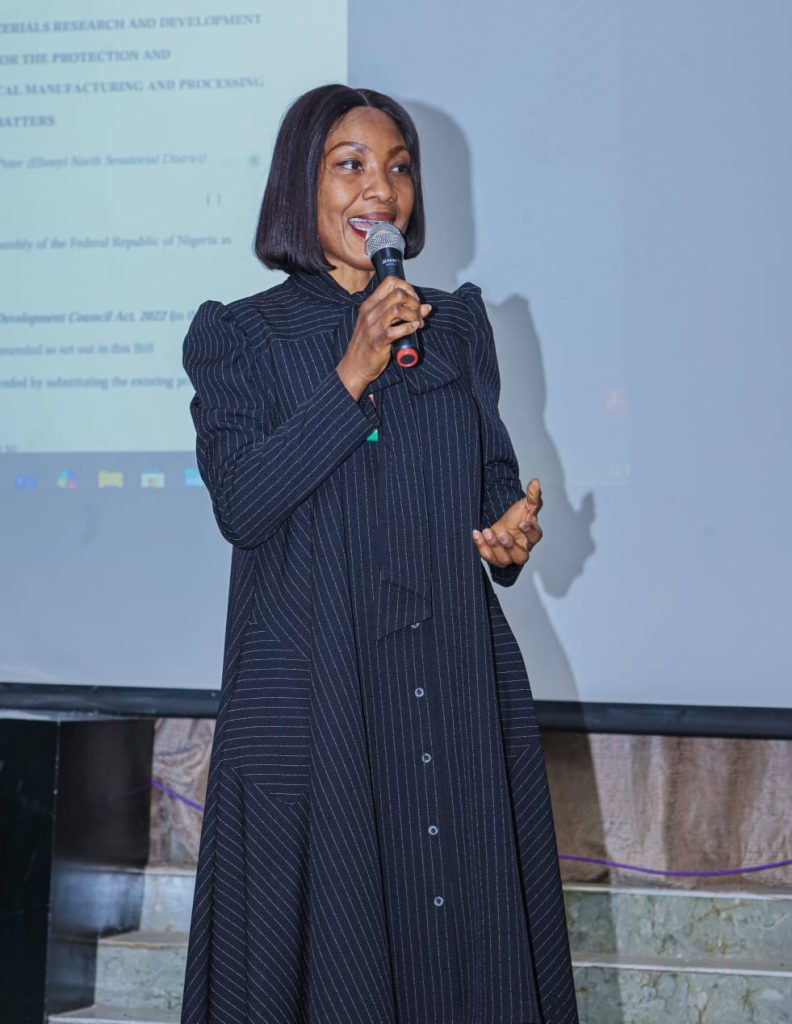
It is no surprise that it was a momentous moment when the legislative Bill received overwhelming support from stakeholders during the public hearing organized by the Senate Committee on Science and Technology, held on Wednesday, March 5, 2025, at the premises of the National Assembly. This is a testament to the Council’s tireless efforts to promote the benefits of value addition, galvanized by the visionary leadership of the present Director General Prof. Nnanyelugo Martin Ike-Muonso, an astute administrator of great repute, a transformer, whose determination to build a solid raw materials base and a sustainable indigenous industrial sector for Nigeria is unwavering.
Prior to the Public Hearing on the value addition Bill, the Council took a significant step in its advocacy. It hosted a successful stakeholders’ sensitization and interactive session. The session brought together diverse group of about 28 stakeholders in raw materials processing, development and utilization, covering both the public and private sector. The Director, Directorate of Legal and Board Services Barr. Ngozi Keshi took the attendees through a well-articulated interpretation of the bill, including its implications on the Council and on the national economy.
You Might AlsoLike



The exercise provided a platform for discussions, clarifications, and consensus-building around the bill’s objectives and benefits to the nations’ economy. The sensitization exercise yielded huge support for the bill, demonstrating the sector’s enthusiasm for Nigeria’s economic development and industrialization.
Earlier in his remark, during the sensitization session, the DG RMRDC had empathically noted that the bill, when passed, will redefined a future for Nigeria.
“For Nigeria not to be free from neo-colonialism through the imbalance of trade of its raw material will result in a future bereft of any opportunities for the youths and its posterity”.
The DG pointed out that, “The Bill is not just about the Council, or the manufacturing industries in Nigeria alone, but it will also protect and provides financial independence to the citizens.
The Raw Materials Value Addition Bill is a critical piece of legislation that will help unlock the potential of Nigeria’s raw materials sector. Its passage will create jobs, stimulate economic growth, and reduce poverty”, he added.

It is pertinent to note that the benefits of the Bill are numerous. By promoting the value addition of raw materials, Nigeria can increase its export earnings, improve balance of trade, and reduce reliance on imported goods. The bill will also create opportunities for small and medium-scale enterprises, which are the backbone of the Nigerian economy. According to the DG, RMRDC will not rest on it oars, it will continue to make significant strides to building a vibrant national economy, even as it eagerly awaits the passage of the Raw Materials Value Addition Bill.