By Muhammad Yunus, Alfaya Jibrilla, Muhammad Umar and Hajara Bomai
The Raw Materials Research and Development Council (RMRDC), Borno State Coordinating Office, has identified the urgent need for indigenous fabrication of modern roofing sheet machinery as part of efforts to strengthen local manufacturing capacity, promote value addition, and reduce Nigeria’s dependence on imported roofing products.

The recommendation emerged during a courtesy and technical troubleshooting visit to Azam Aluminum Company, a leading producer of aluminum and steel roofing sheets in Borno State.
The visit, led by the RMRDC Borno State Coordinator, Mohammed Yunus Ibrahim was aimed at assessing the company’s operations, evaluating its raw material utilization practices, examining the level of technology deployment, and identifying challenges affecting local production and industrial growth.
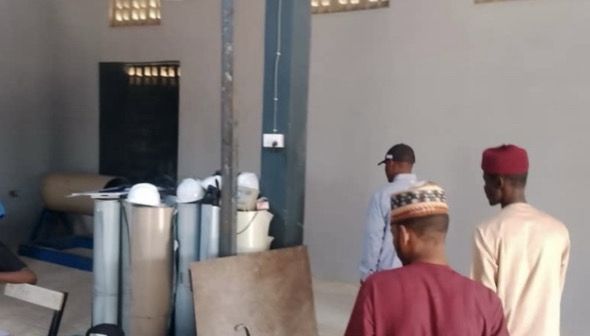
During the inspection, the RMRDC team observed that the company relies largely on locally sourced scrap metals, including steel, iron waste, and aluminium scraps, as its primary raw materials. These materials are compressed and transported to recycling facilities in southern Nigeria, where they are processed into flat aluminium and aluminium-iron sheets before being returned to the northern region for fabrication into roofing products.
You Might AlsoLike




The manager of the company, Mr Zubairu Adamu Malgwi, disclosed that it currently manufactures only M-panel roofing sheets, a design that is gradually losing market appeal due to changing consumer preferences. Modern S-tile roofing sheets, which have become increasingly popular among homeowners and developers, are still largely imported because the required production machinery is not available locally.
According to Mr Malgwi, nearly 60% of roofing sheets used in Borno State are imported despite the abundance of raw materials within the country. He attributed this challenge to the absence of critical machinery components, particularly dent-forming equipment necessary for the production of S-tile roofing panels.
“Although existing production equipment remains operational, the lack of modern fabrication technology continues to limit the company’s ability to compete effectively in the evolving roofing market,” he stated.

In response to the identified gap, the RMRDC State Coordinator, Mr Mohammed. emphasized the need for reverse engineering and local fabrication of roofing sheet machinery, especially dent-forming components required for modern roofing designs.
He noted that developing such equipment locally would reduce import dependence, lower production costs, encourage local value addition, and stimulate job creation within Borno State and beyond.
According to him, the findings underscore the significant opportunity for technological intervention, which aligns with RMRDC’s mandate of promoting indigenous technology development and the optimal utilization of Nigeria’s raw material resources.
The state coordinator reaffirmed the Council’s commitment to supporting local industries through research, technical collaboration, and initiatives aimed at enhancing the competitiveness of Made-in-Nigeria products while advancing the nation’s industrialization agenda.
The visit provided valuable insights into the operational and technological challenges facing indigenous roofing manufacturers and highlighted the critical role of innovation and local technology development in driving industrial growth.