
By Adaora Adibe
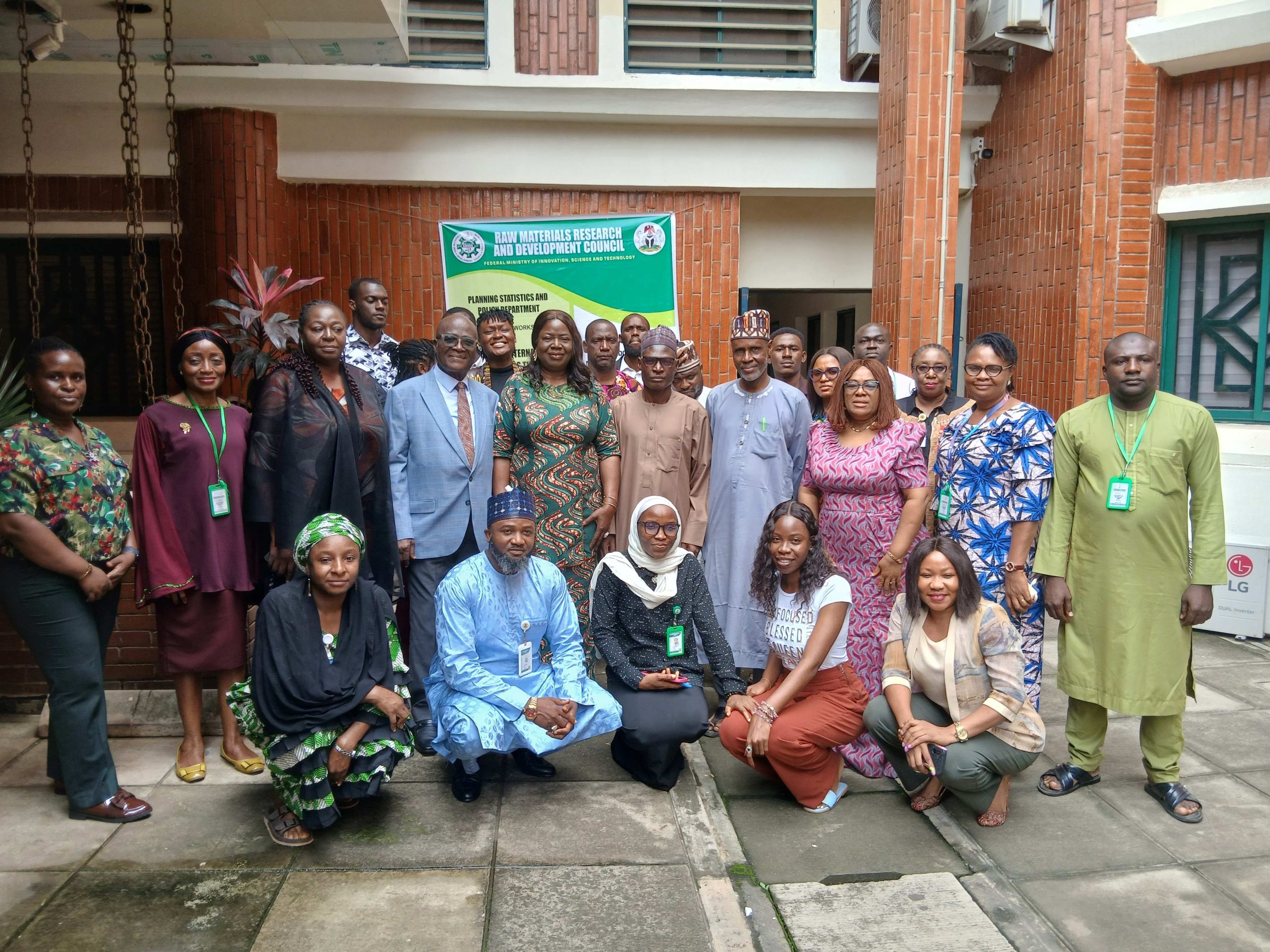
In an effort to progress with the vision of the Director General of the Raw Materials Research and Development Council (RMRDC), Prof. Nnanyelugo Ike-Muonso, in repositioning the Council for global impact, the Planning, Statistics and Policy Department (PSPD) held a capacity building workshop with the theme: Enhancing International Partnership Through Strategic Engagement.

Presenting the opening remarks, Deputy Director, Local and International Collaborations, Dr Oluremi Elusoji, welcomed participants to the capacity-building workshop, stating that the training is both timely and strategic. She stated that the global landscape is evolving, and it is increasingly clear that no nation or institution can operate in isolation. She noted that Collaboration, especially international collaboration, is not a luxury; it is a necessity.
She emphasised the mission of RMRDC to promote sustainable industrial growth in Nigeria, which is intricately linked to how effectively we engage with the global community. This includes fostering partnerships for knowledge exchange, joint research, technology transfer, and innovation, all of which are critical drivers of development in the raw materials sector.
“This workshop reflects our commitment to strengthening institutional capacity, both internally and externally, so that we can engage more meaningfully with international stakeholders. It is also an opportunity to align our strategies, sharpen our engagement skills, and build the competencies necessary for forming and sustaining impactful global partnerships”, she stated.
You Might AlsoLike


She commended RMRDC management for supporting this initiative and urged participants to engage and cover all the training areas.
The Director, Planning, Statistics and Policy Department, Mrs Rachel Kotso, during her welcome address, charged staff to engage efficiently in the training. She said learning is critical and transforms one’s mental understanding.
Mrs Kotso followed immediately with her paper presentation on: “Protocol and Ethics of Engagement with the Diplomatic Community.” The presentation emphasised the critical role that proper diplomatic conduct and ethical standards play in fostering productive international relationships.

She outlined key principles guiding interactions with diplomats, including adherence to established protocol procedures, respect for diplomatic norms under international law, and the importance of discretion and cultural sensitivity. The paper further highlighted the strategic importance of protocol in promoting Nigeria’s image, national interest, and cooperation with foreign missions.
In stressing the need for professionalism, the Director called for continuous training and awareness among government and institutional representatives who interface with the diplomatic corps. The session was well-received and served as a valuable guide for strengthening ethical and effective diplomatic engagement.
Dr Aluko delivered an insightful paper titled “Enhancing International Partnership Through Strategic Engagements.” The presentation focused on the pivotal role of deliberate and well-coordinated international collaborations in advancing national development goals, particularly in the raw materials and industrial sectors.
He emphasised that strategic engagement requires a proactive approach, including clear policy frameworks, mutual respect, and alignment of national interests with global opportunities. He highlighted best practices for fostering sustainable partnerships, such as leveraging diplomatic channels, engaging in technology transfer, and building trust through transparency and professionalism.
The paper also stressed the importance of institutional readiness, capacity building, and continuous dialogue with international partners. Dr Aluko’s contribution offered a practical roadmap for RMRDC and other stakeholders to strengthen global ties and attract meaningful investment and technical cooperation for national industrial growth.
The Director Infrastructure Management Department/ICT, Mr. Gimba presented a compelling paper focused on the critical role of technology and digital collaboration in strengthening cross-border cooperation.
Mr. Gimba emphasized that in an increasingly interconnected world, digital tools and platforms are no longer optional but essential for meaningful international engagement. His paper explored how emerging technologies, such as cloud computing, digital communication frameworks, and secure data-sharing systems, can drive more efficient, transparent, and scalable partnerships between governments, institutions, and development partners.
He also highlighted practical case studies where digital collaboration has improved policy alignment, accelerated knowledge exchange, and enabled real-time coordination during humanitarian and development initiatives. According to Mr. Gimba, strategic investment in digital infrastructure and skills development is fundamental to unlocking the full potential of international partnerships.
At the end of the two-day training, which included a rigorous practical teamwork exercise, participants expressed deep appreciation for the quality and relevance of the sessions, describing the experience as both enlightening and impactful.
Many highlighted the training as a timely intervention that broadened their understanding of global best practices, enhanced their professional competence, and equipped them with the necessary tools to represent RMRDC more effectively on the international stage. They noted that the knowledge gained would significantly improve their approach to diplomatic interactions and contribute to fostering stronger international partnerships.
Presenting the vote of thanks, the Assistant Director, Local and International Collaboration, Ms U C. Chukwu, appreciated everyone for the successful outcome of the training. She also thanked the Director General, Prof. Nnanyelugo Ike-Muonso, for giving the department the invaluable opportunity to participate in such a timely and impactful training. She also extended gratitude to the resource persons for delivering insightful and practical presentations that have broadened the understanding of protocol, ethics, and international engagement strategies.