
By Moyofoluwa Ogunyemi
The Raw Materials Research and Development Council (RMRDC) has been formally acknowledged as a critical stakeholder in advancing research-based value addition and export-oriented industrialization in Nigeria, spotlighting its growing influence within the national and subnational export promotion architecture.

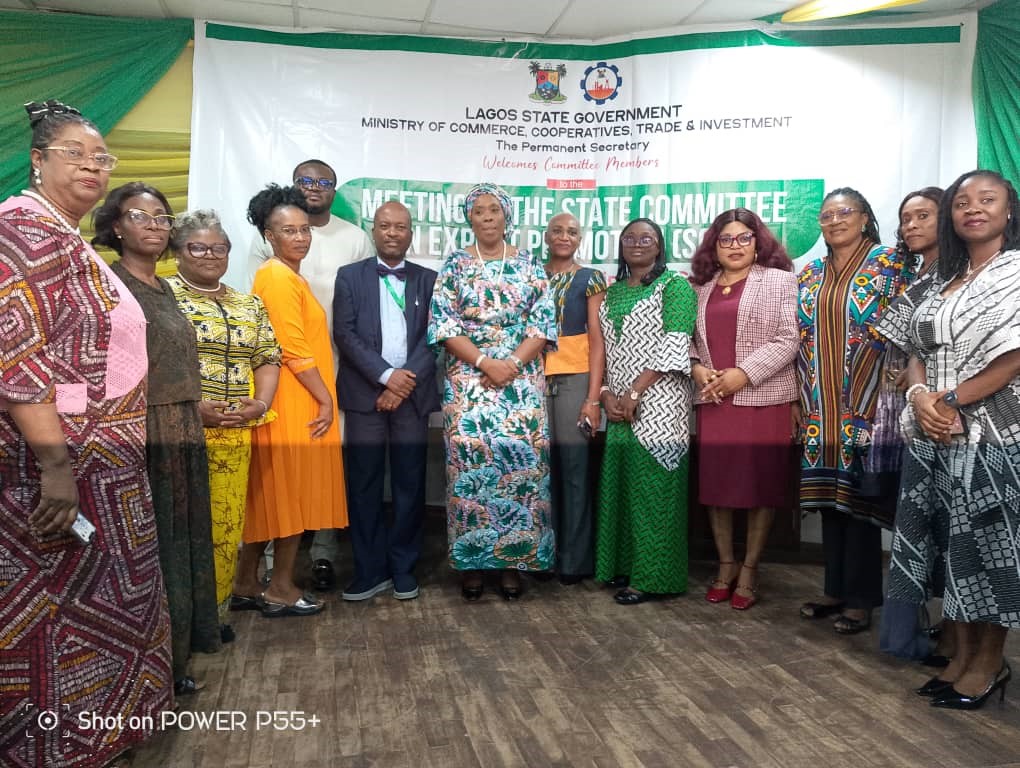
The recognition came during a high-level meeting of the State Committee on Export Promotion (SCEP), jointly convened by the Lagos State Ministry of Commerce, Cooperatives, Trade and Investment (MCCTI) and the Nigerian Export Promotion Council (NEPC). The meeting was held on Wednesday, 29 January 2025, at the Lagos State Secretariat in Alausa, Ikeja, and themed “Strengthening Partnerships for Sustainable Export Growth and Global Competitiveness.”
The event brought together senior government officials and key actors across the export ecosystem to chart a coordinated pathway for strengthening institutional collaboration, addressing persistent export bottlenecks and accelerating Lagos State’s transition to a value-added, non-oil export economy.
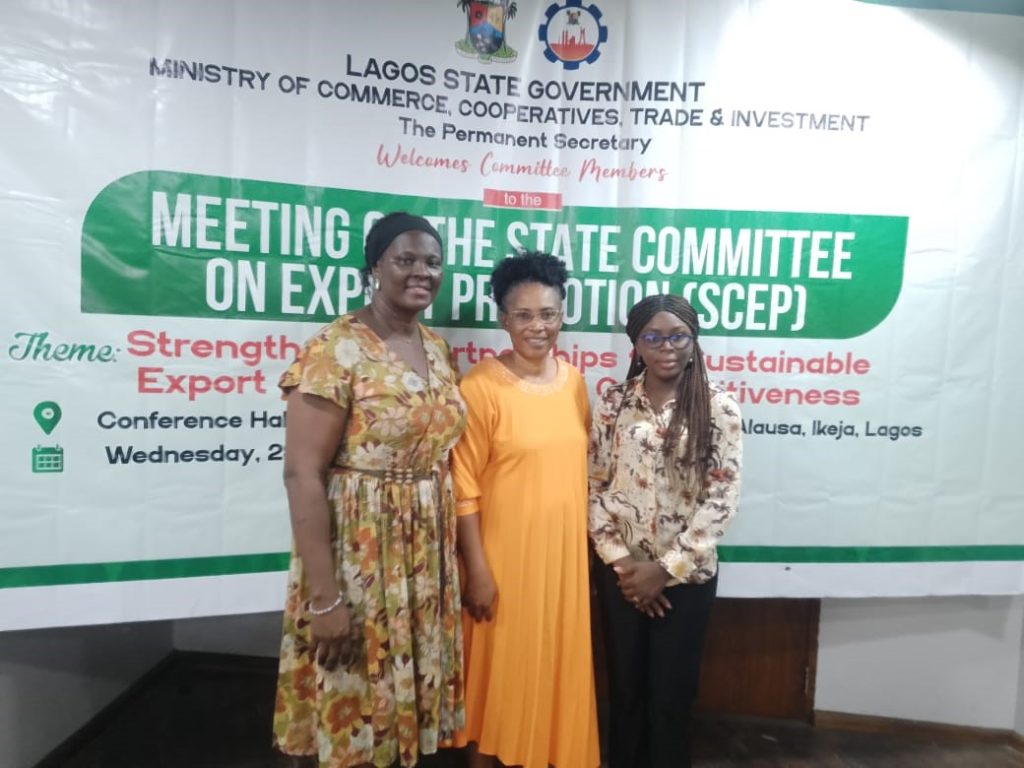
RMRDC’s delegation was led by the Lagos State Coordinator, Assistant Director, Mrs. Uchechukwu Ojiakor, alongside Assistant Director, Mrs. Ebele Nwajuaku and others. Delivering the goodwill message on behalf of the Council, Mrs. Ojiakor reaffirmed the Council’s unwavering resolve to reposition Nigeria from a raw material-exporting economy to one driven by industrial processing and higher-value outputs.
You Might AlsoLike


She highlighted RMRDC’s proposed 30% Value Addition Bill as a landmark policy intervention aimed at curbing the export of unprocessed raw materials and entrenching value addition as a national economic imperative. According to her, sustainable export competitiveness can only be achieved through deliberate local processing, technology deployment, and the systematic transformation of Nigeria’s abundant raw materials into competitive industrial products. Mrs Ojiakor further outlined RMRDC’s interventions in developing processing technologies, supporting industrial clusters, commercializing research outputs and facilitating access to appropriate processing infrastructure across priority agro-industrial value chains.
Earlier, in her welcome address, the Honourable Commissioner for Commerce, Cooperatives, Trade and Investment, Mrs. Folashade Kaosarat Ambrose, emphasized the centrality of value addition and institutional coordination to Lagos State’s global competitiveness ambitions. She outlined ongoing initiatives such as the establishment of a One-Stop Shop for Ease of Doing Business, the development of a Lagos State Export Readiness Master Plan, and Cooperative II, all designed to strengthen the State’s export preparedness. She also highlighted Nigeria’s successful bid to host the Intra-African Trade Fair (IATF) 2027 in Lagos, alongside the forthcoming Cannes X 2026, noting that Lagos State’s contribution of over 30 percent of Nigeria’s Gross Domestic Product places it at the heart of national economic transformation and export expansion.
In a detailed powerpoint presentation, the Regional Coordinator of NEPC, Arc. Benedict Itegbe, noted that while Nigeria’s non-oil exports have recorded sustained growth over the past three years, Nigerian commodities continue to trade at discounts of between 15 and 20 % in international markets. He attributed this gap to limited processing, weak traceability, inadequate certification and poor branding. Addressing these structural challenges, he stressed, would require robust R&D, technology deployment and strong institutional collaboration; areas in which RMRDC plays a pivotal role.

Arc. Itegbe announced plans for a Four-Year Export Strategy for Lagos State, to be implemented through a multi-agency Technical Committee comprising key institutions including RMRDC, Ministry of Commerce, Cooperatives, Trade and Investment, NEPC, the Nigeria Customs Service, NAFDAC, the Central Bank of Nigeria and the Standards Organisation of Nigeria. He explained that the strategy would focus on priority value chains such as coconut, fisheries and vegetables, with emphasis on value addition, cluster-based production, inclusive growth, youth and women participation, and improved access to finance. He added that processing at least 70% of agricultural exports is critical to positioning Lagos State as a leading non-oil export processing hub in Africa. Special attention was drawn to the Value Addition Imperative embedded in the proposed RMRDC Bill 2026, which mandates value addition as a prerequisite for agricultural exports. In alignment with this policy thrust, the EKO-GLOBAL 1.0 initiative integrates value addition requirements across strategic value chains including cocoa, cashew, shea, palm oil, ginger, turmeric, and seafood.
The meeting concluded with a resolution that RMRDC, as a member of the Technical Committee on the Four-Year Export Strategy for Lagos State, would continue to provide technical inputs on exportable raw materials, processing opportunities and research-based industrial solutions to support coordinated export planning and effective policy implementation, further consolidating its position as a cornerstone of Nigeria’s value-added export transformation agenda.