By Bashir Abubakar and Zainab Waziri
The Raw Materials Research and Development Council (RMRDC) has reiterated its commitment to Nigeria’s economic diversification through value addition in the solid minerals and agricultural sectors. Speaking during a sensitization workshop in Gombe State, the Council urged artisanal and small-scale miners to adopt safer mining practices while advocating for a minimum of 30% value addition to raw materials prior to export.

The call was made by the Gombe State RMRDC Coordinator, Engr. Abdullahi G.D., during a one-day sensitization workshop themed “Safe Mining and the Seven-Point Agenda of the Federal Ministry of Solid Minerals Development.” The event was jointly organized by the Federal Ministry of Mines and Solid Minerals Development and the Solid Minerals Development Fund (SMDF).
Engr. Abdullahi emphasized that value addition is central to wealth creation, job generation, and industrial growth. He noted that with robust support from the SMDF and effective implementation of backward integration strategies, the country can unlock the full potential of its mineral resources.
“Achieving 30% value addition before export is not only feasible but necessary if we are to position Nigeria as a competitive player in the global minerals market,” he stated.
You Might AlsoLike


The workshop brought together key stakeholders, including artisanal miners, mining cooperatives, regulatory agencies, and representatives from sister organizations, all of whom commended RMRDC’s advocacy. Participants pledged to collaborate with RMRDC and other relevant institutions to promote value addition, improve safety standards, and align with the national policy direction.
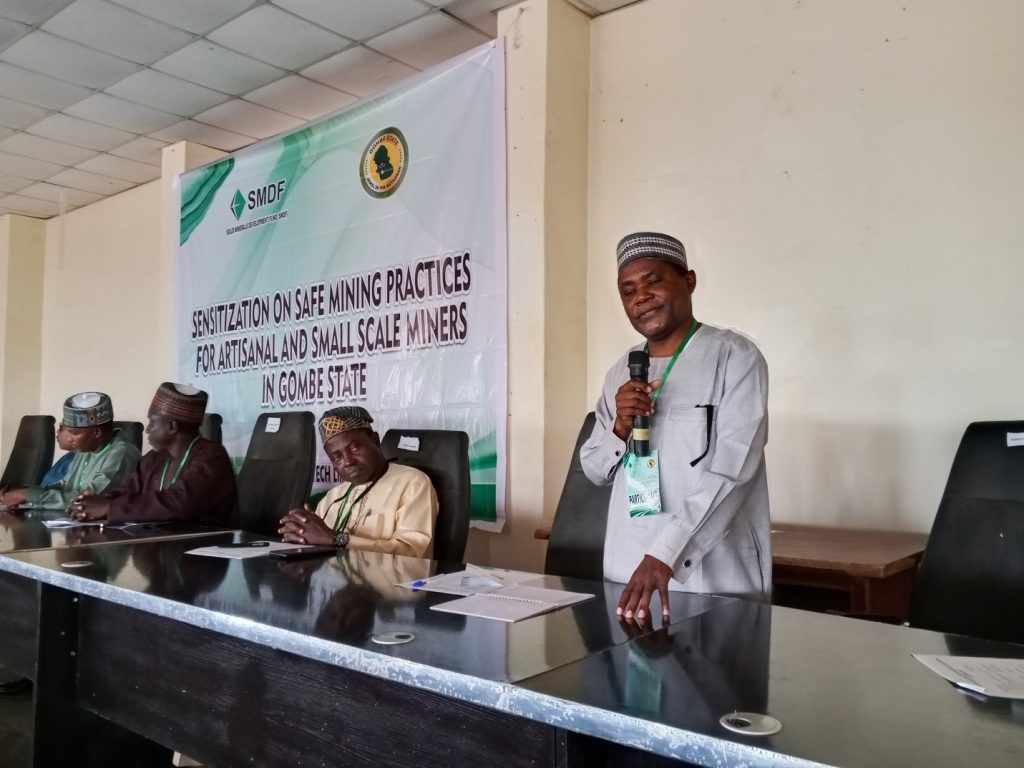
Delivering the opening remarks on behalf of the Executive Secretary of SMDF, Hajiya Fatima Shinkafi, Mr. Mohammed A. Ibrahim, Head of Procurement at SMDF, outlined the Fund’s broad mandate to facilitate the sustainable development of Nigeria’s solid minerals sector. He stressed that SMDF is actively engaging artisanal miners through awareness campaigns on safe mining practices and the Federal Government’s Seven-Point Agenda for the sector.
“Our objective is to support the government’s vision of a mineral sector that is economically, environmentally, and socially sustainable,” Mr. Ibrahim said. “This stakeholder engagement is a crucial step toward achieving that goal,” he stated.

According to the SMDF, the initiative aims to transform informal artisanal mining operations into a structured and formalized industry, thereby improving safety, accountability, and productivity. The forum also provided an opportunity for stakeholders to share ideas and develop strategies that align with international best practices in mining and resource management.
The workshop highlighted the importance of long-term strategic planning, emphasizing the need to attract both local and international investors by restoring market confidence and showcasing Nigeria’s commitment to reforming the solid minerals value chain.
As Nigeria seeks to diversify its economy away from oil dependency, platforms such as this workshop are seen as pivotal in reshaping the solid minerals sector into a driver of inclusive and sustainable economic growth.