By Umar Salihu and Abdullahi Nasir
The Raw Materials Research and Development Council (RMRDC) has intensified its call for strategic reforms to strengthen Nigeria’s export ecosystem, following the identification of critical infrastructural and data gaps by the Niger State Committee on Export Promotion (SCEP).

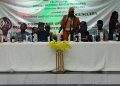
The concerns were raised during the Committee’s First Quarter Meeting held at the Niger State Chamber of Commerce Trade Fair Complex, Shango, Minna, where stakeholders highlighted operational inefficiencies constraining export growth.
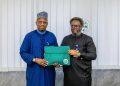
The Director General, RMRDC, Prof. Nnanyelugo Ike-Muonso, represented by State Coordinator, Dr. Abdulrasheed Mohammed, RMRDC, a key member of the Committee, led advocacy for urgent and coordinated reform actions. Abdulrasheed called for the adoption of a comprehensive, data-driven export framework anchored on proper documentation, performance-based ranking of exporters, and enhanced inter-agency coordination. Emphasising the need for direct engagement with the newly appointed Honourable Commissioner for Commerce, Industry and Cooperatives to strengthen policy alignment and institutional support.
The meeting, chaired by the Permanent Secretary, Ministry of Industry, Trade and Investment and Private Sector Development, Mrs. Helen Williams Umaru, brought together representatives from government agencies and the private sector to review progress and develop a more results-driven export strategy.
You Might AlsoLike

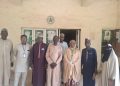

Deliberations focused on persistent structural challenges affecting export infrastructure, particularly the underutilisation of commodity cleaning centres across the state. Data presented at the meeting showed that the Tungan Mallam facility remains the least utilised, followed by the Lapai centre, while the Minna Commodity Cleaning Centre is comparatively more operational.
Participants identified a range of constraints, including unreliable power supply, weak institutional collaboration, stakeholder mistrust, and a growing preference among exporters to operate through external markets such as Kano. Additional concerns included gaps in exporter identification, absence of reliable data systems, and weak revenue tracking mechanisms.
As part of efforts to drive implementation, the Committee constituted a three-member subcommittee led by Mallam Nuhu Ibn Ahmed to develop a strategic action plan for 2026, with clearly defined timelines and deliverables. Key resolutions included intensified community sensitisation to improve utilisation of export facilities, strengthened record-keeping systems, and deeper collaboration with Local Government Authorities.

The Niger State Commodity and Export Promotion Agency (NSCEPA) were mandated to produce a comprehensive profile of all commodity cleaning centres within two weeks to guide evidence-based policy decisions.
While acknowledging milestones such as successful inspection visits and improved processing output at the Minna Centre, stakeholders reaffirmed their commitment, led by RMRDC, to reposition Niger State as a competitive export hub through innovation, accountability, and sustained stakeholder engagement.