
By Perpetual Anozie & Peter Ekwe
The Raw Materials Research and Development Council (RMRDC), Anambra State Coordinating Office, has made a clarion call for increased investment in the bamboo value chain as a strategic pathway to sustainable economic growth, environmental resilience, and industrial development in Nigeria.

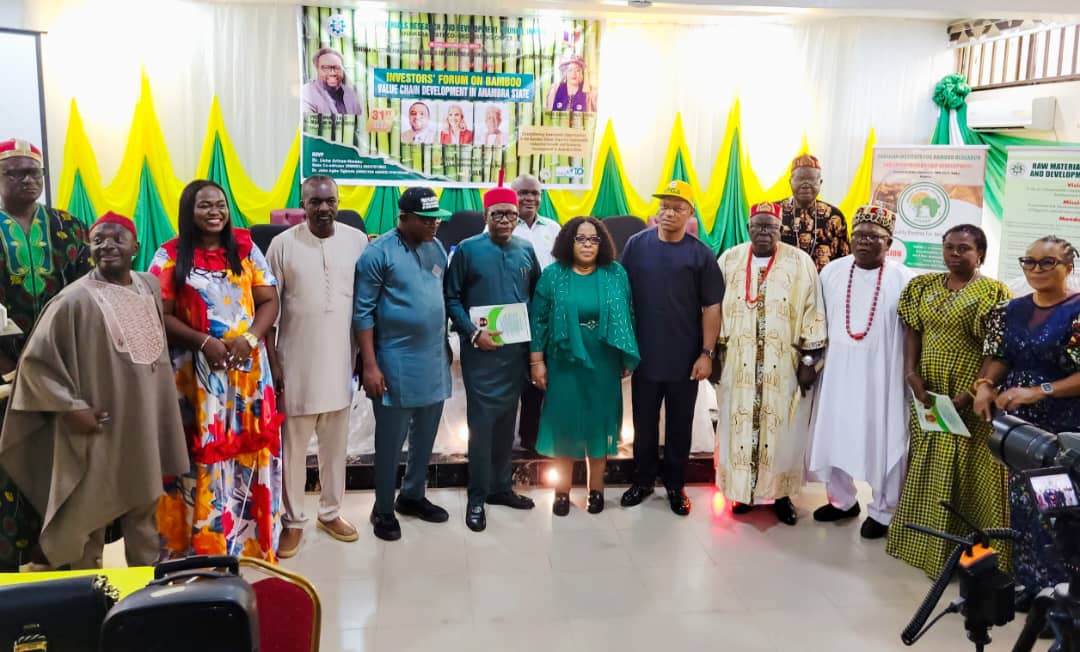
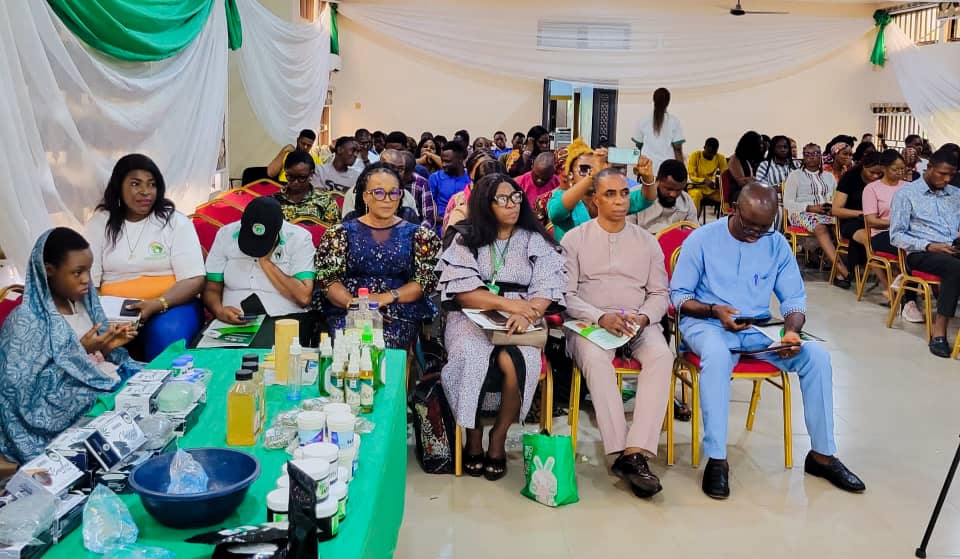
This advocacy came to the fore during a one-day Investors’ Forum on Bamboo Value Chain Development, jointly organised by RMRDC and the Sahelian Institute for Bamboo Research and Entrepreneurship Development (SIBRED). The event, held at the UNIZIK Business School, Nnamdi Azikiwe University, Awka, drew a cross-section of stakeholders from government, private sector, academia, and civil society.
With the theme “Strengthening Investment Opportunities Along the Bamboo Value Chain for Sustainable Economic and Industrial Development,” the forum served as a platform for exploring bamboo’s commercial potential and identifying actionable strategies for wealth creation, job generation, and ecological conservation.
Declaring the event open, the Acting Vice Chancellor of Nnamdi Azikiwe University, Prof. Carol Arinze-Umobi, represented by Prof. Philomena Igbokwe, noted that while Nigeria is endowed with abundant natural resources, including bamboo, many remain largely untapped due to limited value addition. She urged participants to recognise bamboo as a vital raw material that can be harnessed for both economic and environmental benefits.
You Might AlsoLike




Chairman of the occasion and Anambra State Commissioner for Environment, Engr. Dr. Felix Odumegwu, represented by Mr. Toochukwu Obodougha, emphasised the state’s commitment to promoting bamboo cultivation as part of its erosion control strategy and broader efforts at economic diversification.
In a keynote address, Director General and CEO of RMRDC, Professor Nnanyelugo Martin Ike-Muonso, represented by Dr. Uche Arinze-Nwosu, RMRDC Anambra State Coordinator, described bamboo as an underutilised asset capable of transforming multiple sectors. “Bamboo can supply raw materials for over 100 different products spanning construction, furniture, textiles, and bioenergy,” she said, calling for innovative investment models, modern processing technologies, and cross-sectoral collaboration.
Highlighting global investment trends in the bamboo sector, Mrs. Diana Doheny, Co-founder of Agroforestry Impact and Regeneration (USA), delivered a virtual presentation titled “Bamboo-Based Value Chains for Sustainable Development: Identifying Investment Opportunities and Accessing International Grants.” She urged Nigerian stakeholders to leverage the country’s rich bamboo diversity to tap into global green finance.

Dr. John Agbo Ogbodo, Director of SIBRED, delivered a paper on “Bamboo-Based Entrepreneurship for Youths,” stressing bamboo’s potential in job creation and the development of small and medium-sized enterprises (SMEs).
High-ranking government officials, including Dr. Forster Ihejiofor (Commissioner for Agriculture and Rural Development), Mr. Christian Udechukwu (Commissioner for Industry), and Mrs. Bridget Obi (former Commissioner for Women Affairs), pledged state support through land allocation and enabling policies to bolster bamboo-related ventures.
In a virtual keynote address, Vice Chancellor of the Open Learning University, DRC, Prof. Muyisa P. Kazimoto, emphasised bamboo’s relevance in climate action, industrial transformation, and regional trade. “Bamboo is one of the fastest-growing plants and a key enabler of green industrial growth in Africa,” he said.
Panel discussions featured representatives from First Bank Nigeria Plc, Nigerian Export Promotion Council, SMEDAN, Standard Organisation of Nigeria, Technology Incubation Centre, and local chambers of commerce. Deliberations centred on the commercialisation of bamboo across sectors such as furniture-making, construction, handicrafts, and renewable energy.
Notably, First Bank pledged financial backing for viable bamboo-based projects, further encouraging prospective investors.
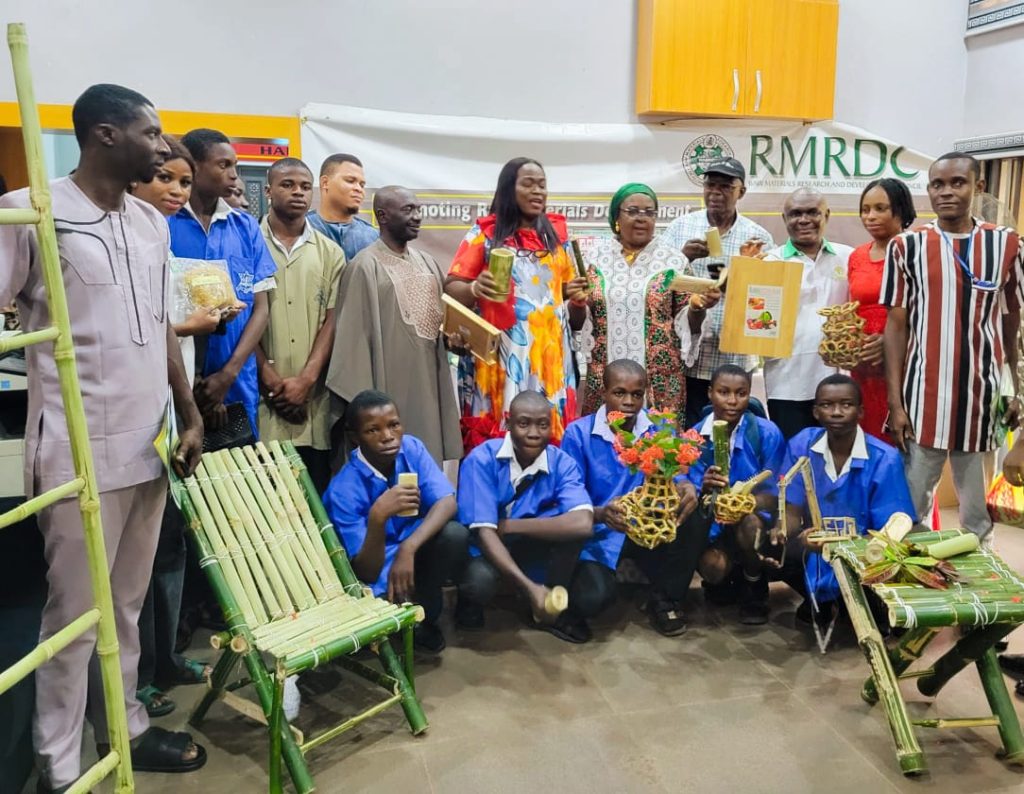
The event also featured exhibitions of bamboo products—including furniture, soap, craft items, and eco-friendly household goods, by artisans, school students, SIBRED, RMRDC, and local producers.
Participants unanimously agreed that bamboo holds immense potential as a cornerstone of Nigeria’s green economy. They called for deliberate investments in bamboo cultivation, processing, research, and policy reform to position Nigeria as a leading bamboo hub in Africa.
The forum concluded with a strong call to action, urging both public and private sectors to integrate bamboo into national development frameworks as a catalyst for sustainable growth, climate resilience, and rural transformation.