By Nafisat Abdulrahman
The Director General and Chief Executive Officer of the Raw Materials Research and Development Council (RMRDC), Professor Nnanyelugo Ike-Muonso, has declared a bold “Nigeria First” agenda as the Council marked its 38th anniversary, unveiling a transformative policy direction that will mandate a minimum of 30 percent value addition to raw materials before export.

“We will no longer export our heritage for a pittance only to buy it back as finished goods,” the DG stated, setting a decisive tone for what he described as a new era of industrial independence anchored on value addition, import substitution, and backward integration.
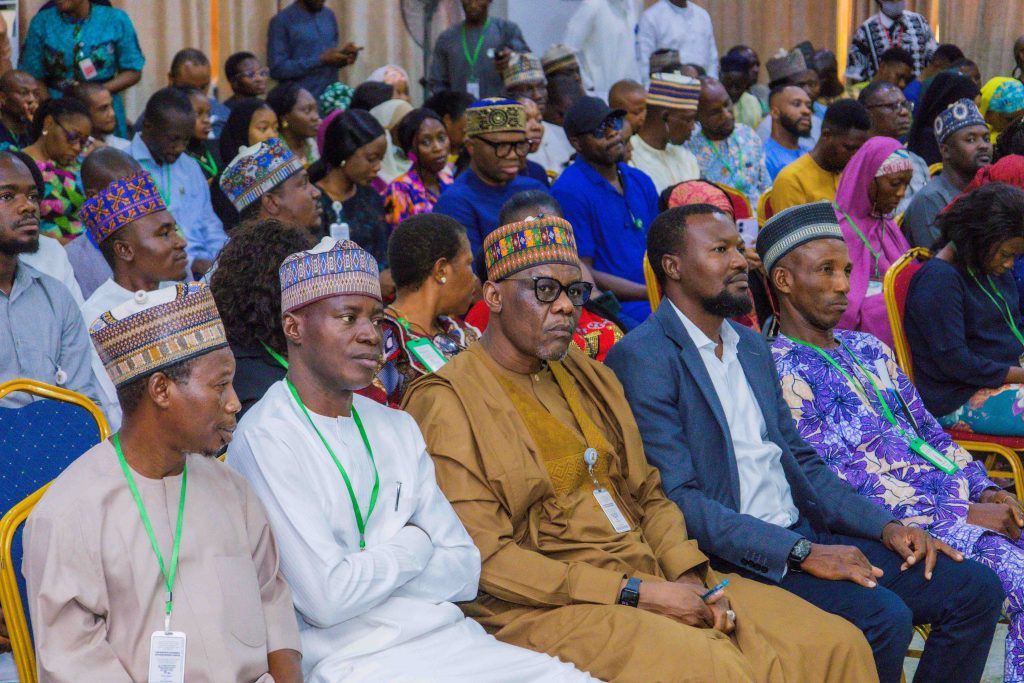
Addressing guests at the anniversary celebration, Professor Ike-Muonso emphasized that the milestone was not merely a commemoration of institutional longevity but a strategic turning point in Nigeria’s industrial trajectory. “Today, we do not just mark the passage of time; we celebrate a journey of resilience and innovation,” he said.

Tracing the Council’s origin to February 10, 1988, in Lagos, he explained that RMRDC was established as a strategic response to the economic crisis triggered by the collapse of global oil prices in the mid-1980s, which exposed Nigeria’s heavy dependence on imported raw materials. The landmark national conference on “The Raw Materials Question” culminated in the establishment of the Council through Decree No. 39 of December 17, 1987—now RMRDC Act Cap R3 LFN—with a clear mandate to drive raw materials development, import substitution, and industrial self-reliance.
You Might AlsoLike




From its formative years to its corporate headquarters in Maitama, Abuja, and coordinating offices across the 36 states of the federation, the Council, he noted, has spent nearly four decades transforming “the raw materials question” into “an answer of industrial progress.”
However, the DG underscored the urgency of reform, revealing that Nigeria still expends approximately $10 billion annually on raw material imports, with ₦3.53 trillion spent in the first half of 2025 alone on inputs that could be sourced locally. “Today, nearly 70 percent of our manufacturing inputs still come from overseas. This is not just a structural weakness; it is a missed opportunity for our youth and our economy,” he said.
Describing the proposed amendment to the RMRDC Act as a watershed moment, Professor Ike-Muonso announced that the Bill—now awaiting presidential assent—will legally mandate at least 30 percent value addition before any raw material is exported and discourage the importation of raw materials abundantly available in Nigeria. “We are choosing Nigeria First and ending the era of exporting our prosperity,” he emphasized.

Highlighting reforms since assuming office in 2024, the DG declared, “We have not just been managing an agency; we have been leading a revolution.” He disclosed that the Council has achieved wholesale digitalization through a state-of-the-art Enterprise Resource Planning system to enhance transparency, accountability, and operational efficiency.
He also announced the forthcoming launch of the National Raw Materials and Products Statistical Information System, a comprehensive data platform designed to support evidence-based policymaking and provide global access to technical and investment information on Nigerian raw materials.
In advancing human capital development, Professor Ike-Muonso said the Council has institutionalized capacity building through the establishment of the RMRDC Training School and strategic academic partnerships for specialized postgraduate programmes in Raw Materials Science.
Further strategic milestones include the development of a 10-year Raw Materials Roadmap (2025–2034) in collaboration with the African Development Bank, targeting value addition levels of between 30 and 95 percent, alongside 10,000 laboratory certifications to strengthen quality assurance. He also highlighted the creation of the Centre for Circularity and Repurposing and the Centre of Excellence in Nanotechnology as critical pillars for driving sustainability, innovation, and advanced materials research.
Reaffirming the Council’s continental outlook, the DG referenced the successful hosting of the maiden Africa Raw Materials Summit in May 2025 and announced plans for the second edition in May 2026 under the theme, “From African feedstock to African factories.”
He paid tribute to past Directors General, including the pioneer DG, Dr. Mrs. Oluremi Aribisala, as well as the Chairman of the RMRDC Board and other stakeholders whose contributions have shaped the Council’s legacy.
As RMRDC marks 38 years of institutional impact, Professor Ike-Muonso reaffirmed the Council’s resolve to reposition Nigeria from a mere exporter of raw commodities to a globally competitive industrial nation driven by value addition, innovation, and self-reliance.