By Mikailu Abubakar and Lukman Isah
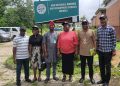
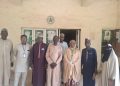
In a renewed drive to reposition Nigeria’s cotton industry as a catalyst for industrial growth, job creation, and economic diversification, the Raw Materials Research and Development Council (RMRDC), Kaduna State Coordinating Office, participated in a stakeholder tour of the Institute for Agricultural Research (IAR), Ahmadu Bello University, Zaria.
The strategic tour, organized by the Federal Ministry of Industry, Trade and Investment (FMITI) in collaboration with the Institute for Agricultural Research (IAR), brought together key stakeholders from government, academia, research institutions, and the private sector to assess Nigeria’s cotton research infrastructure, seed production systems, and fibre quality certification facilities.
The RMRDC delegation, led by the Kaduna State Coordinator, Mr. Mutallab J. S., reaffirmed the Council’s commitment to promoting the sustainable development and utilization of local raw materials as a foundation for industrial transformation.

A major highlight of the tour was the inspection of IAR’s Cotton Fibre Laboratory, home to Nigeria’s only High Volume Instrument (HVI) used for cotton fibre quality certification.
Participants observed that although the facility remains a critical national asset, it requires urgent modernization, improved environmental control systems, and upgraded maintenance support to meet international testing and export standards.
It was observed that the absence of adequate local infrastructure compels many Nigerian cotton exporters to rely on foreign laboratories, increasing production costs and reducing the competitiveness of Nigerian cotton in the global market.
Mr Mutallab, speaking on behalf of the Council emphasized that strengthening this strategic infrastructure would significantly enhance local value addition, improve product quality, and expand Nigeria’s access to international textile markets.
You Might AlsoLike

He added that RMRDC is ready to partner with critical stakeholders to ensure the Nigerian cotton sector is revitalised. He maintained that the vision of the Council is to support raw materials development, including cotton.
The tour of the place provided valuable insights into ongoing research aimed at revitalizing cotton production across Nigeria and experts reviewed recent agricultural surveys highlighting changes in crop preferences among farmers in Gombe, Katsina, and Kano States, while outlining government interventions designed to restore confidence in cotton farming.
Particular attention was given to the introduction of BT Cotton, Nigeria’s first officially approved genetically modified crop, which has demonstrated remarkable productivity. Under proper agronomic practices, hybrid varieties are capable of producing 3–4 tonnes per hectare, representing a significant improvement over the less than one tonne typically obtained from conventional varieties.
Some researchers at the event showcased IAR’s impressive collection of more than 207 cotton breeding lines, including naturally colored brown cotton varieties that offer exciting opportunities for environmentally friendly textile production. These innovations represent critical building blocks for achieving Nigeria’s import substitution agenda and strengthening the country’s industrial raw material base.
In line with its statutory mandate, the RMRDC stakeholders identified several priority areas where the Council can provide strategic support to accelerate the revival of Nigeria’s cotton-textile value chain. They include advocating for the modernization of the IAR Cotton Fibre Laboratory and related quality assurance infrastructure, facilitating partnerships to revive seed multiplication programmes for improved cotton varieties, mapping dormant ginneries and textile industries across Kaduna State to identify viable opportunities for rehabilitation, and
supporting a coordinated multi-stakeholder platform that integrates research, production, processing, certification, and market development.
The stakeholders believe that these interventions will contribute significantly to restoring investor confidence and increasing domestic production of quality cotton for local industries emphasizing that sustainable growth can only be achieved through an integrated value-chain approach that links scientific research, quality seed production, mechanized farming, fibre certification, textile manufacturing, and market expansion.

Mr. Mutallab reaffirmed the Council’s readiness to provide technical leadership, research coordination, and policy support in collaboration with relevant federal institutions and private-sector partners to drive this transformation. According to him, the RMRDC Kaduna State Coordinating Office will submit its observations and recommendations to the Headquarters for incorporation into the Council’s 2026–2027 national work programme.