By Festus Obot & Adaora Adibe
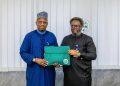
The Director-General of the Raw Materials Research and Development Council (RMRDC), Prof. Nnanyelugo Ike-Muonso, has declared the Council’s readiness to lead Nigeria’s strategic transformation of the shea industry, following the recent presidential suspension of raw shea nut exports for six months.

Speaking at a press conference held at the RMRDC Board Room in Abuja, Prof. Ike-Muonso described the suspension announced by Vice President Senator Kashim Shettima on behalf of President Bola Ahmed Tinubu as a “bold and visionary milestone” in Nigeria’s industrialization agenda.
“This bold directive is more than a ban. It is a strategic turning point in our national industrial journey,” he said.
Nigeria, the largest producer of shea nuts in Africa, accounts for over 350,000 metric tonnes annually across 21 states. However, over 90% of this output is exported raw, a practice that, according to the DG, costs the country more than $200 million annually in lost value addition.
You Might AlsoLike


“The shea value chain already supports over 500,000 rural women,” Prof. Ike-Muonso noted. “But their incomes remain trapped at subsistence level because we export what we should process.”
The DG emphasized that RMRDC has long laid the groundwork for this transition, with targeted interventions across technology, training, research, and collaboration.
Among the Council’s achievements are:

• Technology upgrades for indigenous processors in Kwara State.
• Capacity building programs for rural women in Kwara, Kebbi, Gombe, Niger, and the FCT.
• Establishment of a pilot plant for producing stearic and oleic acids, critical inputs for the food and pharmaceutical sectors.
• A five-year roadmap co-developed with the National Shea Products Association of Nigeria (NASPAN).
• International collaboration through training with experts from Malaysia, and the development of agroforestry systems in Oyo and Niger States.
Prof. Ike-Muonso also highlighted a recent visit to SALID Agriculture Nigeria Ltd, the country’s largest shea refinery, which processes 30 metric tonnes daily. The facility, he said, serves as proof that Nigeria has the capacity to compete globally if processors are adequately supported.
“Since I assumed office, my message has been clear: no raw material should leave Nigeria without at least 30% value added,” he stated. “With this Presidential pronouncement, our advocacy has been validated.”
As the technical lead and Secretariat for the implementation of the suspension, RMRDC has outlined a six-pronged action plan:
• Coordinating inter-agency implementation of the ban with FMITI, the Ministry of Agriculture, NASPAN, SON, and financial institutions.
• Supporting local processors with access to improved technology, finance, and standards.
• Training women collectors and cooperatives across all 36 states and the FCT to meet export-quality standards.
• Expanding shea cultivation through partnerships with states, including a 10-hectare pledge from Niger State.
• Connecting processors to domestic and export markets under the AfCFTA framework.
• Providing regular progress reports to the Presidency on industrial performance indicators.
Prof. Ike-Muonso further called on all stakeholders across the value chain to align with the Council’s vision.
“The Federal Government’s suspension of raw shea nut exports is not merely a ban. It is a clarion call for Nigeria to stop exporting poverty and start exporting prosperity,” he said.
“RMRDC stands fully ready to drive this process, leveraging our statutory mandate, technical expertise, and national spread.”
With coordinated effort, the DG said, Nigeria can emerge from this six-month pause not just as a major shea producer, but as a global hub for shea processing, exports, and value addition.
At the end of the press briefing, journalists in attendance commended RMRDC for its bold and proactive leadership in developing the shea sector and unlocking greater economic value for the nation.
They especially applauded the Council’s comprehensive shea mapping efforts across 21 states, particularly in areas where shea trees are endemic. This mapping, they noted, is a significant step toward structured growth and sustainable resource utilization.
The press further urged RMRDC to sustain its momentum, emphasizing the need for continued investment in value addition, technology access, and smallholder support to ensure that Nigeria not only retains its leadership in production but also becomes a global processing hub.