By Isa Muhammad Mukhtar and Isyaka Rabiu
Stakeholders have underscored the critical role of Gum Arabic development in driving Nigeria’s non-oil export growth, calling for coordinated efforts to harness its full economic potential during a one-day capacity-building workshop organised by the Nigerian Export Promotion Council (NEPC) recently, in Damaturu, Yobe State. The workshop, themed “Good Agricultural Practices (GAP) for Gum Arabic in Yobe State,” brought together government agencies, private sector actors, community representatives, members of the organised private sector, and religious groups.

Participants included officials from the Raw Materials Research and Development Council (RMRDC), Yobe State Coordinating Office, alongside other key stakeholders across the Gum Arabic value chain.
The workshop aimed to sensitise stakeholders on Good Agricultural Practices, strengthen the capacity of farmers and processors, promote export potential, encourage value addition and compliance with international standards, and deepen collaboration within the sector.
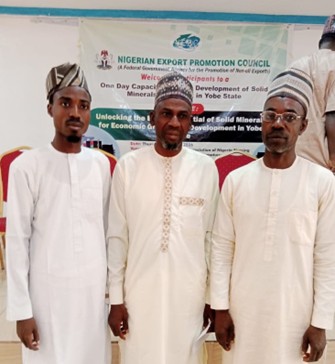
In his opening remarks, the NEPC Yobe State Coordinator, Mr. Ahmed Usman, highlighted the growing global demand for Gum Arabic, particularly in food processing, pharmaceutical, and cosmetics industries. He stressed the need for stakeholders to adopt globally accepted agricultural practices to ensure competitiveness and sustainability in international markets, noting that adherence to quality standards remains essential for export success. Usman added that the workshop served as a platform for knowledge sharing, exposing participants to improved techniques in cultivation, harvesting, and post-harvest handling, all of which are vital for enhancing productivity and product quality.
You Might AlsoLike




Delivering a goodwill message, the Yobe State Commissioner for Commerce, Industry, Investment and Solid Minerals, Rt. Hon. Umar Kaigama, reaffirmed the state government’s commitment to economic diversification through agriculture. He described Gum Arabic as a viable source of income generation, job creation, and rural development, pledging sustained collaboration with relevant agencies to advance the sector.
Also speaking, the RMRDC Yobe State Coordinator, Mr. Sani Musa, described the initiative as timely and aligned with the council’s mandate to promote sustainable development and utilisation of Nigeria’s raw materials for economic growth. He noted that Gum Arabic holds immense potential as a key driver of non-oil exports.
Musa called on stakeholders to adopt improved agricultural practices, enhance quality standards, and strengthen value chain linkages to ensure Nigerian products meet global requirements. He further assured that RMRDC would continue to collaborate with NEPC, the Yobe State Government, and other partners to support farmers and processors through research, capacity building, and technical assistance.
Key presentations at the workshop focused on Nigeria’s potential in Gum Arabic production, best practices in cultivation and processing, export quality standards and certification requirements, value chain development strategies, and access to international market opportunities.
While participants expressed strong interest in the sector, the workshop identified gaps in knowledge, access to inputs, and coordination among stakeholders. The need for intensified training programmes, improved access to funding and inputs, establishment of processing facilities, and stronger inter-agency collaboration was identified.
The workshop concluded with a consensus that strategic investment and sustained stakeholder engagement would significantly enhance Gum Arabic production, improve product quality, and boost Nigeria’s competitiveness in the global export market.