
By Precious Mbaramah
The Raw Materials Research and Development Council (RMRDC), Imo State Coordinating Office, has reaffirmed its commitment to strengthening Nigeria’s cassava value chain through a strategic visit to a community-based cassava processing centre in Awo-Omamma. The visit aligns with ongoing efforts to promote value addition, enhance local processing capacity, and build crucial linkages between primary producers and industrial users.

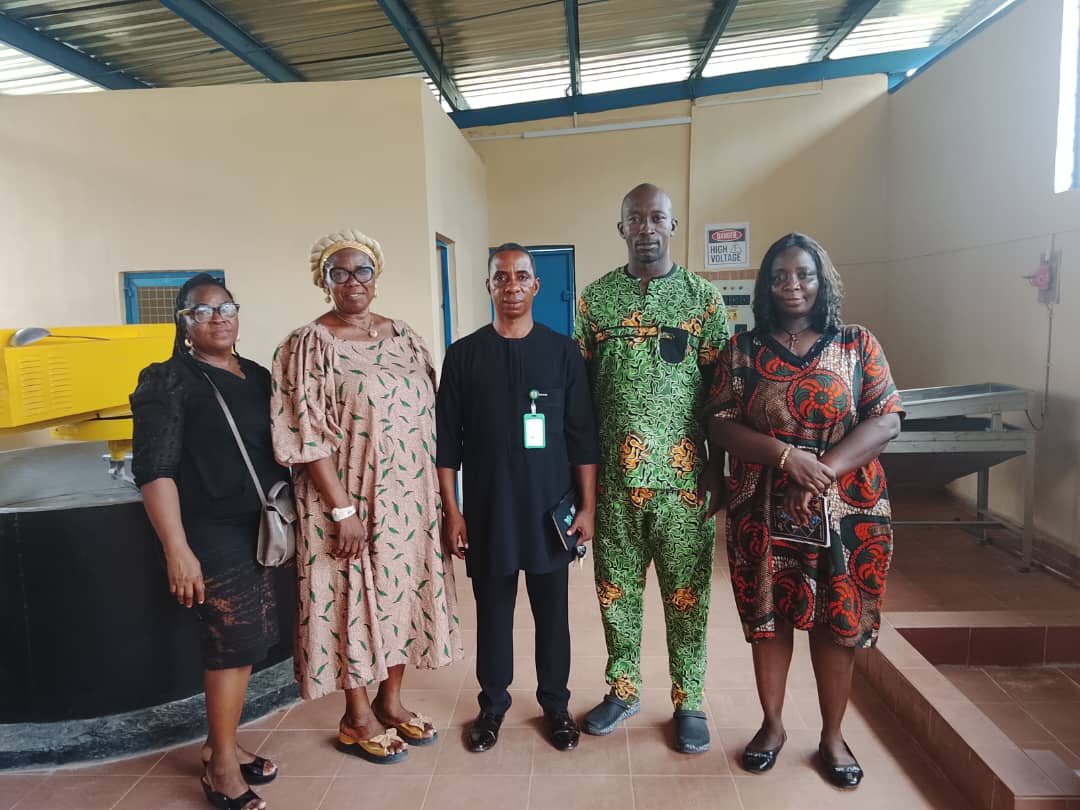
The RMRDC team led by the state Coordinator, Mr. Enemuo was received by the Operational Manager of the processing facility, Mr. Ugochukwu Emezienna who provided an insightful overview of the centre’s operations, revealing that it was commissioned on November 22, 2025, and officially commenced operations in February 2026. Mr. Ugochukwu observed that currently, the centre serves as a hub for villagers to process their cassava, with future aspirations to expand into commercial sales and export markets.
The RMRDC State Coordinator Mr. Enemuo David lauded the center and emphasized the necessity of empowering local farmers and processors through improved processing techniques in cassava production. “Cassava remains one of Nigeria’s most strategic agricultural commodities,” he stated. He highlighted the critical need for enhanced processing, technology adoption, and market integration to drive sustainable industrial development and increase rural incomes.
Mr. Emezienna stated that the facility is part of Nigerian Breweries’ Corporate Social Responsibility initiative, that offers affordable processing services converting cassava tubers into garri for local market distribution. He said the centre is also equipped with locally fabricated machinery from Niji Agro in Ibadan, and boasts a production capacity of approximately 2,000 kilograms of garri per day under optimal conditions. He noted that this position it as a vital support structure for local supply chains and rural livelihoods.
You Might AlsoLike




During the visit, RMRDC representatives engaged stakeholders for on-the-spot assessments, identifying several operational gaps. Notably, the absence of peeling and washing machines necessitated manual processes, which slowed production and increased labour costs and hygiene issues also raised concerns regarding product quality and safety standards.
To address these challenges, RMRDC offered recommendations aimed at enhancing productivity and product quality. These included introducing mechanized peeling and washing solutions, improved staff training, and expanding value addition beyond basic products like garri. Addressing energy supply issues was deemed essential for sustaining operations, with suggestions made to incorporate hybrid energy systems utilizing biomass from cassava peels, solar power to mitigate costs and enhance reliability, strengthen partnerships with indigenous equipment fabricators and industrial off-takers, alongside improving access to structured markets through cooperative development. These were identified as essential steps toward sustainability.
This visit reaffirms RMRDC’s mandate to promote the industrial use of local raw materials while deepening value addition at the grassroots level. With targeted interventions and sustained collaboration, the Awo-Omamma cassava processing centre is well-positioned to evolve into a model agro-processing hub that contributes to job creation, increased incomes, and sustainable economic development in Imo State.