Compiled By Team Lead, Mr A. Abdulazeez – Overseing Director (TDD)
Transforming Nigeria’s Agro Raw Materials: The Indispensable Role of Agro-Processing and Advanced Post-Harvest Preservation – The Freeze-Drying Advantage. By Engr. Olarongbe Aduagba

The success of Nigeria’s agro-processing value-addition strategy hinges on the preservation and utilization of its raw materials, which represent the nation’s untapped agricultural wealth. These raw materials are the focal point of preservation efforts due to their highly perishable nature and susceptibility to post-harvest losses. While the agricultural sector holds immense economic potential, this promise is often undermined by critical challenges in post-harvest management. The journey from farm to market is fraught with losses, particularly for perishable goods like fruits and vegetables. Investing in agro-processing and modern preservation techniques is not merely an option but a vital imperative for unlocking the full economic and nutritional value of Nigeria’s produce.
The Crisis of Post-Harvest Losses
A major constraint on agricultural productivity and farmer income in Nigeria is the significant wastage caused by inadequate processing and preservation infrastructure. For widely cultivated crops like tomatoes, peppers, and okra, farmers rely heavily on traditional sun-drying methods. However, these methods face severe limitations due to Nigeria’s climate:
You Might AlsoLike




- Seasonal Limitations: Sun drying often fails during the rainy season. Continuous rainfall makes it impossible to dry crops like peppers and okra, leading to catastrophic losses.
- Reduced Cultivation: The inability to preserve perishables during poor weather discourages farmers from expanding cultivation, despite high demand.
This systemic issue demands the adoption of advanced technologies to enable year-round preservation. Freeze-drying, an advanced preservation method, offers a transformative solution by adding value and ensuring long-term storage stability.
The Freeze-Drying Revolution
The Raw Materials Research and Development Council (RMRDC) is spearheading efforts to address these challenges through the design and fabrication of a 50kg/day freeze dryer for fruits and vegetables. This project, currently in the fabrication phase at the World Bank Centre for Food Technology & Research (Benue State University, Makurdi), prioritizes indigenous technological self-sufficiency.

How Freeze-Drying Works
Freeze-drying operates on the principle of sublimation—the direct conversion of ice to vapor under low temperature and reduced pressure. This technique is indispensable for farmers and the food industry due to its unique advantages:
Value Addition for Nigerian Crops
- Superior Product Quality and Shelf Life
- The low-temperature process halts microbial activity and enzymatic degradation, preserving nutrients, color, texture, and flavor. Studies show freeze-drying outperforms air-drying in retaining beta-carotene and other vital compounds.
- Minimal volume reduction ensures the product retains its original structure.
- Extended Preservation and Stability
- Freeze-dried products can be stored for over a year, outperforming spray-drying and traditional methods.
- The lightweight nature of freeze-dried goods reduces transportation costs.
- Economic Empowerment for Farmers
- Enables year-round preservation, stabilizing supply and preventing market gluts.
- Farmers can command higher prices by offering premium-quality, shelf-stable products.
Freeze-drying unlocks transformative opportunities for Nigeria’s key crops:
- Tomatoes: Converted into powder for sauces, soups, and ready-to-eat meals.
- Peppers: Retain pungency and color for export-grade spices.
- Okra: Preserved for soups and stews without compromising mucilaginous properties.
- Fruits (e.g., mango, pineapple): Turned into nutrient-dense snacks for global markets.
By creating a vibrant processed food industry, Nigeria can reduce import dependency, boost exports, and mitigate seasonal supply shocks.
The Path Forward
The RMRDC’s freeze-dryer project exemplifies Nigeria’s commitment to agro-processing innovation. Once operational, the technology will undergo rigorous testing for drying efficiency, energy consumption, and product quality. Scaling this initiative could revolutionize post-harvest management, ensuring farmers reap the full benefits of their labour.
Conclusion
Advanced preservation technologies like freeze-drying are not just tools for reducing waste—they are strategic enablers of economic resilience. By overcoming the limitations of traditional methods, Nigeria can transform its agricultural sector into a powerhouse of value-added products, food security, and sustainable development.
Engr. Olarongbe Aduagba is a Deputy Director at the Technology Development Department, Raw Materials Research and Development Council (RMRDC), Abuja.
Report On Improved Flash Dryer For High Quality Cassava Flour Development
The Raw Materials Research and Development Council (RMRDC) facilitate an in-house capacity building to train staff on the engineering design, where the staff (ten staff) were trained on AutoCAD and Aspen Plus for design of flash dryer for high quality cassava flour. The training lasted for two weeks, 6-17th. October, 2025.
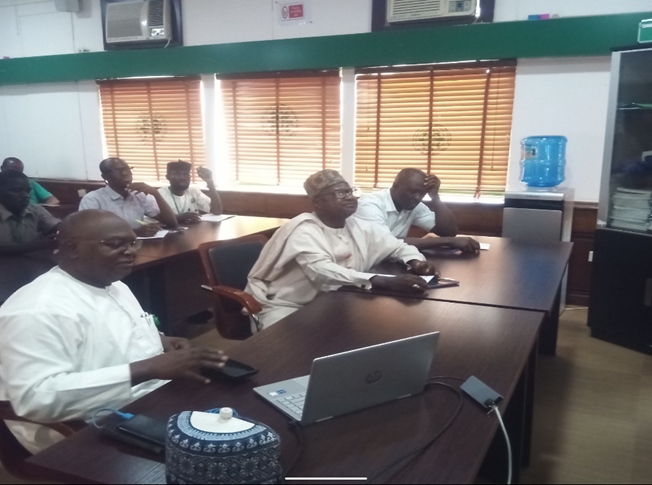
Thereafter convened a high-level technical meeting on November 5th, 2025 to kick-start the development of a 5-ton/day advanced cassava flash dryer—a critical step toward closing Nigeria’s 750,000-metric-ton cassava flour deficit and preparing industries for the proposed 30% value-addition bill.
A Strategic Meeting with National Implications
Opening the session, the Overseeing Director of TDD emphasized the urgency of strengthening Nigeria’s cassava processing capacity, noting that domestic and global demand for high-quality cassava flour continues to rise. He highlighted the Council’s strategy to assemble a multidisciplinary expert team to deliver an optimized, energy-efficient, and locally fabricable flash dryer.
Expert Input and Lessons from Past Projects
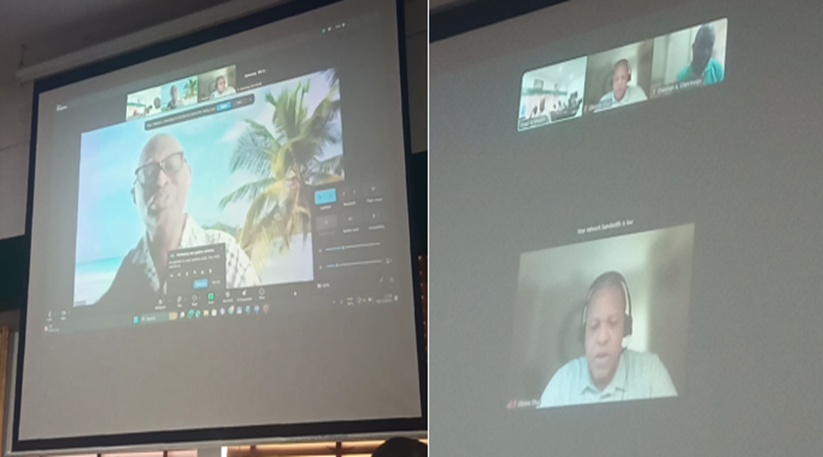
Lead expert Engr. Emmanuel Kwaya provided historical insight from the earlier Godilogo Farms flash dryer project, confirming that operational data, published papers, and past design experiences will guide an improved system. Although only three engineers from the original team are present, the new committee benefits from diverse expertise—including contributions from Professor Ayo Kuye, Dr. Obinna Otuu, Mr. Fatori, and other specialists joining via Zoom.
Kwaya stressed that the new design should not remain theoretical but must evolve into a manufacturable, high-performance machine accessible to small and large investors.
Key Technical Deliberations
The meeting focused on three pillars:
1. Technical requirements and modular design
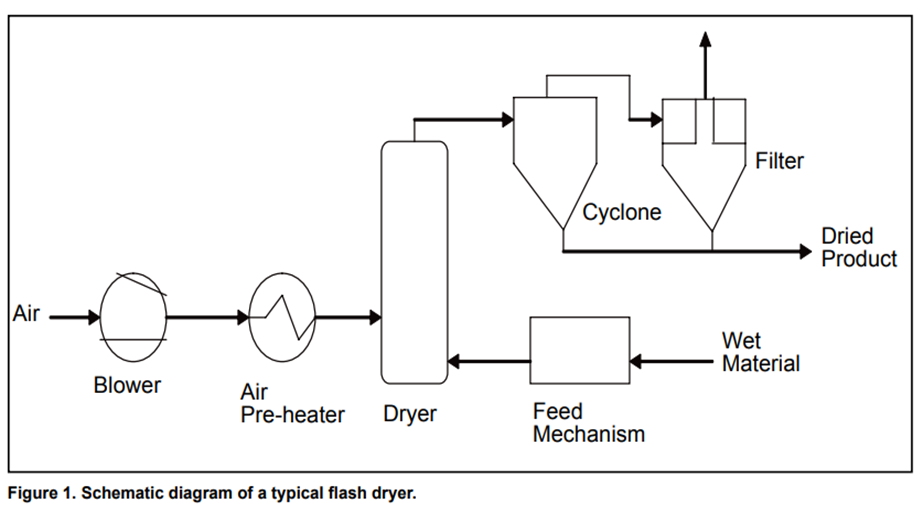
- The design must incorporate unit operations: feeder, flash tube, cyclone, heat exchanger, and collector.
- Residence time must not exceed 5 seconds to avoid cassava gelatinization.
- A modular, easy-to-assemble structure was strongly recommended.
2. Economic and performance data
- Experts emphasized the need for comprehensive cost analysis—fuel use, installation cost, plant lifespan, and profitability.
- The financial cost of past R&D should not be added to the price proposed for investors.
- A scalable design (5–10 tons/day) is essential for market flexibility.
3. Capacity building and software development
- Younger engineers were encouraged to study various drying technologies to strengthen in-house expertise.
- The team agreed to develop simulation software to optimize performance and guide fabricators.
- Past documents and technical drawings will be redistributed for reference.
Commitment to Local Fabrication
Fabricator Mr. Fatori and other experts highlighted the importance of producing components locally to reduce cost and increase accessibility. The team was reminded that the ultimate goal is a practical, fully Nigerian-built flash dryer that strengthens the agro-processing sector.
Conclusion
The meeting closed with a unified commitment to deliver a scalable, cost-effective, and energy-optimized flash dryer. By combining expert knowledge, historical data, and strong technical leadership, RMRDC is positioning Nigeria to meet growing cassava flour demand and drive industrial competitiveness in line with national economic goals.

The Imperative of Agro-Processing for Kuli-Kuli and Dakuwa: The RMRDC Strategic Efforts. By Ms. Aishatu Adamu Ahmed
The Nigerian economy is undergoing a critical transition, shifting focus from raw commodity export to value-added processing as a cornerstone of sustainable industrial growth. The Raw Materials Research and Development Council‘s commitment to agro-processing value addition is a strategic move that addresses several profound national challenges. The process of converting agricultural produce into more sophisticated, higher-value products is critical for:
- Improving Traditional processing methods, which are often labour-intensive, slow, and prone to inconsistency and contamination, leading to significant spoilage and economic loss. Upgrading these technologies reduces waste and ensures the year-round availability of food.
- Economic Empowerment and Poverty Reduction: Value addition enhances the economic worth of crops, leading to increased incomes for smallholder farmers, creating new market opportunities, and generating employment, particularly for women and youth in rural areas.
- Improving Food Security and Quality: By enhancing product hygiene, consistency, and shelf-life through modern techniques, agro-processing safeguards nutritional integrity and ensures a safer, more reliable food supply.
- Boosting National Productivity: Farmers who engage in value addition have demonstrated better efficiency and higher overall productivity.
The Role of Raw Materials Research and Development in the transition to a processing-driven economy is fundamentally dependent on the efficient utilisation of local raw materials. The Council (RMRDC) plays a central and indispensable role in this effort. In respect to its mandate to promote the development and optimal utilization of Nigeria’s abundant raw materials to foster sustainable industrial growth. Its work is aimed at transforming Nigeria from a mere supplier of unprocessed commodities to a global hub for value-added products.
RMRDC acts as a catalyst by:
- Recommending and Adopting Technology: Advising on the adoption of appropriate machinery and processes for local raw materials utilisation.
- Driving Import Substitution: Promoting local sourcing and processing of raw materials to reduce the nation’s dependence on foreign imports for both raw inputs and finished products.
- Technology Development: Directly engaging in projects to support the domestication, enhancement, and commercialization of indigenous processing technologies. The ultimate goal, as outlined in the RMRDC 10-Year Roadmap, is to achieve a minimum of 30% value addition to local raw materials before export in the short term.
RMRDC current effort on upgrading of Indigenous Snack Processing
A prime example of RMRDC’s strategic intervention is its collaboration with the Federal University of Technology (FUT) Minna on the project to upgrade the indigenous processing technologies for two popular Nigerian snacks: Kuli-Kuli (groundnut cake) and Dakuwa (a groundnut-cereal-based snack).
The goal of this “Enhancement of Production Process and Quality of Kuli-Kuli and Dakuwa Snacks” project is the mechanization, standardization, and optimization of production to ensure higher efficiency and improved hygiene, which are key components of value addition.
The project, which commenced in July 2022 and is ongoing, is now at an advanced stage, reported to be 95% completed.
- Fabrication & Efficiency: A suite of machines designed to mechanise the traditionally labour-intensive process has been fabricated. An on-site evaluation confirmed that the developed equipment is well-fabricated, efficient, and ready for further optimization.
- Equipment Fabricated: The new processing line includes a:
- Separator
- Roaster
- Blower
- Miller
- Oil Expeller
- Pelleting Machine
- Fryer
The next steps for the project involve final pilot testing, validation with local processors, and preparation for technology transfer and commercialization. This success reinforces the commitment of RMRDC to supporting indigenous technologies, improving product quality, and empowering local entrepreneurs nationwide.
Ms. Aishatu Adamu Ahmed is a Deputy Director in the Technology Development Department of Raw Materials Research and Development Council, Abuja.
Local Manufacturing of Electrical Sockets and Switches: A Catalyst for Nigeria’s Industrial Development. By Ajayi Oluwaseyi
Despite possessing abundant raw materials, Nigeria continues to rely heavily on the importation of essential electrical accessories. This dependency has led to substantial foreign exchange expenditure and the underutilization of local resources. In response, there has been a strategic push to establish a pilot plant for the local manufacturing of electric sockets and switches, a project that is strategically beneficial for Nigeria’s development and aligns with the nation’s industrialization and import substitution objectives.
Based on the data from Manufacturers Association of Nigeria, (MAN), the Nigerian electrical and electronics sector has seen increasing demand, driven by rapid urbanization, construction expansion, and industrial growth. However, this demand is largely met by imported products, with import records showing that more than ₦77 billion was spent on sockets and switches alone between 2022 and 2023.
In other to address this extensive amount of foreign exchange expended on importation of electrical accessories, the Raw Materials Research and Development Council in collaboration with stakeholders, is championing the transition to local manufacturing that is strongly grounded in key economic and resource factors such as:
- Foreign Exchange Conservation: Meeting domestic demand through imports drains foreign exchange reserves. Local production will conserve this capital and strengthen the national economy.
- Import Substitution: The project directly supports the country’s import substitution policy, reducing market dominance by foreign products.
- Economic Benefits and Job Creation: Local manufacturing is anticipated to support job creation, technology development, and industrial diversification across the electrical manufacturing value chain.
Leveraging on Local Raw Materials and Technical Capacity
A significant finding from both internal feasibility documentation and stakeholder assessments is the confirmation of local raw material availability. Nigeria possesses the requisite materials to support domestic production, including:
- Metals: Copper and brass for conductive components.
- Plastics/Polymers: Thermosetting plastics, urea-formaldehyde resin, phenolic resin, polycarbonate, and other compounds suitable for housings and insulation.
Furthermore, the country has the technical competence needed for this endeavour. The proposed pilot plant requires readily accessible technologies, such as:
- Injection molding machines for plastic parts.
- Metal stamping equipment for conductive components.
- Standardized testing laboratories to verify performance and safety.
For the project to succeed, strict adherence to quality and safety is paramount. Regulatory bodies like SON, NERC, and REA have stressed compliance with international standards, specifically IEC and BS standards. The key prerequisites for market entry include:
- Compliance with insulation integrity.
- Ensuring thermal stability and fire resistance.
- Implementing child-safety features.
One of the paths forward from that was formulated during the experts’ meeting held recently at the Council, suggested a two-phase development and market entry strategy:
- Phase I: Focus on awareness and product introduction.
- Phase II: Drive competitiveness and market expansion.
However, successful implementation depends on overcoming two main challenges:
- Consumer Trust: Many Nigerians perceive imported electrical accessories as superior, necessitating quality certification, effective branding, and awareness campaigns to build consumer confidence in local products.
- Precision Equipment: There is a need for investment in high-quality molds and high-precision stamping tools to ensure the durability and safety required of electrical components.
Despite these hurdles, the establishment of the pilot plant will catalyze growth in ancillary industries—such as plastics and metal fabrication—and support technology diffusion into smart-switch innovations. The project is a crucial step towards strengthening technological capacity and achieving long-term industrial development for Nigeria.
Ajayi Oluwaseyi is an Assistant Director in the Technology Development Department of the Raw Materials Research and Development Council, Abuja
Unlocking Nigeria’s Automotive Potential: The Promise of Spin Casting Technology
By Engr. RAHEEM Dauda Mokolade.
The automotive industry in Nigeria has been facing numerous challenges, including the high cost of importing parts and components, inadequate manufacturing infrastructure, and limited access to technology. These challenges have hindered the growth of the industry, leading to a significant gap in the supply of affordable and quality automobile parts. However, with the efforts of the Raw Materials Research and Development Council (RMRDC), there is hope for a turnaround.
The Challenges of Automobile Parts Manufacturing in Nigeria
The automobile industry in Nigeria is plagued by numerous challenges, including the high cost of importing parts and components, inadequate manufacturing infrastructure, and limited access to technology. These challenges have led to a significant gap in the supply of affordable and quality automobile parts, hindering the growth of the industry.
RMRDC Efforts to Provide Relief
The Raw Materials Research and Development Council (RMRDC) has been working tirelessly to address these challenges and provide relief to the industry. As part of its efforts, a team of RMRDC scientific officers visited several manufacturing industries to gather first-hand information on existing technology and engineering infrastructure used in manufacturing automobile parts and components in the country. The visits were part of the Council’s project on Domestication of Spin Casting Technology for Automobile Parts Manufacturing in Nigeria. An expert meeting was subsequently held to review the findings and provide recommendations for the project’s success. The experts identified key factors impacting the project, including engineering infrastructure, financial capital, and time, and recommended a recast project title, a clear project execution approach, and the use of prototyping to avoid resource waste.
The Spin Casting Technology
Spin casting is a metal casting process that uses centrifugal force to produce high-quality castings. The process involves pouring molten metal into a rotating mold, which is then spun to distribute the metal evenly. The result is a high-quality casting with excellent surface finish and dimensional accuracy.
Principle of Spin Casting
The principle of spin casting is based on the concept of centrifugal force, where the molten metal is thrown against the mold wall, creating a dense and uniform casting.
Spin Casting Technology for Automobile Parts and Components
The spin casting technology has numerous applications in the automobile industry, including the production of engine components, gear blanks, and other critical parts. The technology is ideal for producing complex shapes and designs, making it an attractive option for manufacturers.
Advantages of Spin Casting of Automobile Parts and Components
The spin casting technology offers several advantages, including:
- High-quality castings with excellent surface finish and dimensional accuracy
- Reduced production costs due to minimal material waste and energy efficiency
- Ability to produce complex shapes and designs
- Improved product quality and reliability
Conclusion
The domestication of spin casting technology has the potential to revolutionize the automobile industry in Nigeria. With the efforts of RMRDC, the industry can look forward to improved manufacturing capabilities, reduced costs, and increased access to quality parts and components.
Engr. RAHEEM Dauda Mokolade is an Assistant Director at the Research and Demonstration Plant Centre (RDPC), RMRDC, Abuja.