By Hembadon Ode and Nafisat Abdulrahman
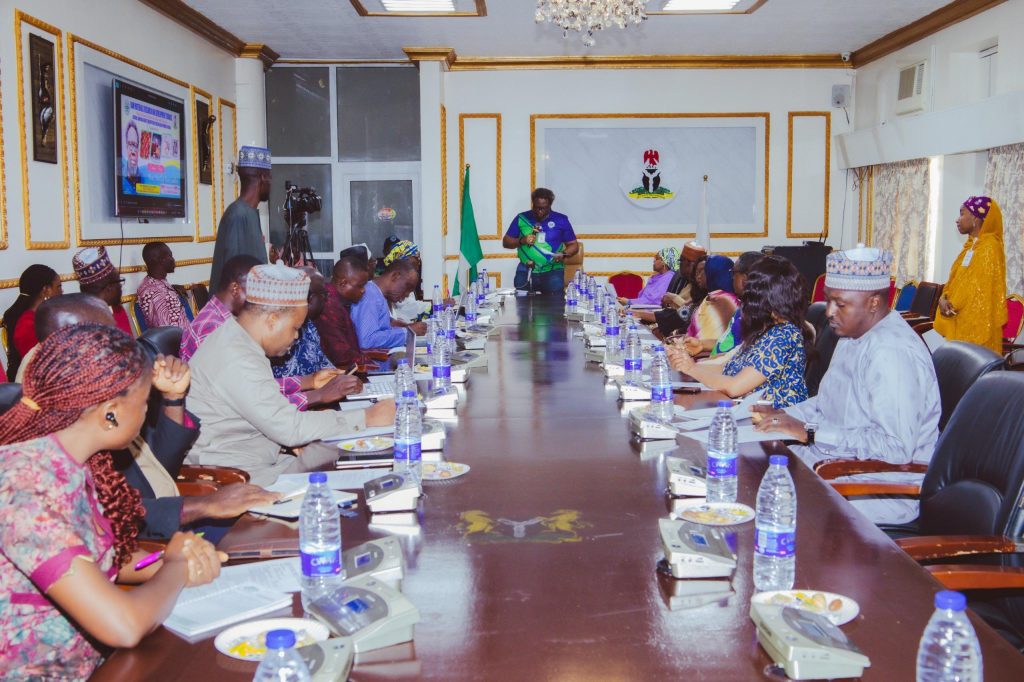
Stakeholders have called for structured support and alternative livelihood opportunities for Nigerians engaged in the ponmo trade, as the Raw Materials Research and Development Council (RMRDC) launched a National Campaign Against the Consumption of Hide and Skin, popularly known as ponmo. The event, themed “Wear, Not Eat Our Leather,” was held on November 13, 2025, at the Council’s headquarters in Abuja.

The programme attracted ponmo traders alongside representatives from government Agencies, academics and the media, who engaged in conversations on how best to shift hides and skins into industrial channels in a manner that is fair to all concerned.
In his welcome address, the Director, Agriculture and Agro-Allied Department, Raw Materials Research and Development Council (RMRDC), Dr. S. C. Ebiriekwe, represented by the Deputy Director Leather, Livestock and Dairy Products Division, Mrs. S.M. Kaita said the campaign is designed to promote the sustainable and industrial utilization of hides and skins, which are critical raw materials for Nigeria’s leather sector. She noted that while ponmo remains popular, its consumption diverts an essential material that could drive job creation, export growth, and industrial development.
She added that the Council aims to sensitize Nigerians on safer and more economically productive uses of hides, stressing the need for stakeholders to engage actively in the transition.
You Might AlsoLike




Delivering the keynote address, the Director-General/CEO, RMRDC, Prof. Nnanyelugo M. Ike-Muonso, described the campaign as a strategic intervention to safeguard public health and reposition Nigeria’s leather industry. He emphasized that the objective is not to attack cultural preferences but to prioritize industrial use of hides and skins in line with global economic opportunities.
The DG explained that ponmo provides minimal nutritional value, and in many cases, the hides are processed with harmful non-food-grade chemicals such as formalin and diesel, posing serious health risks. He noted that Nigeria’s leather market valued at USD 2.79 billion in 2024 and projected to reach USD 4.96 billion by 2033 has the potential to contribute significantly to job creation, foreign exchange earnings, and economic diversification if hides and skins are fully channeled into industrial value chains.
Prof. Ikemuonso, however, stressed that transitioning away from ponmo consumption must consider the livelihoods of those who depend on the trade.

“ This campaign is therefore not about denying our people a delicacy, but about public health, securing livelihoods, and unlocking the immense potential of Nigeria’s leather industry.” He stated.
Stakeholders argued that while the industrial value of hides is undeniable, the government and relevant agencies must establish programmes that provide alternative income streams for ponmo traders, facilitate skills training in leather processing and other value-chain opportunities.
They emphasized that many traders have been involved in the ponmo trade for decades and depend on it for their family’s survival. Therefore, any national shift must incorporate social protection mechanisms.
The programme also featured technical presentations that broadened the discussion on the future of hides and skins in Nigeria. Mr. Bello Abba Yakasai delivered a paper titled “Socio-Economic Dynamics of Hide & Skin Utilization in Nigeria: Towards Sustainable Leather Development and Reduced Ponmo Consumption,” which examined the economic importance of redirecting hides from food use to value-added leather production. In another presentation, Professor S. I. Enem spoke on “Hidden Hazard of Ponmo, Environmental Pollution, Food Safety and Public Health Implications in Nigeria,” highlighting the health risks associated with chemically treated hides and the broader environmental concerns linked to current ponmo processing practices. Both papers reinforced the rationale behind the campaign and underscored the urgent need for safer consumption habits and stronger support for Nigeria’s leather value chain.
The event also recorded the presence of key government institutions whose mandates align with the objectives of the campaign. These included the Federal Ministry of Agriculture and Food Security (FMAFS), the Federal Ministry of Livestock Development, the National Agency for Food and Drug Administration and Control (NAFDAC), the National Orientation Agency (NOA), the Nigeria Export Promotion Council (NEPC) and the Nigerian Institute of Leather and Science Technology (NILEST). Their presence underscored a united front across government in promoting food safety, strengthening the leather value chain and supporting national advocacy against the consumption of hides and skins.