By Isa Mukhtar and Isyaka Rabiu
The Nigerian Export Promotion Council (NEPC), in collaboration with the Raw Materials Research and Development Council (RMRDC), has reaffirmed its commitment to boosting Yobe State’s participation in non-oil exports as part of Nigeria’s broader economic diversification strategy.

This commitment was underscored during a one-day export awareness programme titled “Understanding Export Trade” held in Damaturu, Yobe State. The event brought together entrepreneurs, youth groups, and representatives from key institutions to enhance participants’ knowledge of export documentation, market access, and international trade procedures.
Declaring the workshop open, the NEPC State Coordinator, Mr. Usman Ahmed, emphasized the importance of understanding global trade dynamics, particularly in light of current economic challenges. He noted that non-oil exports remain critical to Nigeria’s economic recovery and sustainable growth.
“Non-oil exports hold the key to Nigeria’s economic recovery and long-term stability,” Ahmed said, reaffirming NEPC’s dedication to empowering small and medium-scale enterprises (SMEs) through continuous training, capacity building, and market facilitation.
You Might AlsoLike




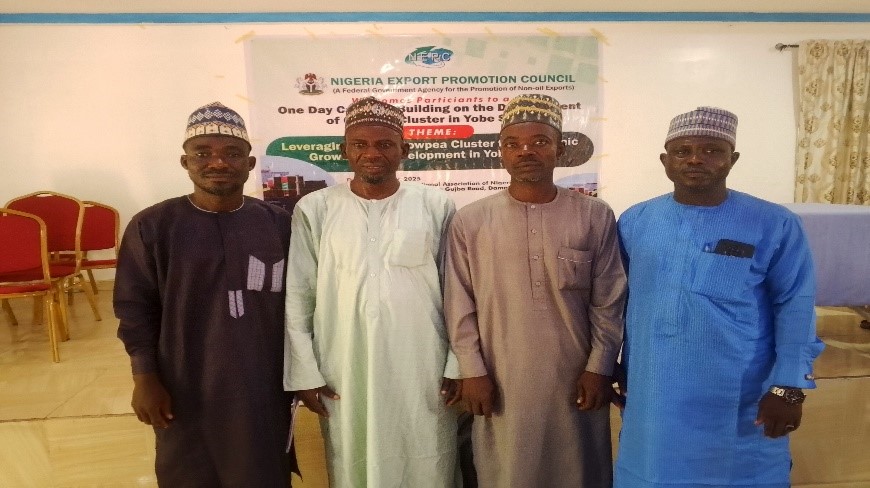
During the technical session, Mr. Ahmed delivered an in-depth presentation covering essential stages of export trade, including business registration, documentation, product certification, shipment logistics, and payment systems. He stressed the importance of adhering to international standards, proper packaging, labelling, and quality control to enhance competitiveness in global markets.
Representing RMRDC, the Yobe State Coordinator, Mr. Sani Musa, lauded NEPC’s initiative, describing it as a strategic step toward developing local industries through export-oriented utilization of raw materials. He reaffirmed RMRDC’s mission to bridge research outputs with industrial applications, pledging continued support for entrepreneurs in product development, standardization, and certification.
“The future of Yobe’s economy depends on how effectively we harness our agricultural and mineral resources for export,” Musa remarked.

Participants from various cooperatives and business groups highlighted common challenges such as limited financing, inadequate knowledge of export standards, and poor logistics infrastructure. In response, NEPC officials assured them of ongoing advocacy for better export policies and access to financing through the Bank of Industry (BOI) and the Nigerian Export-Import Bank (NEXIM).
Chief Scientific Officer at RMRDC, Mr. Isa Muhammad Mukhtar, advocated for stronger institutional collaboration to enhance value chains and proposed the establishment of an Export Resource Centre in Yobe State. He encouraged entrepreneurs to tap into the global demand for local commodities such as gum arabic, sesame, and sorghum.
Representatives from the Yobe State Chamber of Commerce and the Farmers’ Cooperative Union commended the training, noting that it provided valuable insights into non-oil export opportunities. One participant, Mrs. Hauwa Bukar, an agribusiness entrepreneur, said the workshop had opened her eyes to new possibilities.
“Before now, we sold most of our produce locally, but this training has shown us that we can access international buyers with the right standards,” she said.
Concluding the event, Mr. Isyaka Rabiu, of RMRDC, described the programme as a tangible step toward realizing Nigeria’s non-oil export ambitions.
“When local producers begin to export, they don’t just earn foreign exchange, they help shape Nigeria’s industrial future,” he said.
Participants agreed on several resolutions, including the need for stronger inter-agency collaboration, increased awareness of export financing opportunities, and stricter quality control through partnerships with regulatory agencies. NEPC pledged to sustain the momentum through follow-up mentoring and market linkages.