By Gladys Ekpo-Ita
The Raw Materials Research and Development Council (RMRDC), Cross River State Coordinating Office, has reaffirmed its commitment to strengthening Nigeria’s honey industry through active participation in a recent capacity-building workshop organized by the Nigerian Export Promotion Council (NEPC).

The event themed “Empowering Women and Youth for Global Access through Quality Honey Production,” was held in Calabar in collaboration with the Federal Ministry of Industry, Trade, and Investment.
The training aimed to address critical challenges hindering the growth and global competitiveness of Nigeria’s honey sector. Key issues highlighted included limited knowledge of modern beekeeping practices, underutilization of honey by-products, and insufficient value addition, all of which have restricted economic opportunities for women and youth.
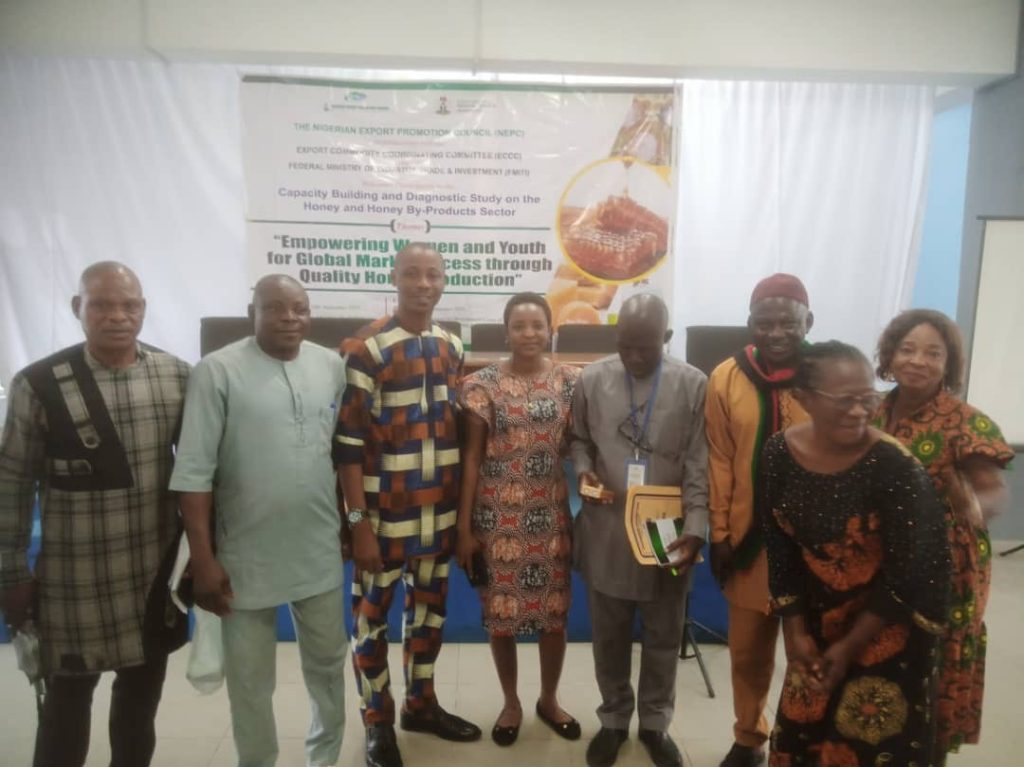
In line with RMRDC’s mandate to promote industrial development through raw materials research and utilization, the Council’s participation contributed to advancing practical knowledge within the industry.
You Might AlsoLike




Sessions were led by Apiculture Field Consultant and Master Beekeeper, Mr. Akpoke C. Christian, and covered sustainable beekeeping methods, the nutritional and industrial uses of honey, and the economic potential of key bee products such as beeswax, propolis, venom, royal jelly, and pollen.
Participants engaged in hands-on demonstrations, educational video screenings, and interactive exercises designed to improve production standards and gather feedback for future interventions.
The RMRDC Cross River State Coordinator, Mr. Obot Anozeng Eteng, commended NEPC for organizing the impactful programme, noting its relevance to the Council’s objectives.

“The workshop significantly enhanced our understanding of honey by-products and value addition processes. It also strengthened beekeepers’ capacity to improve quality and expand the honey value chain,” Eteng stated.
Miss Emeh Ndatah, an RMRDC staff member who also attended the workshop, described the training as eye-opening.
“It provided me with actionable insights into how RMRDC can better support stakeholders in the honey sector, especially in research and technical capacity building,” she said.
Stakeholders at the event recommended deeper collaboration between RMRDC, NEPC, and other relevant agencies to promote modern apiculture practices, expand research into honey derivatives, and implement targeted empowerment initiatives for women and youth.
The workshop ultimately reinforced RMRDC’s strategic role in fostering innovation, enhancing value addition, and positioning the honey industry as a promising driver of Nigeria’s non-oil economic diversification.