By Halima S. Olufadi
The Honourable Minister of Environment, Science, Technology and Innovation of Ghana, Dr. Ibrahim Murtala Muhammed, emphasized that political will is crucial but often missing component in Africa’s pursuit of sustainable resource utilization.
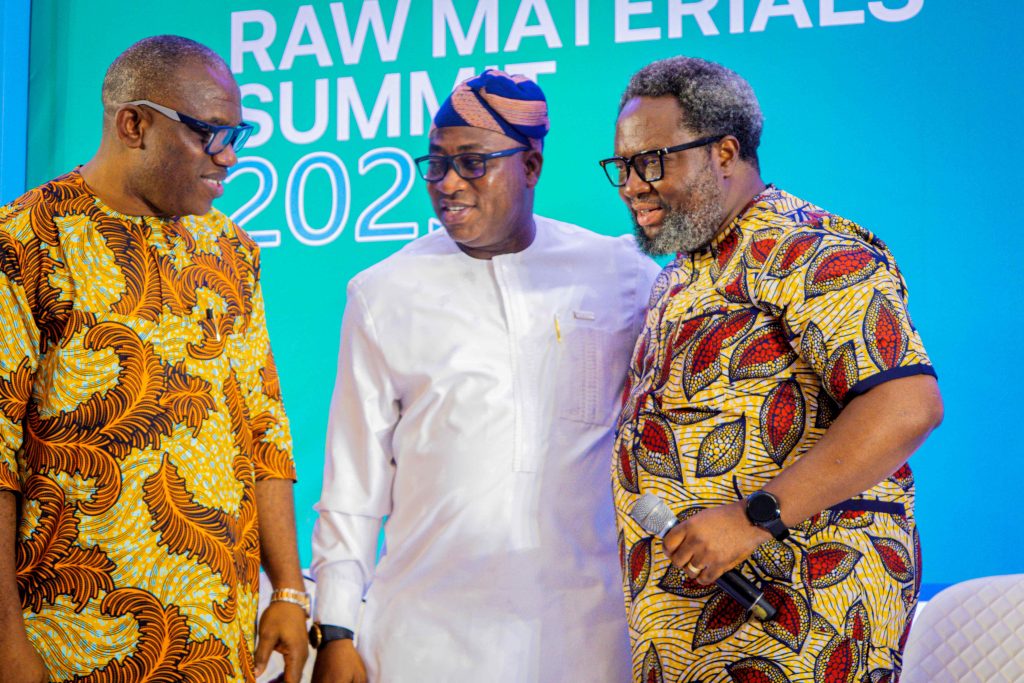
He delivered this impactful remark during his keynote address on the third day of the Africa Raw Materials Summit 2025, held on May 22nd at the Ladi Kwali Conference Hall, Abuja Continental Hotel.

According to him, African nations have the natural resources, intellectual capacity, and human capital required to thrive, but lack of actionable governance and cohesive policies continues to hinder progress
Dr. Muhammed pointed out the paradox of Africa’s agricultural landscape, where over 50% of populations in countries like Ghana are engaged in agriculture, yet food insecurity persists. He noted that countries such as Nigeria have the potential to feed the continent, thanks to vast arable land and a large population resource that remain underutilized due to inadequate policy frameworks.
“The path to economic sustainability is democracy backed by good governance,” the minister stated, stressing the importance of research, innovation, and inclusive policy development. He cited the low average GDP commitment of just 0.4% to research and development in Africa, compared to the 1% target agreed upon by African leaders decades ago, as a critical barrier to innovation.
You Might AlsoLike


He also called for stronger intra-African trade, highlighting the irony of African nations trading more with Europe (over 60%) than among themselves (less than 20%). “We need to begin trading between and among ourselves to fully leverage our collective resources,” he said.
The minister advocated for a sub-regional development agenda, driven by collaboration, inclusive governance, and local participation. He urged African governments to prioritize gender equity, youth engagement, and community-centered planning to create policies that reflect the actual needs of the people.
Dr. Muhammed concluded by commending the summit as a timely and strategic initiative, while urging all stakeholders to ensure that the outcomes of the summit are backed by political will and not left as unimplemented recommendations. “Without the will to act, even the most brilliant ideas will remain just that; ideas,” he warned.

The Africa Raw Materials Summit 2025 set a new benchmark in convening thought leaders, policymakers, industry experts, researchers, financial institutions, and innovators to explore pathways for industrial transformation and economic resilience in Africa.