By Halima S. Olufadi
In a groundbreaking step for skincare science in the tropics, the Tropics Derma Research and Training Institute (TDRTI), in collaboration with the Raw Materials Research and Development Council (RMRDC), has concluded a two-day intensive training session on tropical skin analysis, marking a historic milestone in the development of evidence-based skincare in Nigeria.

Held at the RMRDC office within the National Space Research and Development Agency (NASRDA) in Abuja, the training took place from Tuesday, May 6 to Wednesday, May 7, 2025. Thirty-six state-appointed representatives; one from each of Nigeria’s states, participated in the program, which focused on deploying AI-powered skin analysis technology to gather data on skin conditions prevalent in tropical environments.
Each participant was equipped with the AI-powered skin analysis device and tasked to collect skin data from at least 25,000 individuals nationwide over a three-week period. The exercise is expected to generate Nigeria’s first national database of tropical skin profiles, an initiative hailed as a potential game-changer for the skincare industry across Africa.
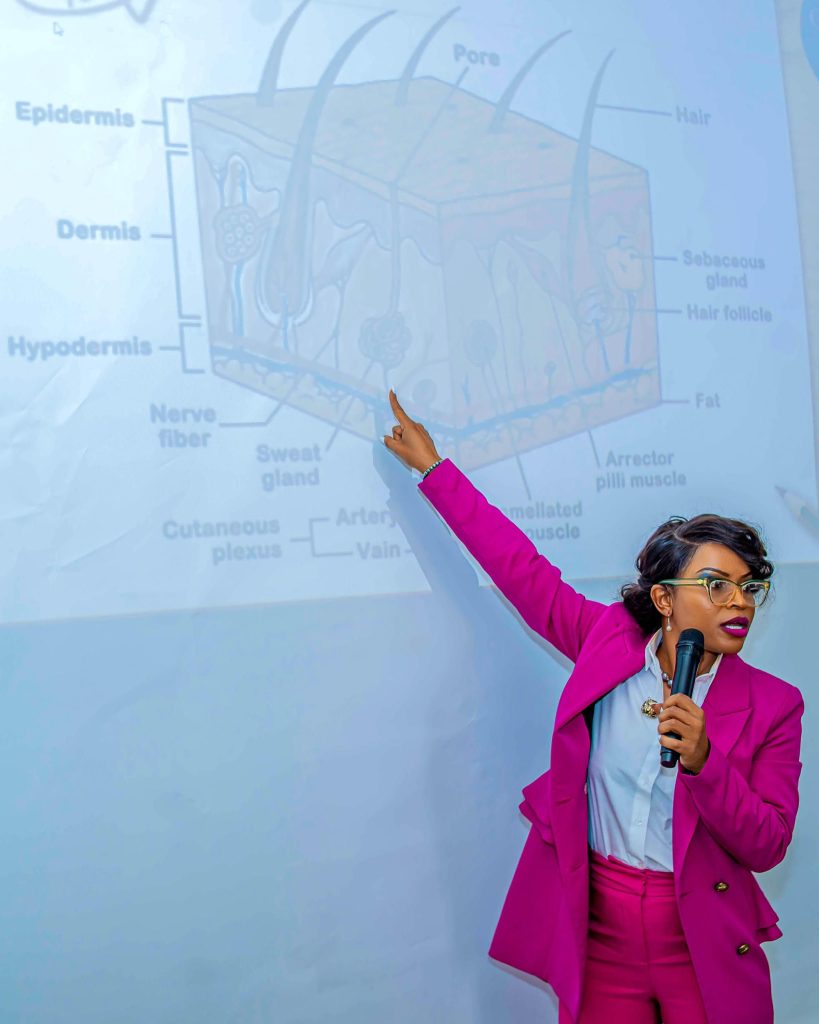
Speaking at the training, the Director General of RMRDC, Professor Nnanyelugo Ike-Muonso Martins, emphasized the urgency of addressing Africa’s growing skin health crisis. “Africa has more than 80% of its women suffering from deep bleaches and skin problems. We have enormous raw materials to address that challenge,” he said. “If untreated, we could see widespread degenerative conditions like skin cancer emerge. This is the right time to act before it becomes a major problem”
You Might AlsoLike




Dr. Edith Gibson, a globally recognized medical aesthetician and founder of TDRTI, described the project as a critical response to a long-standing public health concern. “The World Health Organization reported in 2013 that around 70% of Nigerian women were using skin bleaching products. This is nothing short of a public health pandemic,” she said.
Drawing from similar research in other African countries, Dr. Gibson identified four dominant skin challenges affecting people in tropical climates: hyperpigmentation, surface dehydration, weak elasticity, and overactive sebaceous activity. “Most African women just want an even skin tone. But because there are few products that address hyperpigmentation without bleaching, many fall into the hands of unqualified practitioners,” she explained.
The training concluded with a formal certificate presentation ceremony, where Professor Martins commended the dedication of all participants and reaffirmed the Council’s support for safe skincare innovation.

This training follows the recent strategic partnership between TDRTI and Nigeria’s Federal Ministry of Innovation, Science, and Technology (FMIST), aimed at advancing the mission of promoting safe skincare practices across the country.