
By Adaora Adibe
The Raw Materials Research and Development Council (RMRDC), Training School, in partnership with the Kaduna Business School (KBS), has unveiled the Nigerian Manufacturing Enterprise Programme (N-MEP), a strategic initiative aimed at equipping young Nigerians and women with technical, entrepreneurial and business development skills to drive industrialisation and value addition.

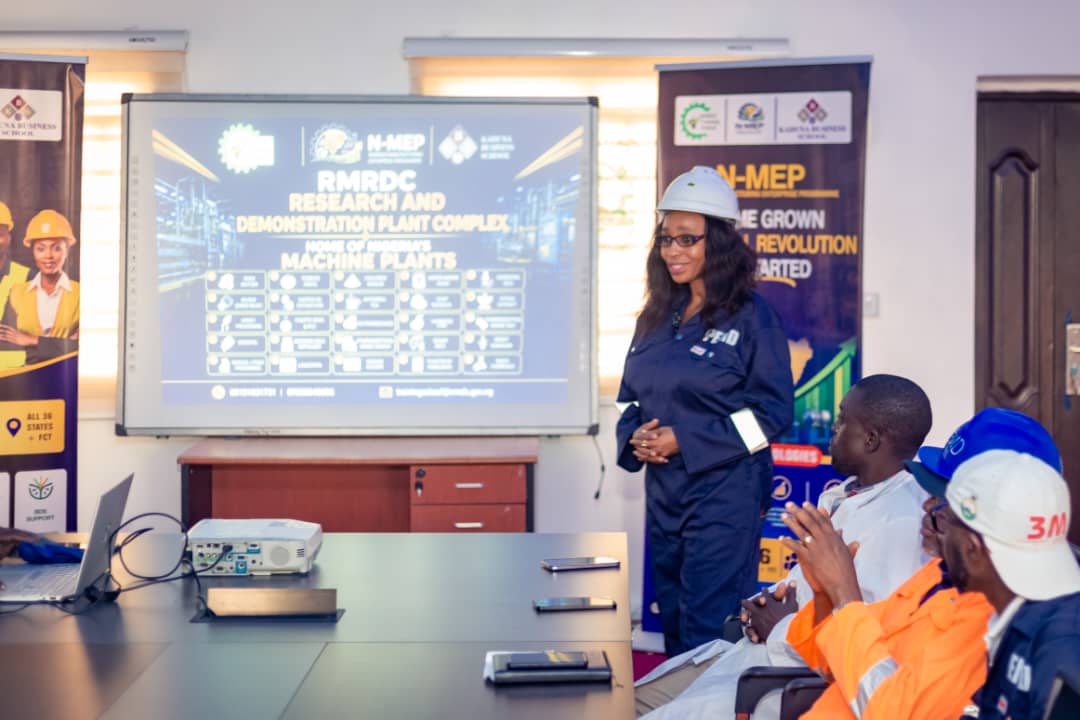
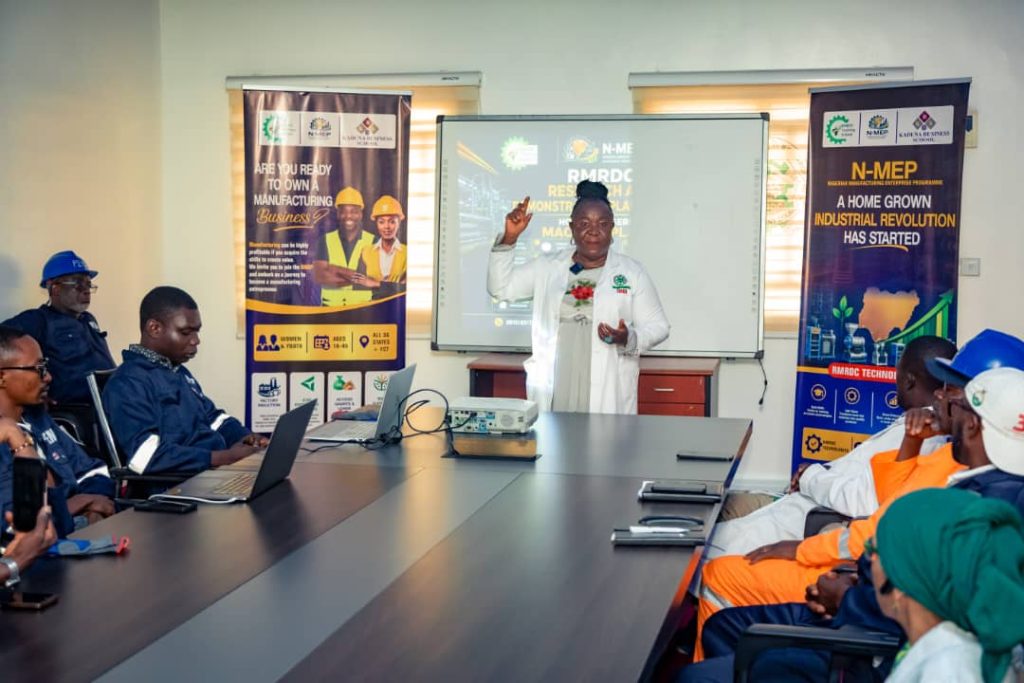
The programme was presented during a sensitisation and awareness session held at the RMRDC Research and Demonstration Plant Complex (RDPC), Abuja, where participants were introduced to the objectives, structure and implementation strategy of the initiative.
Speaking at the event, the Dean of the RMRDC Training School and Project Manager of N-MEP, Dr. Ifeyinwa C. Olife, described the programme as a practical intervention designed to transform vocational training into sustainable enterprise development.
She explained that the initiative targets youths and women between the ages of 18 and 45 and is structured to provide participants with hands-on industrial exposure through the Factory Orientation Programme and Vocational Induction Programme before linking them to business development services in their respective states.
You Might AlsoLike



According to her, the orientation phase exposes participants to modern manufacturing processes, production systems and value-addition opportunities, while the second phase provides mentorship and enterprise support through trained Business Development Service Providers (BDSPs) deployed across the 36 states and the Federal Capital Territory.
Olife stressed that the programme goes beyond skills acquisition by creating pathways for participants to establish viable manufacturing enterprises capable of generating employment and contributing to national economic growth.
She reiterated that one of the programme’s major objectives is to promote local processing of raw materials, reduce dependence on the export of primary commodities and strengthen Nigeria’s industrial base through value addition.

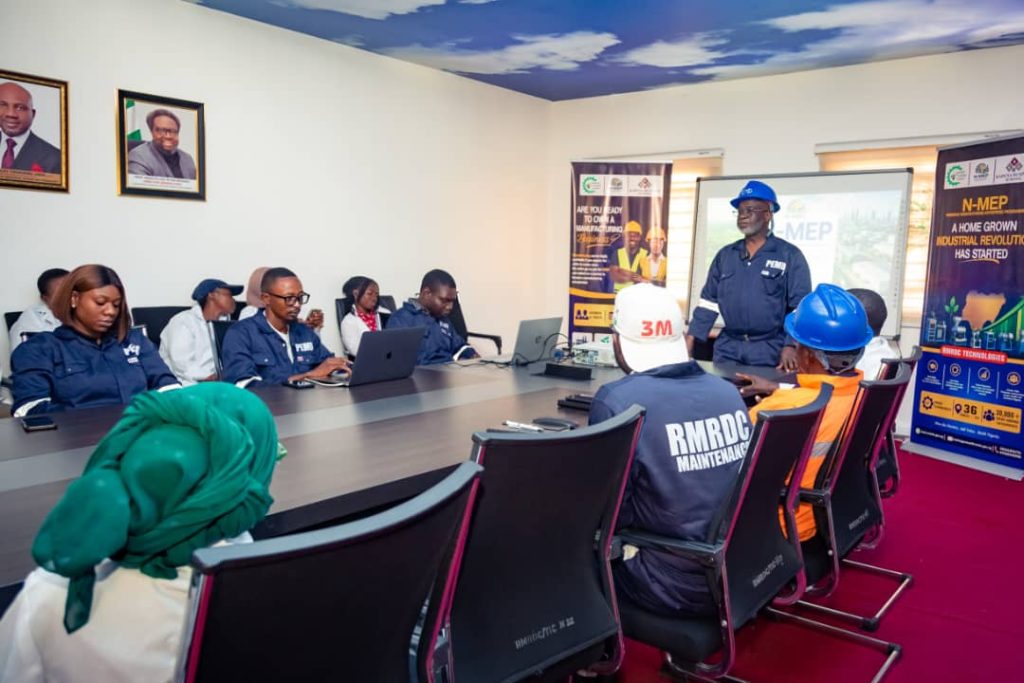
In her opening remarks, the Director of the Research and Demonstration Plant Complex, Dr. Obiageli Okafor, described the facility as a one-stop hub for manufacturing innovation, technology demonstration and enterprise development.
She said the complex was established to support micro, small and medium enterprises through research, practical training, product development and technology transfer, urging participants to maximise the opportunities provided by the programme.
Okafor disclosed that the complex houses about 46 pilot plants, many of which are patented, with 22 of the facilities designed and fabricated locally by RMRDC engineers, demonstrating Nigeria’s growing indigenous engineering and manufacturing capacity.
She added that the ISO-certified laboratory within the complex provides product testing and quality assurance services capable of supporting the certification of locally manufactured products for domestic and export markets.
Delivering a presentation on the Nigerian Manufacturing Enterprise Programme, the Rector of Kaduna Business School and Project Director of N-MEP, Adjunct Prof. Dahiru Sani, described the initiative as a practical platform for building a new generation of technology-driven entrepreneurs and accelerating Nigeria’s industrial transformation.
He said the programme was conceived to bridge the gap between research, innovation and enterprise creation by providing participants with technical training, business support, access to finance and mentorship required to establish sustainable manufacturing businesses.
Sani emphasised that Nigeria’s economic prosperity depends on expanding productive capacity, creating value from local raw materials and strengthening manufacturing rather than relying on the export of unprocessed resources.
He noted that sustainable economic growth would require stronger collaboration among government, research institutions, development partners and the private sector, as well as greater investment in enterprise development, innovation and industrial infrastructure.
The Kaduna Business School Rector also highlighted plans to strengthen participants’ entrepreneurial capacity through internationally recognised Business Development Service certification, digital partnerships, continuous mentoring and enterprise support.
According to him, the programme seeks to build a pipeline of resilient entrepreneurs capable of developing globally competitive products from Nigeria’s abundant natural resources while creating jobs and expanding the country’s industrial output.
He expressed optimism that the initiative would stimulate local manufacturing, encourage technology commercialisation and position Nigeria to take advantage of emerging opportunities within the African industrial and export market.
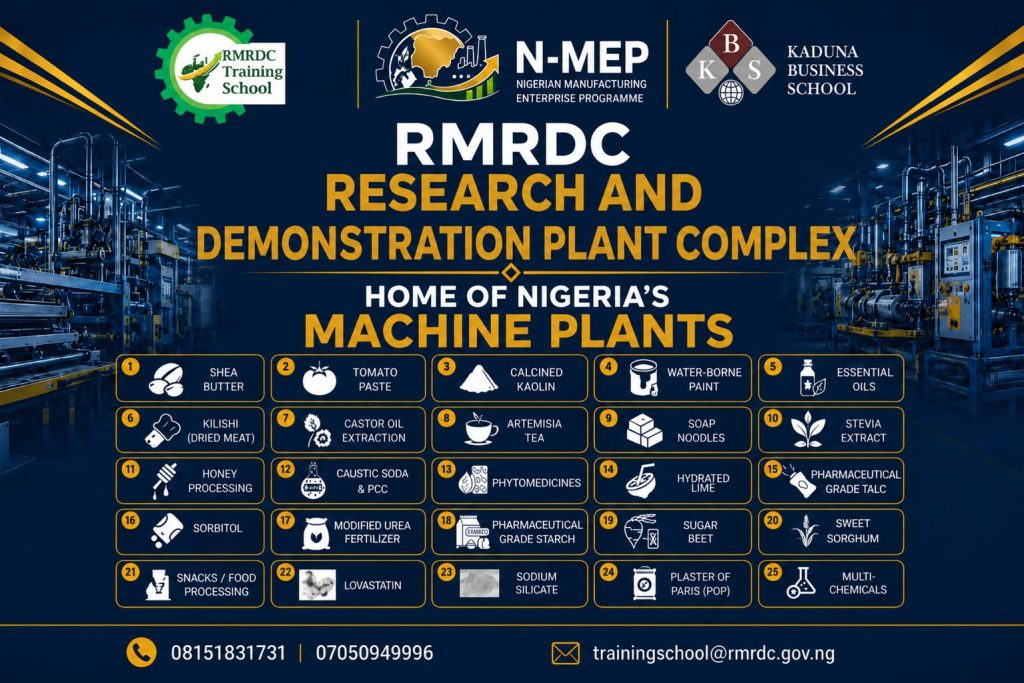
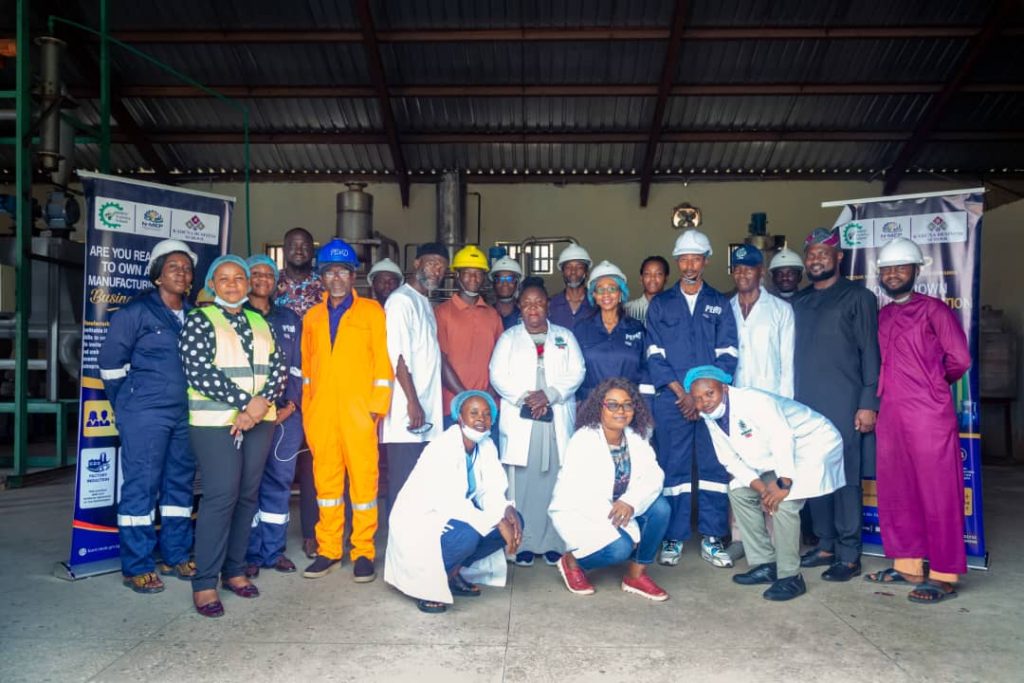
The programme also featured practical interactions with managers of the various pilot plants, giving participants firsthand exposure to research facilities, production systems and manufacturing technologies developed by the Council.
Participants at the event agreed that the success of the Nigerian Manufacturing Enterprise Programme would depend on sustained collaboration, continuous capacity building and deliberate investment in value addition, innovation and enterprise development. They expressed confidence that the initiative would contribute significantly to job creation, import substitution and the realisation of Nigeria’s industrialisation agenda.