
By Mojeed Adeyemi
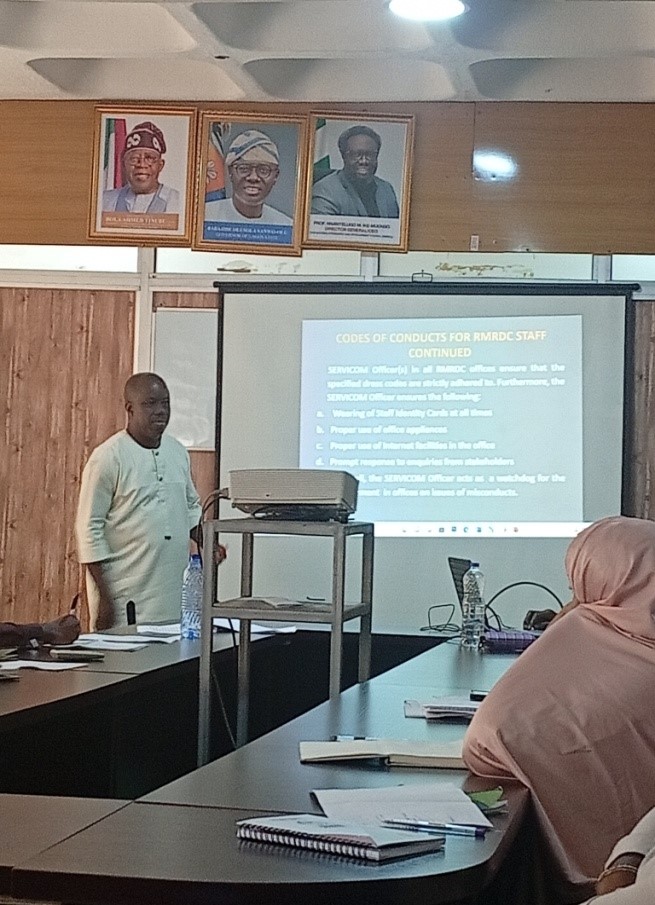
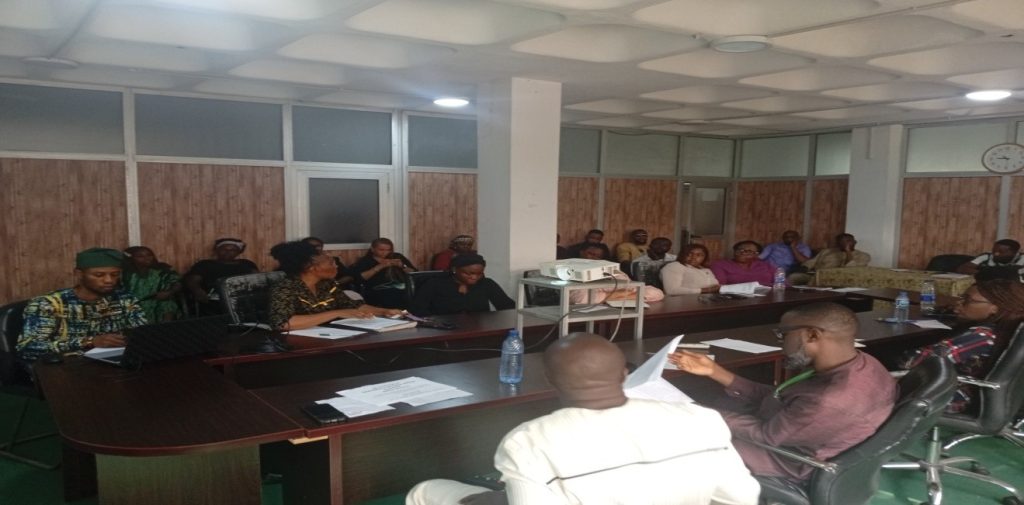
In a strategic move to reinforce professionalism, accountability and service excellence towards achieving its mandates, the Raw Materials Research and Development Council (RMRDC) Lagos Coordination Office recently organized an in-house capacity building training focused on mandate awareness, ethical conduct and discipline in the public service for its staff. The one-day training took place at the Boardroom of RMRDC House, Lekki Phase 1, Lagos State

In her opening address, the Lagos State Coordinator, Mrs. Uchechukwu Ojiakor, underscored the importance of continuous learning and professional development in the public service. She urged staff to embrace the training as an opportunity to sharpen their knowledge and enhance their contributions toward achieving the Council’s national objectives.
“This training is not just a routine exercise; it is a strategic investment in our people to ensure we deliver effectively on our mandate,” she stated.
She stated that the training was designed to strengthen understanding of the Council’s statutory mandate and promote high ethical standards. She urged staff to engage actively on all the modules that shall be delivered by officers.
You Might AlsoLike




The first module, “Understanding the Mandate of RMRDC: Roles, Responsibilities and Effective Staff Contributions,” was facilitated by Mr. Mathew O. Odesanya (PIO). He provided an in-depth overview of the Council’s establishment, structure, strategic goals, roadmap and the proposed 30 percent value addition bill aimed at strengthening Nigeria’s industrial base.
Mr. Odesanya highlighted the importance of interdepartmental collaboration, office etiquette and the critical role of every staff member in advancing RMRDC’s mission of promoting value addition to Nigeria’s raw materials for sustainable industrial growth.
He also led the second session titled “An Overview of Misconduct in Nigeria’s Public Service: RMRDC Focus,” where he examined the types and implications of misconduct within the public sector. Emphasizing professionalism, he outlined standards relating to dress code, punctuality, respect for authority and strict adherence to human resource policies.

According to him, misconduct not only erodes public trust but also undermines institutional credibility, productivity and effective mandate delivery.
The final module, “Disciplinary Actions and Employment Law in Nigeria’s Public Service,” was delivered by the Principal Legal Officer, Barrister Chika Onu. She provided detailed insights into employee rights, disciplinary procedures and the legal framework guiding sanctions within the public service.
Barrister Onu outlined offences such as fraud, embezzlement, assault, dereliction of duty, absenteeism, certificate forgery and unauthorized disclosure of official information, stressing that adherence to due process remains central to maintaining fairness and justice in disciplinary actions.
The training concluded with an interactive session where participants sought clarifications and shared perspectives on practical workplace challenges. Many described the programme as timely and impactful, noting that it reinforced the values of discipline, transparency and accountability essential to public service excellence.