
By Salamatu Musa
The Raw Materials Research and Development Council has intensified efforts toward sustainable agricultural development and raw material utilisation following a strategic working visit to Cocoa–Oil Palm intercropped plantations in Baissa, Kurmi Local Government Area of Taraba State.

The inspection tour, led by the Taraba State Coordinator of the Council, Mr. Musa Waziri, was part of ongoing initiatives to promote value addition, efficient utilisation of agricultural resources, and industrial raw material development across the country.
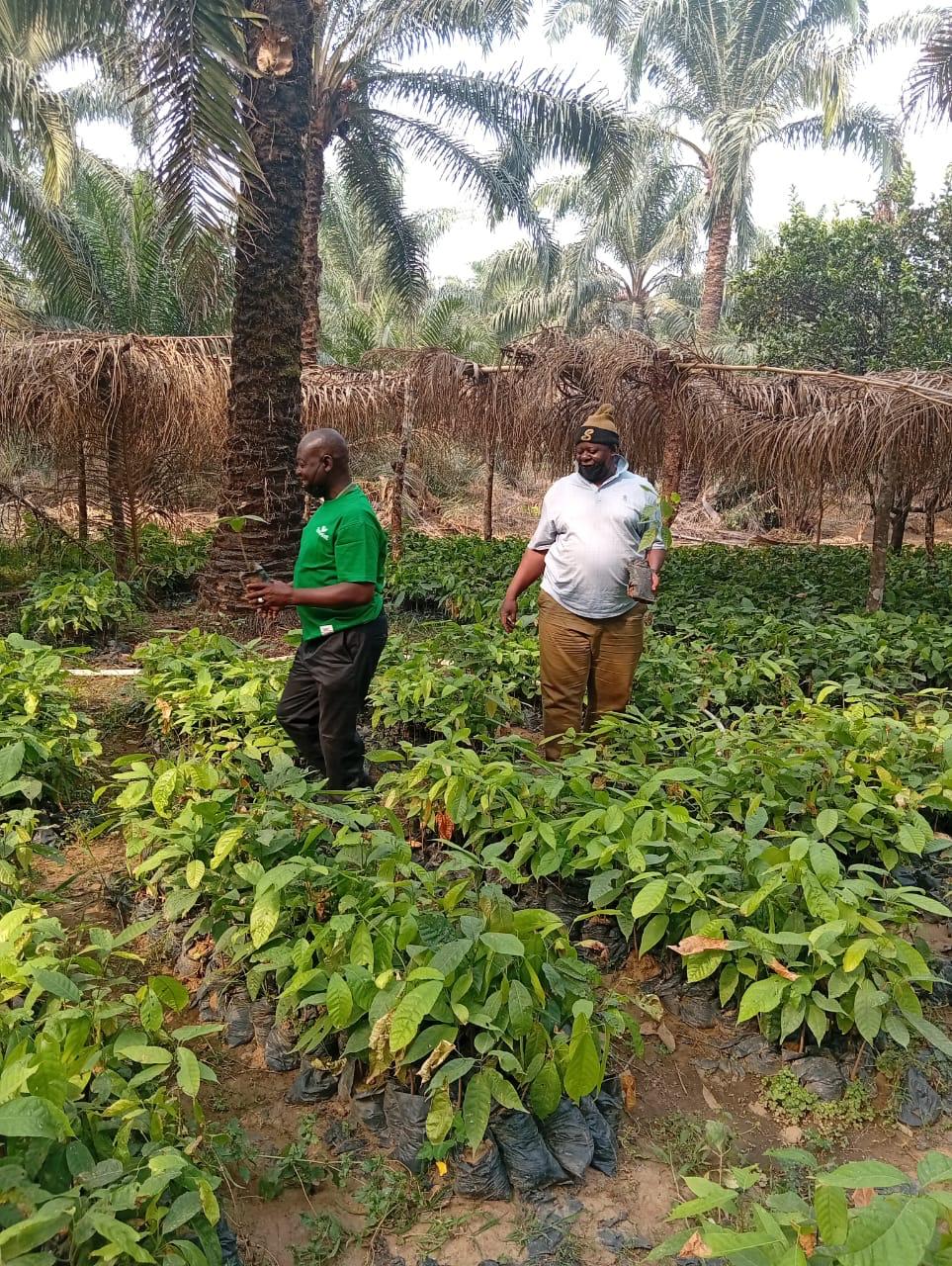
Speaking during the visit, Waziri described the Cocoa–Oil Palm intercropping model as a viable innovation capable of transforming agricultural productivity and agro-industrial growth in Southern Taraba, particularly within the fertile lowland ecology of Kurmi Local Government Area.

According to him, field observations revealed that oil palm plantations provide natural shade and canopy cover that create a favourable microclimate for cocoa cultivation, thereby improving crop performance, conserving soil moisture, and enhancing land-use efficiency.
You Might AlsoLike


He explained that the integrated farming system offers multiple economic and environmental benefits, including improved productivity, protection of cocoa seedlings from excessive sunlight, increased farmers’ income, and the promotion of climate-smart agricultural practices.
“The intercropping system has demonstrated enormous potential for sustainable cocoa and oil palm production. Beyond improving productivity, it supports environmental conservation and opens new opportunities for agro-industrial development in Taraba State,” Waziri stated.
During the exercise, the RMRDC delegation inspected several cocoa and oil palm plantations, as well as nurseries located within Baissa and adjoining communities. Assessments focused on plantation layout, crop spacing, shade management techniques, seedling development, crop health, and productivity potential.

The delegation was received by the Chairman of the Oil Palm Association of Nigeria, Taraba State Chapter, Alhaji Zakari Abong, who conducted the team round strategic plantations across Kurmi LGA and provided technical insights into agronomic practices adopted by farmers in the area.
The Council further disclosed that the initiative aligns with its ongoing collaboration with the National Coffee and Tea Association of Nigeria aimed at promoting Coffee–Tea and Oil Palm intercropping systems in suitable coffee and tea-producing communities across Taraba State.
RMRDC observed a growing willingness among farmers in the area to embrace improved intercropping technologies, particularly where institutional support, technical guidance, and access to improved planting materials are available.