By Salamatu Nyajo and Jubrilla Abdullahi
The Raw Materials Research and Development Council (RMRDC) has reaffirmed its commitment to the optimal development and value addition of Nigeria’s vast natural resources at the 2nd Edition of the Daniel Buba Colloquium held on 3 February 2026 at Taraba State University (TSU), Jalingo.

The Council’s presence at the high-level intellectual forum underscored its leading role in promoting sustainable utilization of agro-based and mineral raw materials as drivers of industrialization and economic diversification.
The Colloquium, convened by renowned Resource Management and Development Finance scholar, Dr. Daniel Buba, was designed to stimulate informed dialogue on national development challenges and practical solutions, with focus on Taraba State and Nigeria at large. It attracted academics, policymakers, development practitioners and other stakeholders committed to advancing sustainable development.

The 2026 edition, themed “Nature’s Gifts and Nation Building,” examined how Nigeria’s abundant natural resources can be strategically harnessed to accelerate industrial growth, economic resilience and long-term national development.
You Might AlsoLike

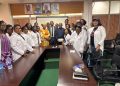


Representing the Council, the Taraba State Coordinator, Mr. Musa W.A., served as a panel discussant and delivered an extensive presentation on the strategic role of raw materials in nation-building. He emphasized that Nigeria can significantly reduce its dependence on crude oil by leveraging its agricultural, solid mineral and energy resources through local processing, value addition and export diversification. According to him, this approach would stimulate job creation, promote inclusive growth and strengthen national cohesion.
Mr. Musa further stressed the importance of effective leadership and transparent governance in resource management, noting that prudent revenue administration, strong institutions and inclusive policies are critical to ensuring that resource wealth translates into tangible development outcomes and poverty reduction.
He highlighted the need to channel revenues from natural resources into critical infrastructure such as roads, power, railways, water supply, education and healthcare, thereby boosting productivity and fostering regional integration. He warned that poor resource governance could lead to insecurity, environmental degradation, illegal mining and social unrest, whereas transparency and inclusiveness promote stability and national security.

Outlining practical pathways to industrialization, the RMRDC representative advocated for strengthened local content policies, mandatory value addition, development of industrial clusters, incentives for processing industries, and improved access to finance and infrastructure. He also underscored the pivotal role of research and development (R&D) in providing data-driven policy insights, promoting innovation in resource processing and ensuring sustainable utilization.
Addressing the role of youth and host communities, Mr. Musa noted that youth organizations can enhance transparency and accountability through civic engagement and digital monitoring tools, while active community participation helps reduce conflict, promote equitable benefit sharing and strengthen local ownership of development initiatives.

He further called for a balanced approach to economic growth, environmental protection and social development through strict regulatory frameworks, environmental impact assessments and sustainable extraction practices. Drawing lessons from countries such as Norway and Botswana, he emphasized the importance of transparency, sovereign wealth funds, strong institutions and long-term planning in managing resource wealth effectively.
In his keynote address titled “Nature Gives, Nations Are Built,” Professor Vincent N. Ojeh of the Department of Geography, Taraba State University, observed that while nature generously endows nations with resources, development outcomes depend largely on leadership and policy direction. He referenced the “paradox of plenty,” where resource-rich countries fail to achieve meaningful development in the absence of strong institutions and deliberate governance frameworks.
The Colloquium concluded with a renewed call for strategic collaboration among government institutions, academia and development stakeholders to transform Nigeria’s natural endowments into sustainable industrial growth, an objective central to RMRDC’s national mandate.