
By Umar Salihu
Imagine a world without skyscrapers, bridges, automobiles, railways, or even the domestic tools and appliances that power our daily lives.

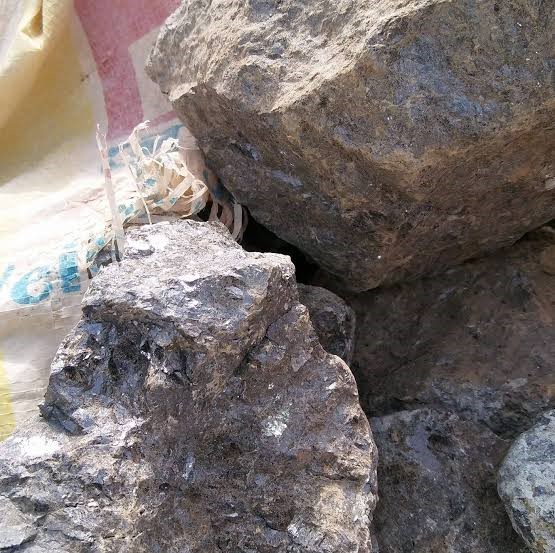
It’s nearly impossible because at the heart of all these is iron and steel, and at the root of it all lies iron ore. Often overshadowed by crude oil in popular discourse, iron ore ranks second only to oil in global economic importance.
This vital mineral found in forms such as magnetite, hematite, goethite, limonite, and siderite feeds the steel industry, with over 98% of mined iron ore processed into steel.
From construction and infrastructure to automotive and industrial manufacturing, iron ore is the unsung hero of modern development.
You Might AlsoLike


This article takes a deep dive into the world of iron ore, with a special focus on Niger State, Nigeria, exploring its historical relevance, major deposits, and industrial potential.
It highlights its uses, by-products, estimated reserves, and most importantly, the vast investment opportunities it presents both locally and globally. In a time when resource-based industrialization is key to economic transformation, Niger State’s iron ore could be the cornerstone of Nigeria’s next big leap.
The iron and steel industry has often been described as the “backbone’ of industrialization and the ‘bedrock’ of the economy of nations. Such words of encomium can be attributed to the fact that, iron and steel products are used in making machinery and other tools needed in manufacturing and infrastructural development.

HISTORY OF IRON ORE:
You may recall that iron ore was one of the key commodities traded across the world centuries ago, but our history with iron ore predates all modern financial markets by a good few years.
According to historians, as far back as 3200 BC humans have been working with iron in various capacities. However, it wasn’t until around 1200 BC in ancient Mesopotamia that iron production became widespread, after bronze which was the dominant material of choice when it came to producing weapons, armor, tools, and building materials before this time. Bronze is actually a metal alloy, meaning it is forged from two different metals; copper and tin. Unfortunately, copper and tin are seldom found near each other, and therefore gathering enough of both metals to make bronze was quite an onerous task. Some historians have stated that the Bronze Age came to an end because of a shortage of tin around 1300 BC amid trade disruptions, which forced metalworkers to find an alternative. Whatever the reason, the beginning of large-scale production of iron brought the Bronze Age to an end and thus brought iron ore into prominence.
Iron ore’s perhaps most important contribution came during the Industrial Revolution in the 1800s when iron began to be used to produce steel on a mass scale.
The beauty of iron is that it is just one metal. It is not an alloy and therefore, producing iron was rather easy in comparison especially with the development of iron ore smelting to remove impurities, which was a game changer for iron production. Thus, iron production took off and was associated with the expansions of many great civilizations over the millennia even at Dokodza, Masaga, Gbongbofu, and Tswatamukun Brassworks in the Ancient Town of Bida Niger State which has now become UNESCO Arts and Crafts Folk City, at the Global level, Iron Ore was used extensively throughout Pre-Colonial, Colonial, Post-Colonial Africa and in the Roman Empire, during the Middle Ages, all the way up to the Industrial Revolution.
IRON ORE USES/APPLICATION:
- Iron Ore as the primary raw material is to manufacture steel of various types.
- Used metallurgy products, magnets, high-frequency cones, auto parts, shipping industry, home appliances manufacturing, armory/weapons, catalyst making of other applications, and building material.
BI-PRODUCTS OF IRON ORE:
Bi-products of iron ore as similar to its above-listed uses/applications, especially steel manufacturing of several types.
INVESTMENT OPPORTUNITY:
Just as there is no house hood, neighborhood, community, and industry where metal materials or steel are not found, including the ones used for domestics purposes such as utensils, working tools, armory, and even construction materials, there are indications of abundant investment opportunities in Iron Ore mining and processing in Niger State and Nigeria for any interested person or firm.
Another investment opportunity in Iron Ore is in the retail supply and selling of its secondary raw materials such as steel, rod, pipes, poles, and metal panels.
ESTIMATED DEPOSIT AND LOCATION:
In Niger State, Iron Ore could be found in: Bida, Gbako, Kontagora and Rafi.
Apart from the aforementioned places where there are numerous deposits of Iron Ore, the purest deposits of commercial quantity are based around Itakpe Kogi State.
According to the Niger State Investment Promotion Agency, “Niger State located in North-Central Nigeria, hosts significant iron ore deposits across several local government areas, including Kontagora (Mahoro), Rijau (Erini), Magama (Agido & Majaba), and Mariga (Kasuwan Ango). These deposits are characterized as large-scale and high-grade, indicating their potential for substantial economic development.”
While precise figures for the iron ore reserves in Niger State are not publicly available, Nigeria as a whole is estimated to possess over 3 billion metric tonnes of iron ore.
Major iron ore mining activities are currently concentrated in Kogi State, particularly at the Itakpe mine, which alone accounts for approximately 3 billion tonnes of reserves.
The iron ore deposits in Niger State remain largely untapped, with only small-scale smelters currently operating. This presents a significant opportunity for investment and development in the region’s mining sector. For more detailed information and potential investment opportunities.
Other states where Iron Ore is deposited include, Abia, Anambra, Bauchi, Benue, Kwara, Plateau, and Nasarawa.
IRON ORE ECONOMIC IMPORTANCE IN THE CONTEMPORARY:
As stated in the introductory aspect of the study, the Economist has referred to iron ore as the most important commodity after oil and stated that the development of processes to turn raw earth into steel is one of the market-driven achievements.
In contemporary Nigeria and Niger State to be specific, the economic significance of Iron Ore evolved out of the fact that the Nigerian Solid Minerals Sector is an edge to witness aggressive market-driven development capable of uplifting the country’s economy.
With Iron Ore corresponding secondary or intermediate Raw Materials such as steel, machinery, rod, pipes, and poles, Iron Ore end products will continue to dominate all our industrial sectors, offices, hospitals, and homes beyond even the extent it has been centuries long ago, for that reason, investing in Iron Ore mining and processing in line with International best practices will not only foster economic prosperity of Nigeria and Niger State but will go long way to creating job opportunities and good proceed or gains for the investors.