

By Moyofoluwa Ogunyemi
The Raw Materials Research and Development Council (RMRDC) has called for accelerated value addition to Nigeria’s abundant raw materials, describing it as a critical strategy for achieving industrialisation, economic diversification and sustainable national development.

The Director-General and Chief Executive Officer of the Council, Prof. Nnanyelugo Ike-Muonso, who was represented by the RMRDC Lagos State Coordinator, , Mrs. Uchechukwu Ojiakor, made the call during the 11th Nigeria Energy Forum (NEF 2026), held on June 30 at Marcelina’s Place, Radisson Hotel, Ikeja GRA, Lagos.
The forum, themed “Upscaling Value Addition for Sustainable Industrialization,” brought together policymakers, industry leaders, researchers, academics and innovators to explore practical strategies for strengthening Nigeria’s industrial base through clean energy, innovation, local content development and strategic investments.
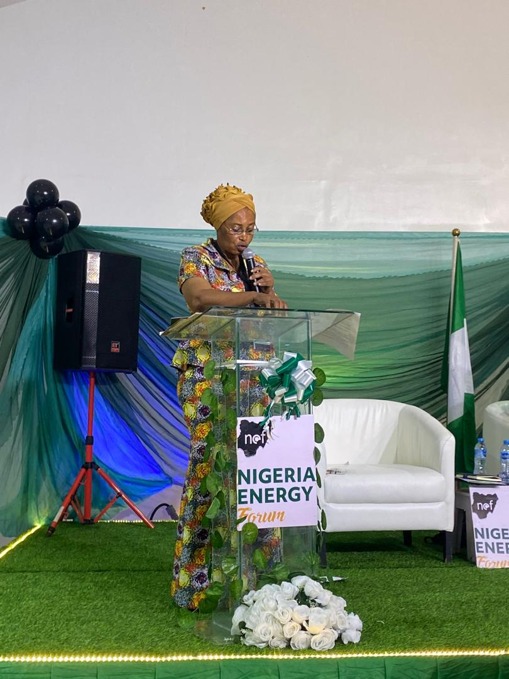
Delivering the keynote address titled “Accelerating Raw Materials Value Addition: A Pathway to Industrialization, Sustainability and Economic Transformation,” Ike-Muonso said Nigeria’s continued dependence on exporting raw materials in their primary form has constrained industrial growth, reduced employment opportunities, weakened foreign exchange earnings and limited the country’s global competitiveness.
You Might AlsoLike



He maintained that sustainable economic prosperity lies in processing, manufacturing and innovation rather than the export of unprocessed commodities.
According to him, Nigeria’s vast agricultural, mineral, forest and industrial resources should serve as the foundation for a robust manufacturing sector capable of creating jobs, attracting investment and expanding the nation’s export base.
The Director-General highlighted several initiatives being implemented by RMRDC to promote industrial transformation, including the Council’s Agricultural Boosting Programme, designed to strengthen the supply of strategic industrial crops, and its Research and Demonstration Complex, where more than 40 patented research outputs are available for commercialisation.

He also underscored the importance of the proposed 30 per cent Value Addition Bill being championed by the Council, describing it as a strategic policy that would encourage domestic processing, deepen manufacturing, attract investment, increase export earnings and create sustainable employment opportunities.
Prof. Ike-Muonso further noted that the ongoing global transition to cleaner energy presents significant opportunities for Nigeria to leverage its abundant mineral resources in renewable energy technologies, battery manufacturing and other emerging green industries.
“Nigeria possesses significant deposits of minerals and industrial materials that can support renewable energy technologies, battery manufacturing, energy infrastructure and emerging green industries. By promoting local processing and manufacturing, we can create domestic industries that support solar energy systems, electrical equipment, industrial components and other technologies required for a sustainable energy future,” he said.
The DG also advocated greater support for Micro, Small and Medium Enterprises (MSMEs), women and young entrepreneurs through improved access to technology, finance, innovation and skills development.
He stressed that Nigeria’s aspiration to become a trillion-dollar economy would only be realised through sustained investment in value addition, industrial processing, research commercialisation and stronger collaboration among government, industry, academia, development partners and the private sector.
He concluded that the country’s economic future depends on transforming its raw materials into high-value products rather than exporting them in their unprocessed state.
Other speakers at the forum echoed the Council’s position, emphasising that scientific research and technological innovation must be translated into commercial ventures capable of creating industries, generating employment and driving national prosperity.
Representatives of the National Board for Technology Incubation (NBTI) and the National Agency for Science and Engineering Infrastructure (NASENI) stressed the need for stronger collaboration among government, research institutions, investors and industry to accelerate technology commercialisation and industrial development.
Stakeholders from the clean energy and manufacturing sectors also advocated increased investment in renewable energy, local production of energy technologies and enhanced domestic manufacturing capacity to reduce dependence on imports and improve energy security.
Experts on the circular economy highlighted the economic potential of electronic waste recycling, noting that improved recycling systems could recover valuable industrial materials, create employment, support battery regeneration and contribute to environmental sustainability.
A major highlight of the event was the launch of the publication, United Nations Africa Report on “Lithium in Nigeria – Enhancing Sustainable Value Addition,” alongside the Tertiary Institutions Energy Challenge (TIEC 3.0) Awards, which recognised innovative energy solutions developed by students from tertiary institutions.
The forum concluded with a renewed consensus among stakeholders that Nigeria’s economic transformation will depend on accelerating raw materials value addition, commercialising research and innovation, expanding renewable energy investments and strengthening partnerships among government, academia, industry and the private sector. Participants expressed optimism that sustained implementation of these strategies would enhance the nation’s industrial competitiveness, create jobs, boost exports and position Nigeria as a leading value-added manufacturing hub in Africa.