By Moyofoluwa Ogunyemi and Mojeed Adeyemi
Stakeholders and industry experts have called for the urgent adoption of locally sourced, cost-effective fish feed solutions to curb rising production costs and unlock the full potential of Nigeria’s aquaculture sector. The call was made at a one-day Investors’ Forum on the local production of high-quality floating fish feed, organized by the Raw Materials Research and Development Council (RMRDC) Lagos Coordination Office in collaboration with the Lagos State Ministry of Agriculture and Food Systems and the Lagos State Ministry of Commerce, Cooperatives, Trade and Investment.

Held on March 31, 2026, at RMRDC House in Lekki, Lagos, the forum brought together key stakeholders from government, academia, industry, and the private sector to explore investment opportunities and sustainable pathways for strengthening local aquaculture feed production.
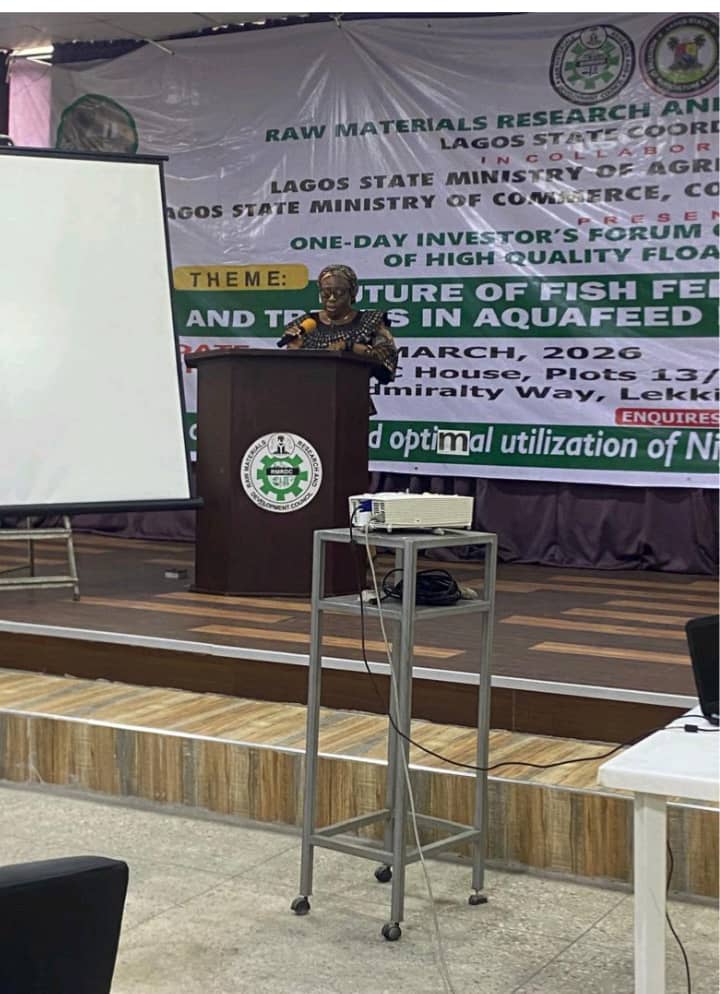
Speaking on behalf of the Director-General of RMRDC, Prof. Nnanyelugo Ike-Muonso the Director of State Industrial Extension Services, Dr. (Mrs.) Edith Obi, decried the high cost of fish feed, estimated to account for 60–70% of total production costs, as a major constraint to aquaculture development.
She attributed this challenge largely to import dependence and foreign exchange volatility. Dr. Obi emphasized the need for innovative, locally sourced alternatives, highlighting RMRDC’s ongoing efforts to promote indigenous raw materials such as soybean, groundnut cake, cassava derivatives and other agro-industrial by-products as viable plant-based inputs. She further noted the importance of adopting modern technologies, including extrusion systems, alternative protein sources such as insect meal and algae and digital feed solutions.
You Might AlsoLike




Delivering the keynote address, the Honourable Commissioner for Commerce, Mrs. Folashade Kaosarat Bada Ambrose, represented by Mr. Segun Alugba, reaffirmed the Lagos State Government’s commitment to strengthening agriculture and agro-processing. She noted that local feed production is critical to reducing costs, improving fish yield, creating employment and enhancing food security. She also highlighted ongoing government support for innovation, value addition and sustainable practices, while calling for increased private sector investment to drive growth in the aquaculture industry.
A lead paper presented by Prof. Francis Toromade, Director-General of the Fisheries and Aquaculture Producers Association of Nigeria (FIPAN), on behalf of the Association’s President, Dr. Ayo Oduntan, focused on advances in indigenous feed formulation technologies.
His presentation identified high feed costs and reliance on imports as major constraints and proposed solutions such as the use of plant-based proteins, insect-based feed, cassava-based inputs, and least-cost formulation techniques. Prof. Toromade highlighted the potential of locally sourced materials, including cassava derivatives, rice bran, and black soldier fly larvae, stressing that reducing import dependence and adopting cost-efficient technologies are key to improving profitability and sustainability in fish farming. He also emphasized the need for strategic investments in infrastructure, capacity building and quality assurance systems to strengthen the feed value chain.

In his presentation, Professor Simeon Ayoola of the University of Lagos advocated for the increased use of locally available raw materials in feed formulation, noting that such inputs are not only cost-effective but can also outperform some imported feeds in terms of quality and safety.
Other presentations were from representatives of the Standards Organisation of Nigeria (SON), the Nigerian Stored Products Research Institute (NSPRI), Lagos State Catfish and Allied Fish Farmers Association of Nigeria (LASCAFAN) industry stakeholders which also reinforced the viability of local raw materials and innovations in feed production.
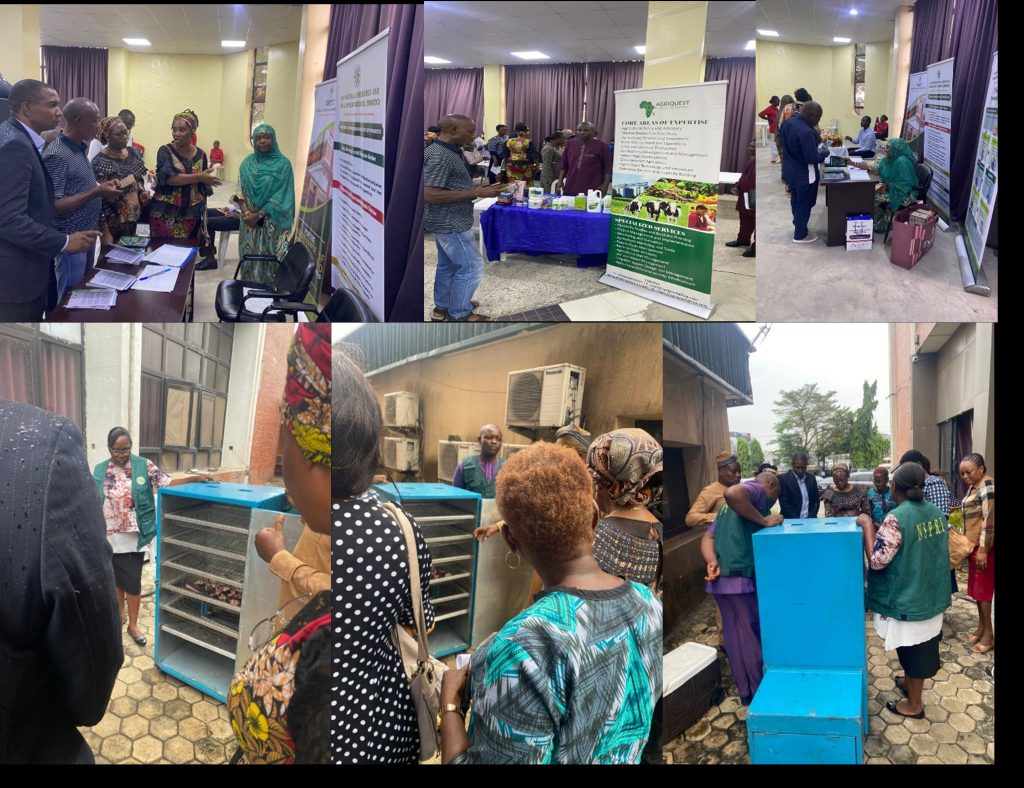
Speakers highlighted ongoing research efforts in their respective fields, and emphasized the importance of post-harvest technologies, quality assurance, preservation technologies, packaging, proper storage and adherence to global standards across the aquaculture value chain. Innovations in storage and preservation technologies that could enhance feed safety and longevity were also showcased at the event.
During the interactive session, participants identified key challenges facing the sector, including limited access to finance, knowledge gaps in feed formulation and low adoption of local innovations. In response, experts recommended collaborative financing models, continuous capacity building and stronger policy support to promote local production.
The forum, therefore unanimously advocated for increased investment in feed mills, processing infrastructure and modern technologies such as extrusion systems, alongside enhanced collaboration between research institutions and industry players to facilitate the commercialization of innovative solutions in Nigeria’s aquaculture sector.