By Umar Salihu
The Nigerian Export Promotion Council (NEPC), in strategic partnership with the Raw Materials Research and Development Council (RMRDC), Niger State Coordinating Office, has successfully conducted a One-Day Intensive Training on Sesame Seed Oil Extraction for key stakeholders in the state.

Held at the RMRDC Resource Centre in Minna, the capacity building programme brought together a diverse group of participants, including farmers, processors, women-led cooperatives, youth groups, and small-scale agribusiness operators.
In a welcome address, the Niger State Coordinator of the Raw Materials Research and Development Council (RMRDC), Dr. Abdulrasheed Mohammed said the programme was designed to enhance participants technical competencies in modern sesame oil extraction methods, quality assurance practices, and market competitiveness within domestic and international value chains.
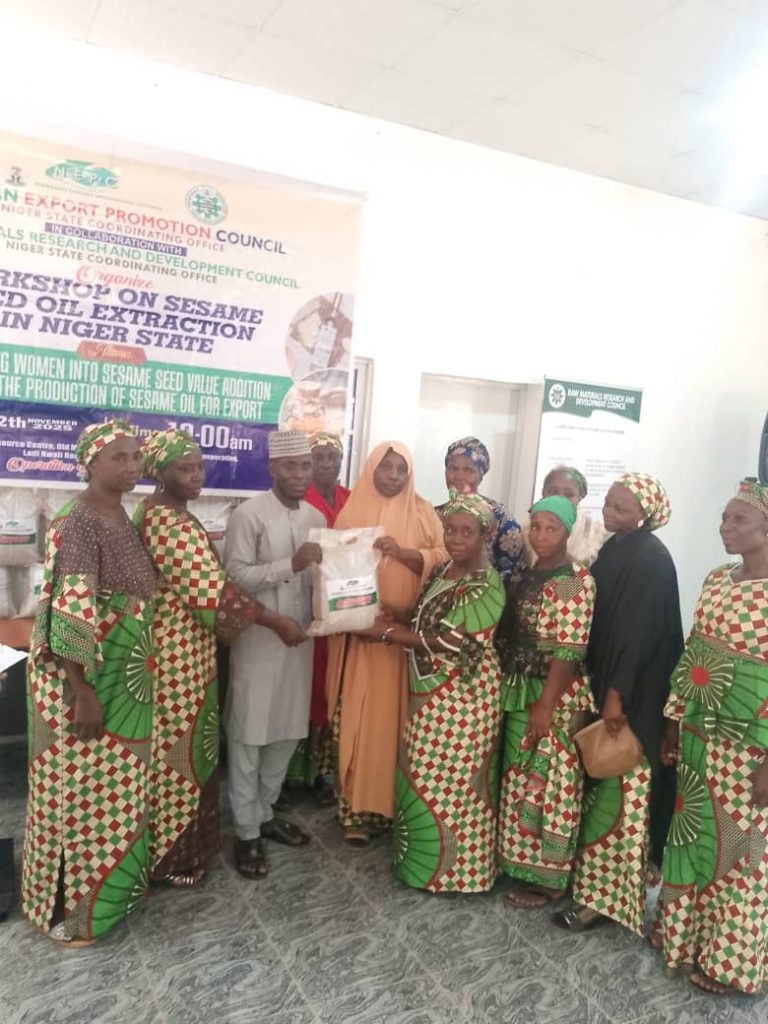
Dr. abdulrasheed said the training is also capable of expanding global demand for premium grade sesame oil, particularly for use in the cosmetics industry and human consumption. Participants were encouraged to adopt improved production standards to effectively tap into emerging markets and strengthen the competitiveness of Niger State’s sesame value chain.
You Might AlsoLike




The Niger State Coordinator of the RMRDC Dr. Abdulrasheed, therefore, reaffirmed RMRDC commitment to providing sustained technical support and urged all stakeholders across the sesame value chain to remain in close synergy, maintain active communication with the Council as he further emphasized that such collaboration is essential for preserving current capacity building gains and for enhancing Niger State’s contribution to Nigeria’s non-oil export sector.
During the workshop, resource persons provided hands-on demonstrations covering a broad spectrum of extraction techniques. These included traditional/manual processing, mechanical extraction using both cold and hot press systems, and the application of small-scale expeller machines. Participants were further guided through essential processes such as oil filtration, sedimentation, and hygiene management. The facilitators emphasized that the use of contaminated or unsafe water could introduce harmful microorganisms, jeopardize product quality, and limit market acceptance.
A robust interactive session afforded trainees the opportunity to seek clarifications on challenges such as the cost and accessibility of extraction equipment and the economics of small-scale processing. Facilitators responded with practical solutions, shared technical insights, and made themselves available for further support on product development, resource access, and operational enhancement.

Certificates and start up incentives were presented to all participants at the end of the programme.