By Salamatu Nyajo and Jubrilla Abdullahi
The Federal Government has announced plans to provide quality seedlings to coffee and tea farmers across Nigeria to boost production and consolidate the Raw Materials Research and Development Council’s (RMRDC) efforts in agro-based raw materials development for growth, profitability and sustainability.

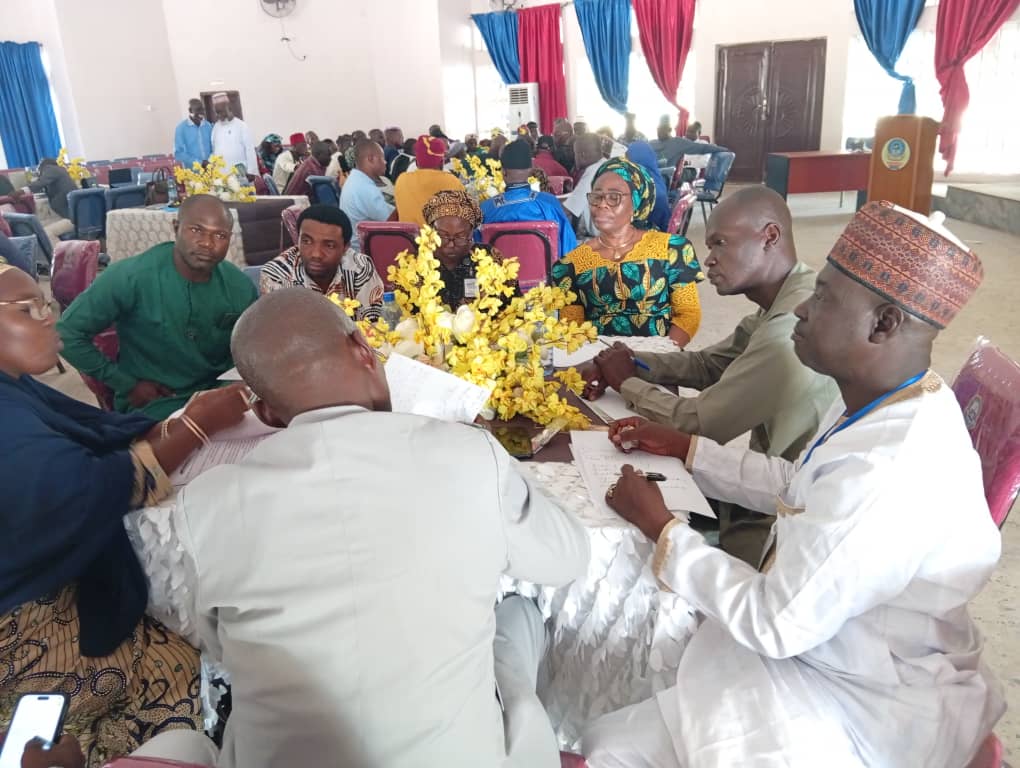
The announcement was made by the Minister of Agriculture and Food Security, Senator Abubakar Kyari, at a two-day roundtable discussion on coffee and tea value chains in Nigeria, organised by the National Coffee and Tea Association of Nigeria (NACOFTAN) in collaboration with Taraba State University (TSU) and the Raw Materials Research and Development Council (RMRDC). The forum was held at the ASUU Secretariat, Taraba State University, Jalingo.
Represented by Mr. Adamolakun Ebenezer, the Minister said states such as Taraba, Cross River and Plateau possess some of the best agro-ecological conditions for coffee and tea cultivation in Nigeria. He noted that the Ministry is committed to improving farming practices and productivity in the sub-sector, adding that stakeholders would soon be engaged on strategies to scale up production nationwide.
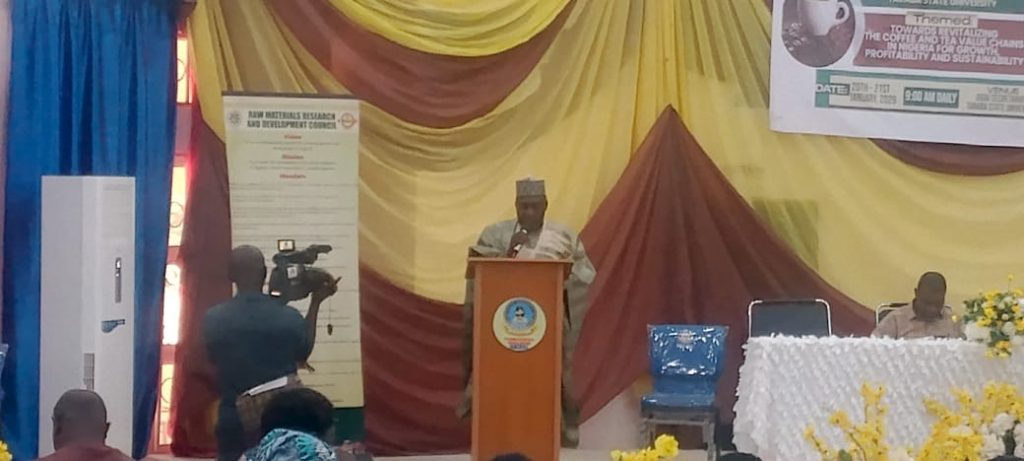
In his remarks, Taraba State Governor, Dr. Agbu Kefas, represented by the Special Adviser on Agriculture and Food Security, Mr. Zanau Maikasuwa, said the state is richly endowed with fertile land suitable for coffee and tea farming, particularly in Sardauna, Gashaka, Kurmi and parts of Bali Local Government Areas.
You Might AlsoLike




According to him, the state government has placed agriculture at the centre of its economic diversification agenda, stressing that the development of coffee and tea farming would help transition farmers from subsistence to commercial agriculture, create jobs for youths and women, and increase household income. He reaffirmed the administration’s commitment to promoting coffee and tea cultivation to drive inclusive growth in the state.
Earlier in his welcome address, the National President of NACOFTAN, Dr. Hassan Usman Kakara, said coffee and tea production in Nigeria holds immense potential, especially across the country’s highlands and suitable agro-ecological zones. However, he lamented that the sector continues to face major challenges such as low productivity, outdated farming practices, limited processing capacity, weak market linkages and inadequate access to finance.
Dr. Kakara explained that the roundtable was designed to provide a platform for stakeholders to engage in meaningful dialogue, exchange ideas and develop practical, actionable strategies to strengthen the entire value chain—from seedling production and cultivation to processing, packaging, marketing and export.

He emphasised that sustainable revitalisation of the sector can only be achieved through strong collaboration among government, the private sector, development partners, research institutions and farmers. He urged participants to think innovatively and commit to solutions that are inclusive, climate-smart and economically viable, expressing optimism that the discussions would lead to policy alignment, increased investment and concrete interventions to reposition Nigeria competitively in regional and global coffee and tea markets.
Highlighting the economic importance of coffee and tea in countries such as Kenya, Ethiopia and China, Dr. Kakara identified key challenges facing the Nigerian sector to include lack of processing facilities, limited financing, weak donor engagement and insufficient government support. He disclosed that NACOFTAN plans to allocate one hectare of land to coffee and tea farmers in each of the four geopolitical zones for cultivation, noting that although the crops take about three years to mature, they remain highly promising.
He encouraged farmers and stakeholders to register with the Association to benefit from its programmes and interventions, and commended the Vice-Chancellor of Taraba State University, Prof. Sunday Paul Bako, for his active support and collaboration in advancing the coffee and tea sector.
Speaking on behalf of the Vice-Chancellor, the Deputy Vice-Chancellor (Administration), Prof. Reuben Jonathan, described coffee and tea as critical but neglected areas of agriculture that require urgent revitalisation. He stressed their potential for job creation and economic expansion, calling on stakeholders to work collectively to develop actionable roadmaps that would significantly boost production and value addition.
Also speaking, the Director of the CRI-TSU Institute of Tree Crop Research and Chairman of the Local Organising Committee, Dr. Patrick K. Kefas, commended participants for their engagement, describing coffee and tea as strategic agricultural commodities capable of generating employment, foreign exchange earnings and sustainable livelihoods for thousands of Nigerians.
He noted that although the crops historically contributed significantly to agricultural output and export earnings, the sector has declined over the years due to policy inconsistency, limited access to finance, ageing plantations, weak value chains, poor research-to-market linkages and insufficient private sector investment. He stressed that the forum was convened at a critical time, adding that no single institution or stakeholder can revitalise the sector alone.