By Olufadi Halima and Abdulrahman Nafisat
To strengthen collaboration across academia, industry and government; and to review priority areas for national research and development, the Raw Materials Research and Development Council (RMRDC) on Thursday, 27th November 2025, hosted the First Strategic Engagement Meeting of the Research and Development Sub-committee of the National Consultative Committee on Competitiveness (NCCC). The meeting, held at the Council’s Headquarters in Abuja, brought together key stakeholders committed to advancing Nigeria’s global competitiveness.

During the session, the DG/CEO of RMRDC, Prof. Nnanyelugo M. Ike-Muonso, reaffirmed the Council’s commitment to strengthening Nigeria’s innovation landscape and translating research outputs into measurable industrial and economic gains. He recalled the approval of the National Competitiveness Strategy by the Federal Executive Council in May 2017 and the inauguration of the NCCC as a multi-stakeholder platform in August of the same year.
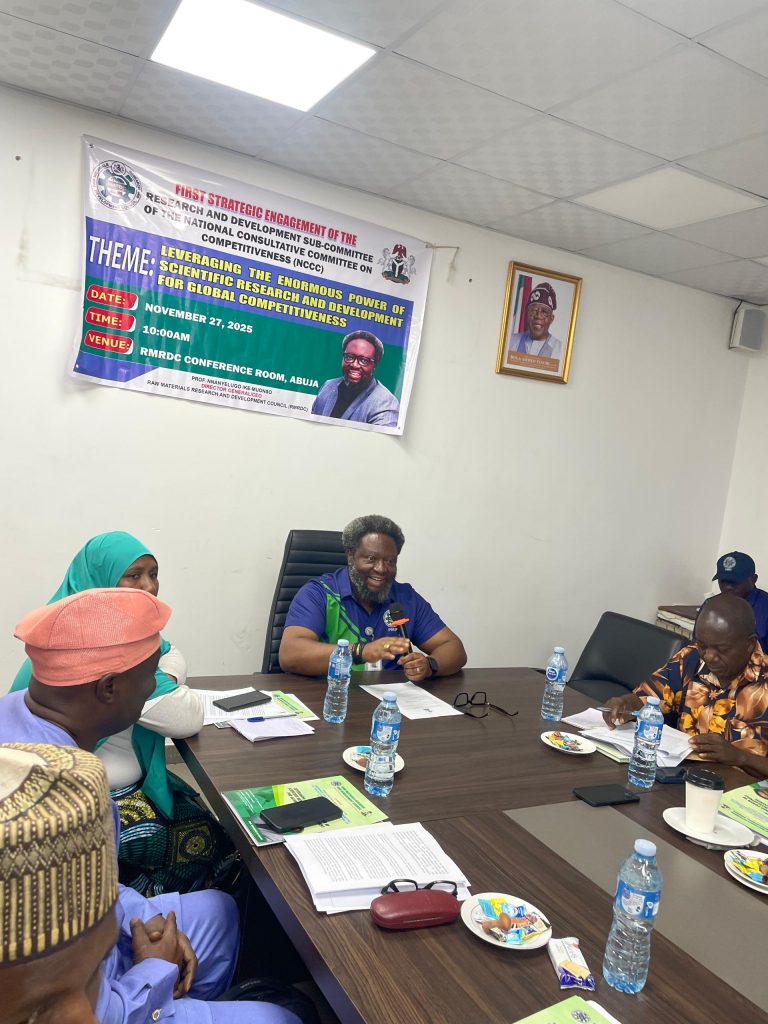
He noted that the engagement aims to consolidate previous resolutions, enhance collaboration within the Triple Helix model of academia, industry and government, and develop actionable pathways for improving Nigeria’s competitiveness ranking. The DG expressed confidence that the meeting would produce a practical roadmap capable of transforming research into innovation and economic opportunities.
Meanwhile, the Deputy Director, Directorate of National Competitiveness Strategy and Special Projects, Mr. Oluwasola John Marinho, described the engagement as a major step in advancing the National Strategy for Competitiveness in Raw Materials and Products Development, approved by the Federal Executive Council in 2017. He noted that the Sub-committee, inaugurated in February 2020, plays a central role in ensuring that Nigeria’s research ecosystem delivers market-driven and industry-relevant solutions that align with national development goals.
You Might AlsoLike




He emphasized the need to deepen teamwork, review recommendations from the July 2024 NCCC Conference, and establish Competitiveness Project Desk Offices across R&D and tertiary institutions.
The technical session was led by the CEO Statistical Systems Consulting Management Limited Sir Henry C. Eteama, who delivered a presentation on “Paradigm Shift in Research and Development Programmes for Global Competitiveness in Nigeria: The Knowledge Economy Model”. His paper explored how Nigeria can reposition its research and development landscape to deliver stronger industrial impact and support the country’s competitiveness goals.
Sir Henry emphasized the need to transform the current state of universities in Nigeria, noting an over dependence on traditional technology curricula that are not aligned with the needs of businesses and industries. He highlighted the lack of interaction between academia and industry in solving real-world problems and stressed the importance of modernizing agriculture beyond the practices of our forefathers. Furthermore, he underscored the necessity of growing Nigeria’s intellectual capital to fully exploit natural resources, stating, “You cannot be globally competitive if you are not industrialized.” He said.

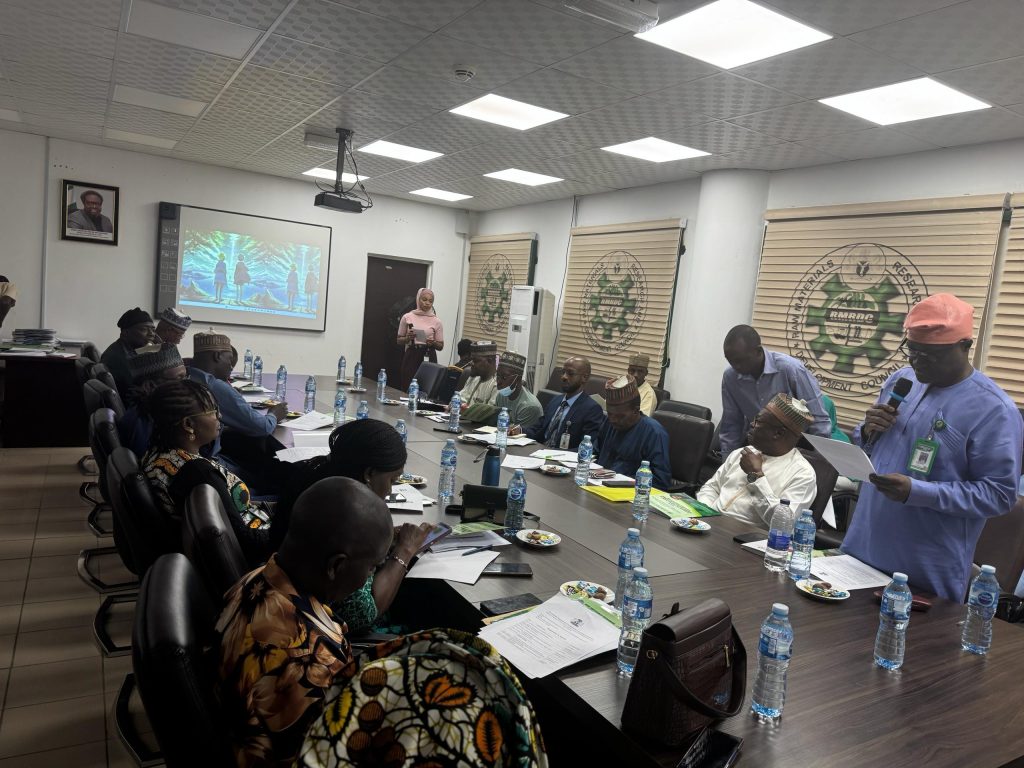
Participants also engaged in a practical HS Code review exercise to highlight priority areas for improvement. While they completed initial assessments during the session, they were encouraged to return to their agencies and work with their respective desk officers to refine the inputs and align them with institutional priorities. The exercise formed part of broader discussions on establishing and operationalising the Competitiveness Project Desk Offices (CPDOs).
Goodwill messages were delivered by representatives of the Miners Association of Nigeria, the National Space Research and Development Agency (NASRDA), the Standards Organisation of Nigeria (SON), the National Biotechnology Development Agency (NABDA), the Tertiary Education Trust Fund (TETFund), the Northern Chamber of Commerce, the Infrastructure Concession Regulatory Commission (ICRC) and the National Agency for Food and Drug Administration and Control (NAFDAC). They commended RMRDC for convening the engagement and reiterated their commitment to supporting research led industrial development and strengthening partnerships for national competitiveness.