By Oluremi Modupe
The Raw Materials Research and Development Council (RMRDC), Ondo State Coordinating Office, has urged civil servants in the state to explore and invest in locally available raw materials as a pathway to sustainable wealth creation. The State Coordinator, Mrs. F. A. Tejumola, delivered this charge during the 2025 Public Service Week held on Thursday, 13 November 2025, at the Ondo State International Event Centre, Alagbaka, Akure.

Speaking on behalf of the RMRDC, Mrs Tejumola reiterated the Council mandate to promote raw material development for industrial utilisation in the state. She noted that the theme of this year event: “Rejuvenating the Public Service for Effective Service Delivery,” is a call for all civil servants to stand up to the occasion and build a resilient Nigeria.
The event, which brought together civil servants, government officials, and key stakeholders from across Ondo State to deliberate on strategies for transforming the public service into a more efficient, accountable, and citizen-centred institution, was chaired by Mr. Ajose Kudenbu, former Head of Service, and attended by notable dignitaries, including His Excellency, Governor Lucky Orimisan Aiyedatiwa; Deputy Governor Mr Olaide Adelami; Secretary to the State Government, Mr Taiwo Fasoranti; the Chief of Staff; and current and past Heads of Service.
Speaking at the event, the Chairman of the Ondo State Local Government Commission Honourable Femi Idris, charged civil servants to demonstrate greater commitment and punctuality, emphasising that “what you present Ondo State to be is how it will be viewed.” His remarks underscored the crucial role of civil servants in shaping public perception and the outcomes of service delivery.
You Might AlsoLike


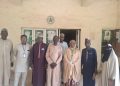

The keynote lecture was delivered by the former Head of Civil Service of Ekiti State and Lecturer at Elizade University, Dr. Olugbenga Peter Faseluka in his presentation, titled “Rejuvenating the Public Service in Nigeria for Effective Service Delivery Through Policy and Legal Framework,” provided comprehensive insights into the evolution of Nigeria’s public service from the Classical Model characterized by permanence, neutrality, and impartiality to the New Public Management approach emphasizing efficiency, accountability, and citizen-centered service delivery.
Dr. Faseluka highlighted major reforms since Nigeria’s return to democracy in 1999, including the Obasanjo Administration’s initiatives (2003-2007) that targeted professionalisation, waste reduction, and the introduction of the Contributory Pension Scheme. He mentioned the Stephen Oronsaye Committee Report of 2014, which recommended streamlining government ministries, departments, and agencies for improved efficiency, though its implementation remains pending as of 2025.
The lecturer extensively analyzed the legal framework governing public service operations, including provisions of the 1999 Constitution, the transition from General Order to Public Service Rules in 2006, and reform initiatives such as the Performance Contract System, e-Government implementation, and the Integrated Payroll and Personnel Information System (IPPIS).

Recognizing Ondo State’s upcoming 50th anniversary in 2026, Dr. Faseluka acknowledged the state’s economic transformation from a civil service-dominated economy to an emerging business and investment hub.
He highlighted the state’s industrial developments, agricultural potential as Nigeria’s leading cocoa producer, infrastructure projects, and strategic initiatives like the Port Ondo project. However, he identified critical challenges, including poverty, corruption, insecurity affecting agricultural settlements, politicisation of career appointments, and inconsistencies between administrative rules and constitutional provisions.
Dr. Faseluka made several key recommendations for rejuvenating the public service, including strict adherence to financial and administrative regulations to combat corruption, regular staff training and capacity development programs, alignment of Public Service Rules with constitutional provisions, public servants’ engagement in agriculture through cooperative societies to boost food security, reactivation of shareholding rights in government-owned companies, and strategic partnerships to revitalize moribund industrial ventures.
He concluded by emphasising that “no nation can rise beyond the capacity of its public service,” calling for continuous rejuvenation through policy reforms, legal compliance, and enhanced responsiveness to citizens’ needs.
In his address, Governor Aiyedatiwa commended the guest lecturer for his comprehensive presentation and pledged to implement the recommendations. The Governor announced significant progress on industrial revival initiatives directly aligned with the RMRDC’s mandate, including investment agreements signed for silica sand glass production at Araromi Obu, a Memorandum of Understanding executed for Ifon Ceramic, and the Menthol Company in Ore, which is 95% complete and awaiting gas supply for January 2025 commissioning. These developments underscore the state government’s commitment to leveraging local raw materials for industrial growth and economic diversification.
Governor Aiyedatiwa congratulated civil servants on the 25th Public Service Week celebration, describing it as “a celebration of duties.” He emphasised that “the strength of any government lies in the dedication and diligence of civil servants” and pledged to nurture mutual respect and open communication between the state government and public servants.