By Moyofoluwa Ogunyemi & Aderonke Gbogboade
As part of the Council’s strategic drive to expand its patent portfolio from 46 to 200 within the next four years, the Raw Materials Research and Development Council (RMRDC) has intensified efforts to equip staff with the skills to identify and protect innovative ideas and research outputs. To achieve this goal, the Council held a capacity-building training on Intellectual Property (IP) for South-West State Coordinators (Lagos, Ekiti, Oyo, Osun and Kwara) and senior officers of the Lagos Coordination Office on Tuesday, November 19, 2025, at RMRDC House, Lekki, Lagos.

This South-West edition follows the successful implementation of the training for South-East and South-South State Coordinators in Owerri in September 2025 and Northern State Coordinators in Kaduna in October 2025, emphasizing RMRDC’s commitment to building a nation-wide, IP-conscious workforce.
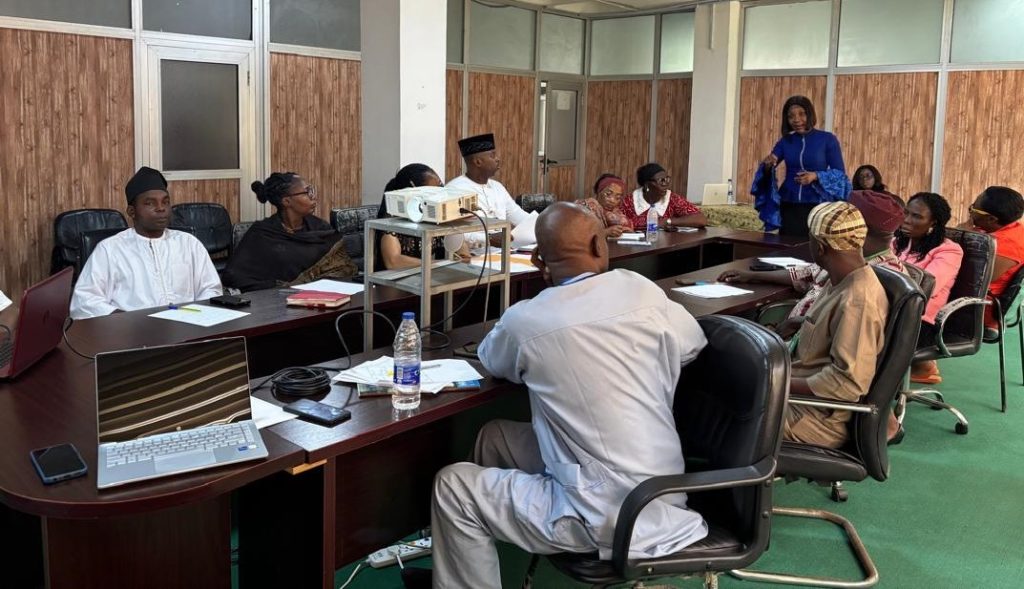
The workshop was facilitated by the Director of Legal and Board Services, Barr. Ngozi Keshi, who emphasized that intellectual property is the lifeblood of the Council’s research and innovation mandate. She explained that RMRDC’s activities, from field investigations to product development, produce new knowledge, technologies and processes that constitute IP and must be properly identified and safeguarded.
Barr. Keshi provided a comprehensive overview of key forms of IP, including patents, industrial designs, utility models, trademarks, trade secrets, geographical indications, and copyright. She illustrated these concepts with practical examples from past RMRDC innovations, highlighting both successful patent registrations and cases where early detection and reporting was lacking.
You Might AlsoLike




She stressed that achieving the Council’s ambitious patent expansion target requires coordinated effort across all departments, particularly the State Offices. According to her, “every R&D result must be protected by registering the patent or appropriate IP right,” noting that such protection preserves novelty, strengthens the Council’s competitive advantage, enhances commercialization opportunities, and reinforces national relevance.
A central focus of the training was the strategic role of State Offices as the Council’s first line of IP identification. She stated that the State Coordinators must be able to recognize potential IP arising from projects, collaborations, and field activities within their domains. She warned that failure to identify innovations early could lead to the loss of novelty, an essential requirement for patent approval.
Barr. keshi highlighted the key responsibilities of State Coordinators, including:

- Identifying and notifying DLBS of potential IP from the earliest stages of project design and during implementation.
- Documenting and escalating innovative findings to the Directorate of Legal and Board Services upon project completion for review and formal protection.
- Sensitizing and guiding officers within their state offices on IP best practices.
- Strengthening IP reporting structures to support the Council’s patent expansion target.
During the interactive Q&A session, she addressed questions on patent features and approval processes, approach to technical papers and divulgence of certain classes of information, use of Council’s logo and strategies for attracting investors and collaborators. She highlighted the Council’s existing portfolio of 46 patented technologies and encouraged State Coordinators to be vigilant to ensure that all IP produced from Council’s projects are tracked for necessary registration.
Presenting her closing remarks, she urged all State Coordinators to replicate the ongoing IP Identification and Protection Training within their respective offices to promote widespread IP awareness, early detection, and proper documentation of innovations. She emphasized that intellectual property remains central to RMRDC’s strategic vision and essential for sustaining its leadership in Nigeria’s innovation ecosystem.