By Otoikhila Emmanuel
In a major push to strengthen Nigeria’s non-oil export base and enhance the global competitiveness of its palm oil sector, the Raw Materials Research and Development Council (RMRDC), in collaboration with the Nigerian Institute for Oil Palm Research (NIFOR) and other key partners, recently convened a one-day Investors Forum themed “Unlocking the Agricultural Potential of the Oil Palm Value Chain in Edo State.”

The forum brought together the entire oil palm ecosystem, government, research institutions, financiers, private sector operators, and local communities, reinforcing a shared commitment to reposition Edo State as Nigeria’s leading hub for oil palm production and processing.
Delivering his welcome address, the Director-General of RMRDC, Professor Nnanyelugo M. Ike-Muonso emphasized that the palm oil value chain holds “immense potential for economic growth, employment generation, and industrial development,” but remains significantly underdeveloped. He highlighted Edo State as the nucleus of Nigeria’s oil palm hub, contributing an estimated 25 per cent of national output. He further noted the state’s competitive advantages: world-class research capacity at NIFOR, leading private sector operators, and the ESOPP programme, which has already allocated over 114,000 hectares for sustainable oil palm development and attracted more than $531 million in investment. He therefore urged participants to utilize the forum as an opportunity to come up with practical ways in boosting the oil palm sector to as to drive the economy.
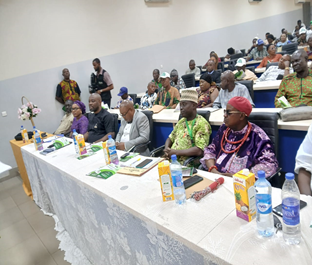
A series of technical presentations offered deep insights into the sector’s opportunities and bottlenecks. NIFOR’s presentation provided historical context, critical data, and research-driven solutions for cultivating a competitive oil palm sector. Industry leaders from Okomu Oil Palm Plc and Raedial Farms stressed that real value lies in processing, integration, and innovation rather than cultivation alone. Financial institutions outlined available funding and insurance instruments, though they noted that these remain under-utilized due to low farmer awareness and collateral challenges. ESOPP highlighted existing policy frameworks designed to attract investment and drive sustainable expansion.
You Might AlsoLike




Strong representation from the Edo State Government underscored the political backing behind the sector’s transformation. The delegation was led by the Special Adviser to the Governor on Agriculture and Food Security, Mr. Golden Ogbodu, alongside the Edo State Oil Palm Programme (ESOPP) helmed by Mr. Churchill Ebehitale Oboh.
Across all sessions, stakeholders identified key challenges: limited access to affordable finance, poor rural infrastructure, climate and sustainability risks, including the global push for RSPO certification, low adoption of improved seedlings due to fake seedling producers, and persistent security and land issues affecting farmers and processors.
Key private sector groups were also in attendance, including Engr. Godwin Omoregie, President of BENCCIMA; Mr. Ehizogie Osadolor, President of MAN (Edo/Delta Branch); Mr. Enoma Igusi, Chairman of NASSI; HRH Alhaji Bako Ebiredelu Dogwo JP, President of AFAN (Edo Chapter); and Mr. Solomon Ovbiogie, Chairman of OPPPAN (Edo Chapter). Financial institutions and risk-mitigation agencies, the Bank of Industry (BOI), LAPO Microfinance Bank, and the Nigerian Agricultural Insurance Corporation (NAIC), were prominently represented, reinforcing the crucial role of financing and de-risking in expanding the value chain. Major industry players, including Okomu Oil Palm Plc, also participated.

The forum outlined a suite of strategic recommendations for RMRDC, these include championing an integrated financing and de-risking framework, advancing mechanization and midstream processing capacity, strengthening research-extension-quality linkages, promoting climate-smart and inclusive best practices, and facilitating robust data collection and partnership brokerage across the value chain.
The event concluded with a strong consensus that Edo State stands on the brink of a transformative breakthrough. The convergence of political will through ESOPP, research excellence from NIFOR, an emerging financial support ecosystem, private sector readiness, and RMRDC’s policy leadership has created an unprecedented opportunity to reposition Edo as West Africa’s oil palm powerhouse.
By adopting the proposed strategic interventions, RMRDC is poised to serve as the central catalyst for sector-wide transformation, driving import substitution, expanding industrial capacity, creating jobs, and advancing the Council’s mandate of achieving self-sustaining industrial growth and economic development for Nigeria.