
By Okporie Chima
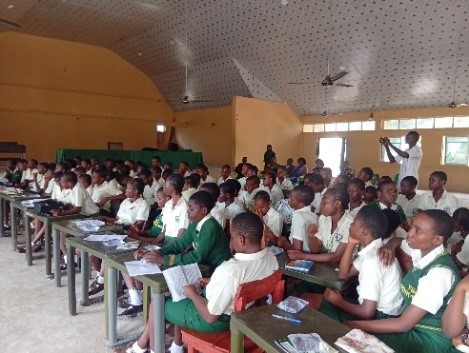
In furtherance of its mandate to promote the development and optimal utilization of Nigeria’s raw materials, the Raw Materials Research and Development Council (RMRDC), Ebonyi State Coordinating Office, has embarked on a sensitization campaign across secondary schools in the three senatorial zones of the state.

The initiative aims to enhance students’ awareness of the abundance, uses, and economic potential of locally available raw materials in Ebonyi State. The first phase of the outreach commenced at the Federal Government Girls’ College, Ezzamgbo, where the team was warmly received by the Vice Principal (Academics, Junior Section), Dr. Mrs. Okume Georgina.
The sensitization exercise is aimed at exposing students to the wealth of raw materials available in Ebonyi State, their uses, and geographical distribution, while fostering awareness on environmental sustainability and economic development.
In her presentation, the Ebonyi State Coordinator, an Assistant Director of the Council, Mrs. P. N. Nwagu, expressed appreciation to the school management for hosting the team and reaffirmed RMRDC’s commitment to advancing the sustainable utilization of Nigeria’s raw material base.
You Might AlsoLike



Mrs. Nwagu explained that the sensitization program was designed to expose students to the vast raw materials present in Ebonyi State and their specific locations. She emphasized that identifying and understanding these resources is vital for promoting environmental consciousness, sustainable practices, and inclusive economic development.
According to her, “RMRDC, through the State Office, is adopting approaches that focus on teaching students the importance of identifying key raw materials for economic development.” She noted that the lecture was divided into two key segments, Agro-Raw Materials and Mineral Raw Materials to give students a holistic understanding of the sector.
She added that the major objective of the program is to bridge knowledge gaps and equip students with the skills required to address emerging environmental and economic challenges. The initiative, she said, would help students understand the entire life cycle of raw materials, from extraction to disposal, while highlighting the potential environmental and social impacts.

Also speaking, Senior Scientific Officer, Miss C. S. Uwakwe emphasised the importance of sensitizing students about raw materials, noting that it is critical for promoting sustainable practices, fostering innovation, and driving local economic development.
“Understanding the importance of resource management, environmental impact, and the value of local resources will help students make more informed decisions as future consumers, entrepreneurs, and policymakers,” she explained.
Miss Uwakwe, who lectured the students on Agro-Raw Materials with comparative advantages in Ebonyi State, further highlighted the broader impacts of the program in areas such as environmental awareness and sustainability, economic development and entrepreneurship, as well as innovation and technological advancement.
She decried the growing preference for foreign goods among Nigerians, which she said has hampered the development of local industries and raw materials. “The crave for foreign goods by most Nigerians has left a huge toll on the nation’s raw materials and overall economic development. This is why the Ebonyi State Coordinating Office of RMRDC initiated this sensitization programme, to enable secondary school students become active participants in research and development of Nigeria’s raw materials,” she said.
The sensitization campaign, according to the RMRDC Ebonyi State Office, will continue across other schools within the state’s three senatorial zones, as part of efforts to deepen students’ understanding of the strategic role of raw materials in national development and industrial growth.