
By Isa Muhammad Mukhtar & Isyaka Rabiu
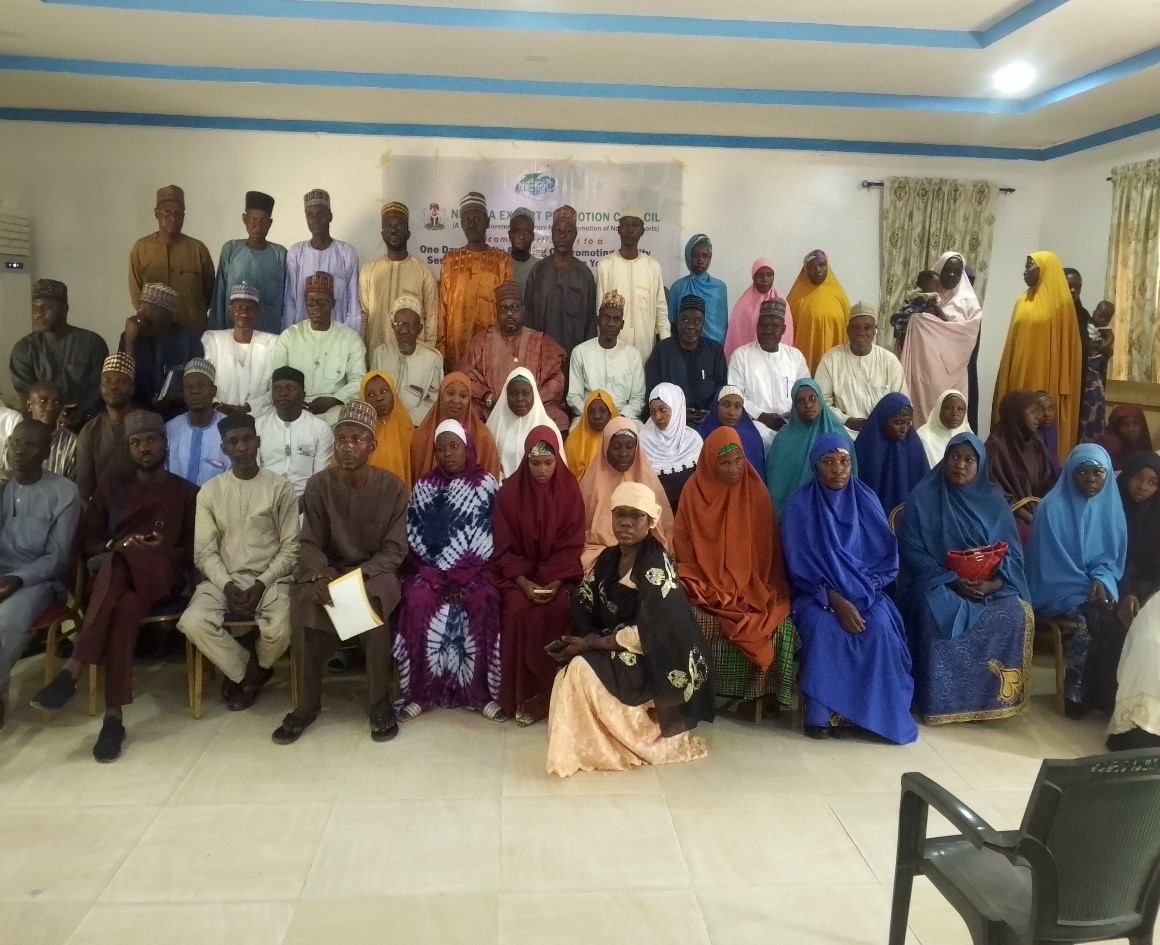
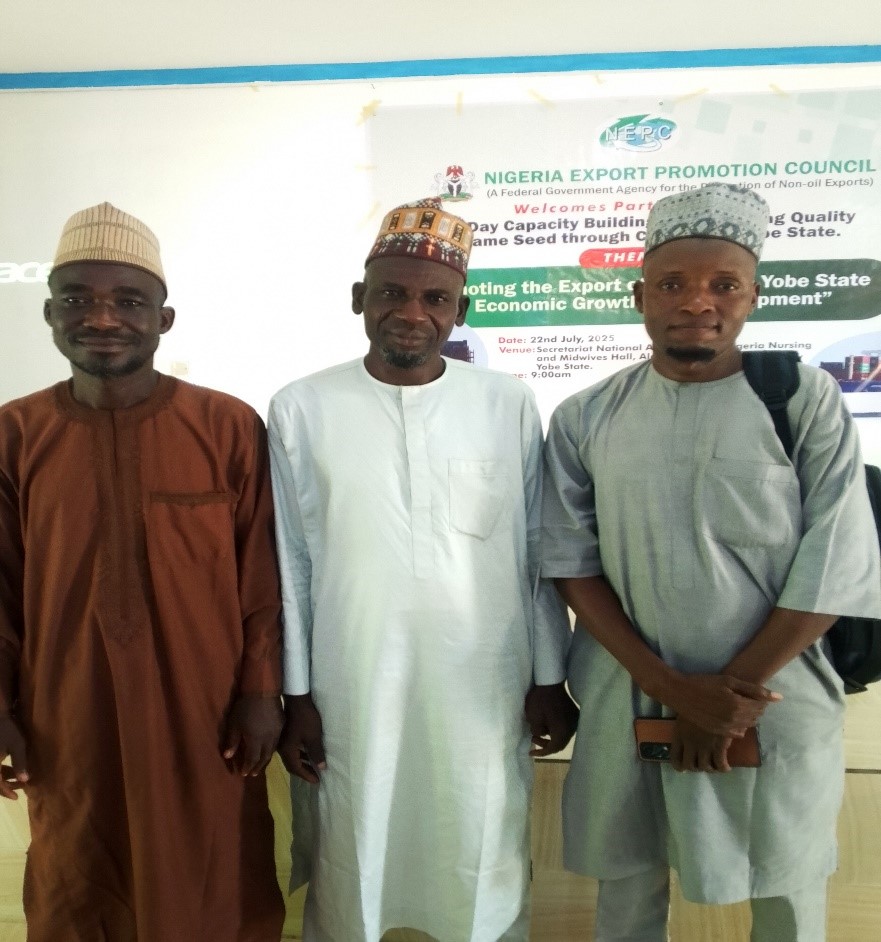
Raw Materials Research and Development Council (RMRDC) and Nigeria Export Promotion Council (NEPC) held a one-day capacity workshop to strengthen advocacy on Sesame seed cluster development in Yobe State. This is aimed at development of local raw materials through research-driven innovation, industrial cluster development, and capacity building initiatives.

The workshop brought together stakeholders from across the value chain, including farmers, processors, exporters, SMEs, financial institutions, and government agencies, to deliberate on strategies for enhancing Yobe’s competitiveness in the global sesame market. Also, in collaboration is the Yobe State Ministry of Commerce, Industry and Solid Minerals.
Delivering the opening remarks on behalf of the Honourable Commissioner, Rt. Hon. Kaigama Umar, the Permanent Secretary of the Ministry, Alhaji Zanna Ali Ibrahim, welcomed participants and commended NEPC and RMRDC for their timely and strategic intervention. He emphasized the urgent need to shift Nigeria’s economic priorities from oil dependency toward non-oil sectors such as agriculture, solid minerals, and tourism, where Yobe State holds significant comparative advantage. He noted the state’s rich endowment in agricultural commodities including sesame, hibiscus, sorghum, gum Arabic, and livestock products, as well as its mineral wealth and unique tourism sites like the Dagona Birds Sanctuary and the Tulo-Tulo Dunes.
The Commissioner disclosed the establishment of four sesame processing and packaging plants in Damaturu, Potiskum, Machina, and Nguru. He observed that these facilities are aimed at supporting local value addition, ensuring quality compliance with international standards, and improving market access for smallholder farmers and processors. This development aligns with the state government’s broader industrialization strategy focused on job creation, export growth, and rural development.
You Might AlsoLike


In his presentation, Usman Ahmed, NEPC State Coordinator, underscored the importance of sesame seed as one of Nigeria’s top non-oil export commodities. He pointed out that despite Nigeria’s status as one of the world’s leading producers of sesame, several bottlenecks continue to limit its full export potential. These challenges include poor post-harvest handling, inadequate processing and packaging infrastructure, limited access to finance, and low awareness of international market requirements and phytosanitary standards.
He maintained that if properly addressed, these barriers can be turned into opportunities for Yobe farmers and processors. With adequate training, improved facilities, and access to finance, sesame exports can become a significant driver of rural prosperity, increasing income levels and contributing to national export revenues.
Representing RMRDC State Coordinator, Mr. Isa Muhammad Mukhtar spoke on the importance of the 30% Value Addition Bill currently the process of actualization. He described the policy as a game-changer for Nigeria’s non-oil export sector, emphasizing that it discourages the export of unprocessed raw materials and encourages the establishment of local processing clusters. For a predominantly agrarian state like Yobe, he noted, the legislation presents an opportunity. It pushes stakeholders to transition from primary production to value-added activities such as processing, packaging, and compliance with international quality standards, thereby enhancing the global competitiveness of Nigerian exports.

Mukhtar also highlighted that local processing not only increases the market value of raw materials but also contributes significantly to employment generation, particularly for women and youth. He added that the resulting industrial learning and skills development would foster innovation and long-term sustainability in the state’s agricultural sector.
The workshop concluded on a high note, with stakeholders expressing renewed commitment to repositioning Yobe State as a major player in Nigeria’s non-oil export sector. Through strengthened partnerships, policy alignment, and capacity development, the state is poised to harness its rich natural resources for sustainable economic growth and greater participation in global trade.